The Making of a Prig
Evelyn Sharp
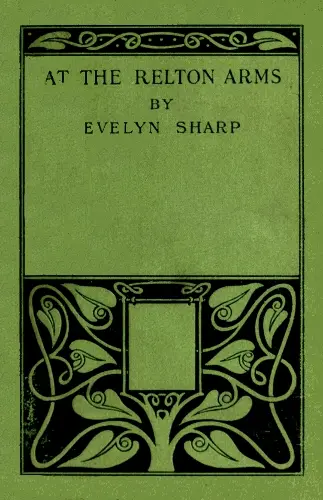
THE CLASSIC COLLECTION · 1895
"At the Relton Arms" by Evelyn Sharp is a novel written in the late 19th century. The narrative begins with a reception in a musician's studio attended by a mix of socially obligated guests and his devoted pupils. Central to the unfolding drama are characters such as the passionate musician Digby Raleigh and the unconventional Lady Joan Relton, whose interactions set the stage for themes of love, artistic aspiration, and societal expectations. At the start of the story, we are introduced to a crowded reception where the musician captivates his remaining students with his theories and compositions, while the restless Lady Joan challenges traditional ideas and boldly engages with Digby. Their playful banter reveals contrasting views on art, life, and the looming presence of societal norms. As the evening progresses, the tension between personal desires and external expectations becomes palpable, highlighted by the arrival of new characters and their complex interconnected relationships. This initial chapter lays the groundwork for the numerous emotional entanglements and moral dilemmas that will be explored throughout the novel.
Introduction adapted from the source catalogue; source summaries may be automatically generated.
Free to read · English · 36,716 words · No account needed
MAKE TIME FOR A GOOD BOOK
On by default. Untick to stop anonymous reading totals. Each page counts after 10 seconds in view. How this works.
Anonymous counting is on unless you have switched it off.
"Good sport to-day, lad?" asked Peter presently.
"Aye, for sure," answered Roger; and then, glancing professionally at the row of dead rats that hung from his waist, he added slowly, "more ways nor one."
"Eh," said Peter, with a slight access of emphasis.
They all knew something more was coming, and Mrs. Haxtell's knowledge of the rat-catcher's temperament sufficed to keep her breathlessly silent in view of coaxing him to tell his news; though, with the jealousy of the reformed thief who hates to see his brother continuing to thieve, she glanced imploringly at her husband and daughter, who had no intention of speaking, as if to silence them likewise.
"Lady Relton's Dick came down my way last night," began Roger,
deliberately filling his pipe.
So far his news came within the ken of his audience, and they were quick to maintain a share in it.
"I saw him myself, I did," began Lily Eliza; but her mother promptly
took up the tale.
"Lady Relton's Dick? Eh, but he come along nigh after sunset, he did, and he says to my man, he says, 'Seen Muster Brill?' he says. And my man told him, he did, as ye worn't long gone home, not to call it short neither, nor yet very long; leastways ye were gone along home, he said, didn't ye, Pete? Speak up, man, and say what ye know, and doan't sit starin' as though heavin and earth worn't big enough for your eyes to look into."
"Woman," said Peter, with unusual effort, "heaven and earth bain't big enough for your tongue to clapper in, nor yet they wouldn't be if t' other place was joined on too."
Here Roger struck in afresh.
"Lady Relton's Dick said the rats in the stable worn't worth their keep. Lady Relton told him she'd pay the corn for the horses, but the rats would have to go elsewhere if they wanted good grain, as she didn't intend for 'em to have hers. I said I'd go to-morrow, being promised to Farmer Wadsden's ricks to-day; but Dick, he says the world has to stop a turnin' round for my lady, he says, and she were in a taking along of them rats, so to-day I took the pup along and I went up to the Court."
"Ah," gasped the landlady; she had not meant to interrupt, but the approach of the pith of the story was too much for her, and with the desperate economy of the schoolboy, who leaves the biggest plum to the last, she again diverted the channel of conversation.
Your reading position is saved on this browser. Take it to another device with a library code. Reading pages adapt to text, rather than matching a printed edition.
BEHIND THE BOOK
This eBook is for the use of anyone anywhere in the United States and most other parts of the world at no cost and with almost no restrictions whatsoever. You may copy it, give it away or re-use it under the terms of the Project Gutenberg License included with this eBook or online at www.gutenberg.org. If you are not located in the United States, you will have to check the laws of the country where you are located before using this eBook. Read the source licence.
The original source file, including credits and licence, is retained by this library. Request an original-format copy at no charge. Please include the book title and Project Gutenberg identifier #41403.
KEEP YOUR CURIOSITY GOING
Coulson Kernahan

Maurice Baring
Frances Wright
Cécile Tormay

Frederic Jesup Stimson

W. H. P. (William Henry Pope) Jarvis