THE CLASSIC COLLECTION✦My diaries, being a personal narrative of events 1888-1914, Part 2 (1900-1914)CLASSIC FREE BOOKS
My diaries, being a personal narrative of events 1888-1914, Part 2 (1900-1914)
Wilfrid Scawen Blunt
THE CLASSIC COLLECTION · 1893
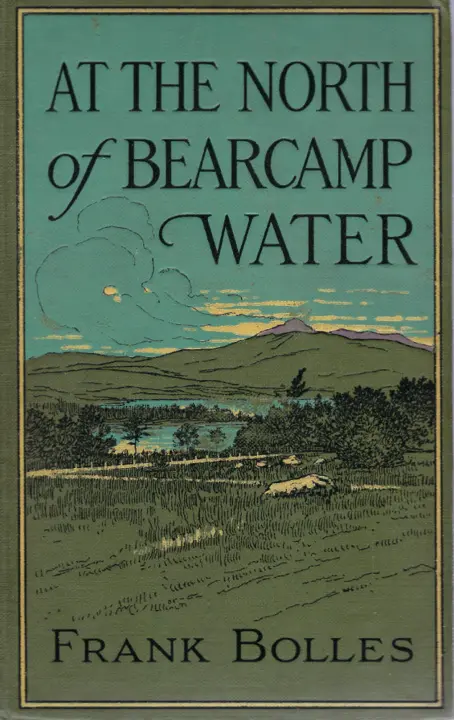
"At the North of Bearcamp Water" by Frank Bolles is a collection of nature writings written in the late 19th century. This work chronicles the author's experiences and observations as he strolls through the landscapes of New England from July to December, immersing himself in the beauty, flora, and fauna of the region. The narrative is likely rich with serene descriptions and personal reflections, aiming to capture the essence of the natural world and the author's intimate connection to it. The opening of the book introduces us to a quiet New Hampshire landscape where the author encounters the aftermath of a gentle rain and the beauty of a swamp. He vividly describes the sounds and sights around him—the calls of birds, the colorful flora, and the imminent thunderstorm. As the storm unfolds, the atmosphere shifts dramatically, showcasing the wildness and splendor of nature. Bolles' observations, steeped in a quasi-poetic reverence for the environment, set the stage for an exploration that blends nature, personal experience, and the nuances of the changing seasons. The beginning promises a deeply reflective journey through New England's wilderness, inviting readers to join him in appreciating the intricate details of the natural world.
Introduction adapted from the source catalogue; source summaries may be automatically generated.
Free to read · English · 66,740 words · No account needed
MAKE TIME FOR A GOOD BOOK
On by default. Untick to stop anonymous reading totals. Each page counts after 10 seconds in view. How this works.
Anonymous counting is on unless you have switched it off.
The smoke of the saw-mill showed that the timber-eater finds no time for remembering the birthday of Jesus. Teams were moving as usual, carrying the green lumber down to the railway. The men employed to demolish our forests are poorly paid. A dollar a day and board is what the French Canadian receives here. Board is called fifty cents a day, and the married workman with a houseful of children lives on that sum. We passed the home of a French Canadian known in the valley as Bumblebee. The house is twelve feet long by ten feet deep. The ridgepole is twelve feet from the ground. The chimney is a piece of stove-pipe. The walls are made of boards, battened, and the roof is unshingled. Bumblebee has five children, the eldest being eight. His wife’s mind is affected. The standing timber, the mill, the lumber railway, and many of the dwellings and small farms belong to non-residents, whose only object is to shear the mountains, squeeze the laborers, and keep Congress from putting lumber on the free list.
Not far beyond Bumblebee’s one-room house we entered the primeval forest. We were following the trail through the snow made by us on Sunday. When a quarter of a mile in, we were surprised to find a bear track crossing our path at right angles. The huge brute had passed that way on Tuesday or Wednesday, judging by the condition of the snow. On reaching the spot where we had aroused a barred owl on Sunday, we hid under some small hemlocks, thereby getting a thorough sprinkling, and I hooted. After my third attempt, I saw a great bird fly through the woods to a point only a hundred yards distant. In a moment or two I hooted again, and then made the fine squeaking noise which a mouse makes. The owl came nearer, and at once began hooting. During nearly ten minutes, in which we kept up a lively exchange of hoots, he varied his notes in several ways, sometimes keeping on, without pausing, from one series of hoots to another. I never heard a more talkative owl. At last he flew into a tree so near us that I could see him clearly through my glass. As he hooted, his throat swelled and pulsated. He searched the trees and the ground with his keen dark eyes. When at last he saw me, I seemed to feel the force of his glare. Then he turned his head to the left and flew away with long, soft sweeps of his wings. At a distance he resumed his hooting, which we could hear for some time as we strolled on up Sabba Day Brook. What we had supposed to be the river, on Sunday, proved to be Sabba Day Brook itself. The water was high, most of the ice had gone, and all the small brooks poured in liberal streams. In one pool I observed a small trout. At last we heard the thunder of the falls, and looked forward eagerly to see them. The stream seemed to issue from the solid rock, for directly across the channel rose a cliff of dark granite crowned with black spruces and one or two pines whose lofty tops were pale in the fog. As we drew near, the majestic beauty of the place became apparent. At the foot of the black cliff was a deep pool full of strange colors,—greens, olives, and white. The waters in it were restless, rising and settling back, but forever washing the sides of their basin. Four gigantic icicles hung from the top of the cliff, extending to the bottom. One of them, at its lower end, touched a flat shelf of rock, and so became a graceful column supporting the overhanging mosses from which it started. Another adhered to the rock all the way, and was a crystalline pilaster. The other two were free throughout the whole of their thirty feet of length, and tapered to needle points threatening the pool below. The colors in the pool were in fact borrowed from the mosses and ferns which grew in masses at the sides and upon the top of the cliff. Living in perpetual dampness, these exquisite plants flourish and become perfect examples of their kind. The trailing fern fronds were as green and as clean in outline as in summer. They sprang from beds of mosses wonderful in tints. Some were golden olive, others pale green, and still others blood red. Pressed against the upper edge of the black cliff, they were like a garland of bright flowers on the forehead of some sullen warrior.
Your reading position is saved on this browser. Take it to another device with a library code. Reading pages adapt to text, rather than matching a printed edition.
BEHIND THE BOOK
This eBook is for the use of anyone anywhere in the United States and most other parts of the world at no cost and with almost no restrictions whatsoever. You may copy it, give it away or re-use it under the terms of the Project Gutenberg License included with this eBook or online at www.gutenberg.org. If you are not located in the United States, you will have to check the laws of the country where you are located before using this eBook. Read the source licence.
The original source file, including credits and licence, is retained by this library. Request an original-format copy at no charge. Please include the book title and Project Gutenberg identifier #66269.
KEEP YOUR CURIOSITY GOING
Wilfrid Scawen Blunt
Wilfrid Scawen Blunt

E. W. (Edgar Watson) Howe
Francis Greenleaf Allinson & Anne C. E. (Anne Crosby Emery) Allinson
Cyrenus Cole

John Martineau