
Neka, the boy conjuror
Edward Stratemeyer
THE CLASSIC COLLECTION · 1903
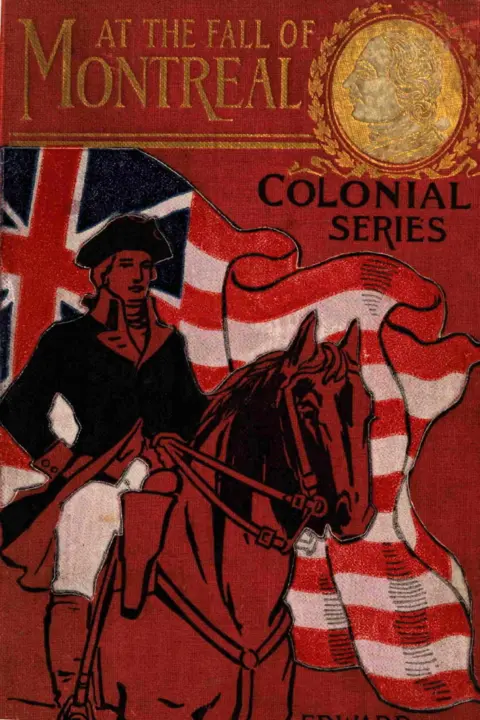
"At the Fall of Montreal; Or, A Soldier Boy's Final Victory" by Edward Stratemeyer is a historical novel written in the early 20th century. The narrative is set during the French and Indian War and follows young soldiers David and Henry Morris as they navigate treacherous circumstances, confronting enemies and making critical choices while serving in the Colonial army. The story encapsulates themes of bravery, loyalty, and the struggles faced by individuals during wartime. At the start of the tale, the cousins, who are stationed at Fort Niagara in July 1759, discuss fishing and the recent military activities. Their camaraderie is a focal point, revealing their connection to family back home amid the looming dangers of war. As they engage in fishing, they remain vigilant for enemies, foreshadowing the violence that inevitably erupts when they encounter wounded Indians, leading to their involvement in a broader conflict between the English and French forces. The opening scene sets a tone of adventure, suggesting the boys’ forthcoming challenges as historical events unfold around them.
Introduction adapted from the source catalogue; source summaries may be automatically generated.
Free to read · English · 63,967 words · No account needed
MAKE TIME FOR A GOOD BOOK
On by default. Untick to stop anonymous reading totals. Each page counts after 10 seconds in view. How this works.
Anonymous counting is on unless you have switched it off.
Slowly the balance of the night wore away and day came on. A farmhand came to feed the horses and hitch one to a cart, and a maid came out to milk three cows, but otherwise they did not see or hear a soul. As she worked around the milk house the maid sang a gay song in French, as if no such thing as a war existed.
“It takes a French girl to do that,” observed Silvers. “No English girl could sing so happily with danger at the very door of the home.”
“The French are a gay people,” answered Henry. “But, just the same, they can fight when they want to.”
At last the sun went down and night came on. They had eaten the last of the food brought along, and Silvers had long since finished his bottle of wine. It was somewhat cloudy, which promised to be in their favor.
“Now we’ll see what fate has in store for us,” said Silvers, after a long look around the outbuildings. “Shall I carry the musket, or will you?”
“As you are the best shot, you had better take it,” answered Henry.
“Then I’ll give you the knife,” went on the sharpshooter, and passed
over the dagger.
The gun was in the same condition as when taken from the prison, and they had taken care to preserve the powder for priming.
They left the barn by a back door and lost no time in crossing a turnip and onion lot to a row of berry bushes skirting a ditch. Once at the ditch, they crawled along until they gained the shelter of the woods.
“Now we can make for the river,” said Silvers. “But how we are to get across remains a problem still to solve.”
“Perhaps we can find a canoe or a rowboat. Or, on a pinch, we can build
a raft.”
“Not so easy, lad, without tools.”
The woods were thick with underbrush, and it was no mean task to push a way through. Soon, however, they came to a well-beaten path, and along this they moved faster, Silvers in the lead, and both with eyes and ears strained to the utmost, for a possible sign of an enemy.
“There is a building ahead,” said the sharpshooter, after a quarter of a mile had been covered.
It proved to be a fair-sized summer house, standing on a rocky cliff. Beyond was a series of rough stone steps, leading to the river bank, far below. At the shore was a rude dock, and here rested a long, strange-looking object, half boat and half raft, piled high with some straw and several barrels of pitch.
Your reading position is saved on this browser. Take it to another device with a library code. Reading pages adapt to text, rather than matching a printed edition.
Edward Stratemeyer

Edward Stratemeyer
Edward Stratemeyer

Edward Stratemeyer
BEHIND THE BOOK
This eBook is for the use of anyone anywhere in the United States and most other parts of the world at no cost and with almost no restrictions whatsoever. You may copy it, give it away or re-use it under the terms of the Project Gutenberg License included with this eBook or online at www.gutenberg.org. If you are not located in the United States, you will have to check the laws of the country where you are located before using this eBook. Read the source licence.
The original source file, including credits and licence, is retained by this library. Request an original-format copy at no charge. Please include the book title and Project Gutenberg identifier #69501.
KEEP YOUR CURIOSITY GOING
Cécile Tormay

Moritz Busch
Coulson Kernahan
John L. Ransom

Maurice Baring
Frances Wright