
Neka, the boy conjuror
Edward Stratemeyer
THE CLASSIC COLLECTION · 1903
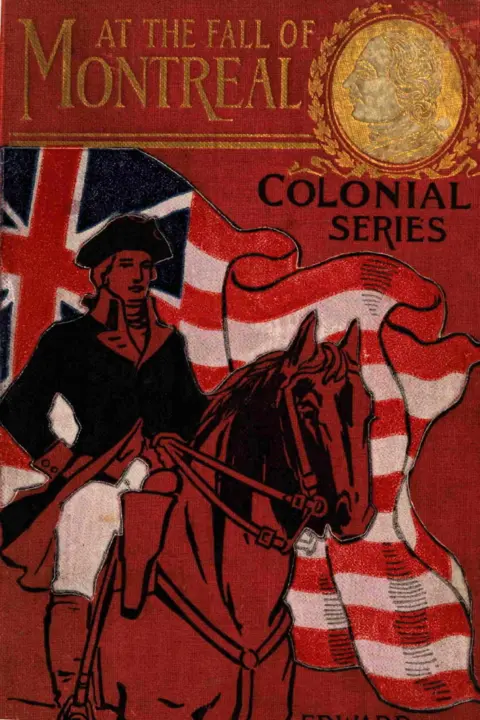
"At the Fall of Montreal; Or, A Soldier Boy's Final Victory" by Edward Stratemeyer is a historical novel written in the early 20th century. The narrative is set during the French and Indian War and follows young soldiers David and Henry Morris as they navigate treacherous circumstances, confronting enemies and making critical choices while serving in the Colonial army. The story encapsulates themes of bravery, loyalty, and the struggles faced by individuals during wartime. At the start of the tale, the cousins, who are stationed at Fort Niagara in July 1759, discuss fishing and the recent military activities. Their camaraderie is a focal point, revealing their connection to family back home amid the looming dangers of war. As they engage in fishing, they remain vigilant for enemies, foreshadowing the violence that inevitably erupts when they encounter wounded Indians, leading to their involvement in a broader conflict between the English and French forces. The opening scene sets a tone of adventure, suggesting the boys’ forthcoming challenges as historical events unfold around them.
Introduction adapted from the source catalogue; source summaries may be automatically generated.
Free to read · English · 63,967 words · No account needed
MAKE TIME FOR A GOOD BOOK
On by default. Untick to stop anonymous reading totals. Each page counts after 10 seconds in view. How this works.
Anonymous counting is on unless you have switched it off.
“Zat was von bad work—zat fight. I no haf been dair, but I hear, yes, I
hear it all.”
“Who are you?” asked Henry boldly.
“Me? Ah, I am not much, my bold little troopair, I am plain Jacques Volnier, a hunter and trappair.”
“Then why have you captured us?” went on Henry curiously.
At this the Frenchman shrugged his shoulders.
“Because—yes, because we want ze company,” he answered, with a smile.
Henry frowned, and so did Silvers, and at this both Frenchmen laughed at what they thought was a good joke. Then they talked to each other in their own tongue, leaving the prisoners to themselves.
“What do you think they will do with us?” asked Henry, in a low voice.
“Throw us into a French prison, more than likely,” answered Silvers
gloomily.
“What did you do with Sir William’s message?”
“Hush! I threw it overboard,” said the other, in a still lower voice.
The strong sun was now beginning to tell upon Henry, and he said no more. He wanted to keep his senses, but presently all seemed to fade from him. He felt himself pitch into Silvers’ arms, and then he knew no more for the time being.
“Poor lad,” murmured Silvers.
“What is ze mattair?” demanded Jacques Volnier.
“He has fainted. Won’t you untie me so that I can do something for him?”
“Oui! oui!” was the answer, and in a moment more Silvers was free. He untied Henry and bathed his forehead, and presently the young soldier opened his eyes. But it was not until long after sundown that Henry felt anything like himself again, and even then he was almost too weak to stand.
The two prisoners wondered where they were being taken, but could get nothing from either the Frenchmen or the Indians. The rowboat was headed to the northeast, and this showed that the general direction was for the mouth of the St. Lawrence. On and on swept the craft, through the dismal night and still on when the morning came.
“They are going quite a distance,” said Henry, after he had swallowed a piece of bread that had been given to him. “Can it be that they mean to move right down the river?”
“It is possible,” answered Silvers. “Montreal, you know, is not so very
far away.”
At last the boat turned to the eastward, and that evening a landing was made near what is to-day Wolfe Island. There had been a small settlement here, but this was abandoned, the inhabitants having withdrawn to a fort on the mainland.
Your reading position is saved on this browser. Take it to another device with a library code. Reading pages adapt to text, rather than matching a printed edition.
Edward Stratemeyer

Edward Stratemeyer
Edward Stratemeyer

Edward Stratemeyer
BEHIND THE BOOK
This eBook is for the use of anyone anywhere in the United States and most other parts of the world at no cost and with almost no restrictions whatsoever. You may copy it, give it away or re-use it under the terms of the Project Gutenberg License included with this eBook or online at www.gutenberg.org. If you are not located in the United States, you will have to check the laws of the country where you are located before using this eBook. Read the source licence.
The original source file, including credits and licence, is retained by this library. Request an original-format copy at no charge. Please include the book title and Project Gutenberg identifier #69501.
KEEP YOUR CURIOSITY GOING
Cécile Tormay

Moritz Busch
Coulson Kernahan
John L. Ransom

Maurice Baring
Frances Wright