
Neka, the boy conjuror
Edward Stratemeyer
THE CLASSIC COLLECTION · 1903
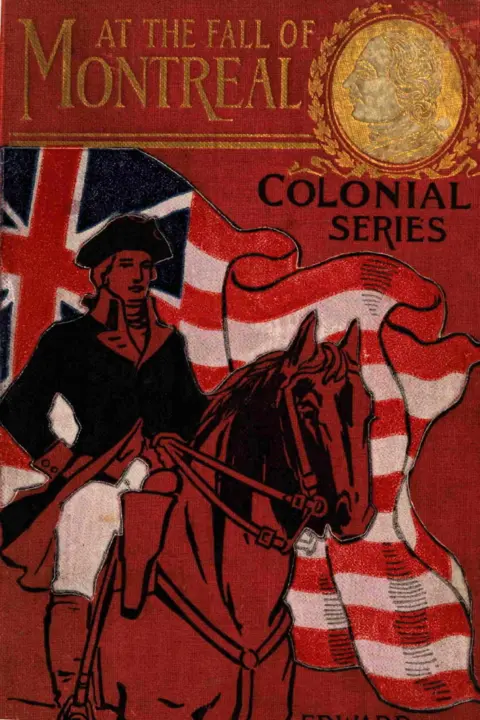
"At the Fall of Montreal; Or, A Soldier Boy's Final Victory" by Edward Stratemeyer is a historical novel written in the early 20th century. The narrative is set during the French and Indian War and follows young soldiers David and Henry Morris as they navigate treacherous circumstances, confronting enemies and making critical choices while serving in the Colonial army. The story encapsulates themes of bravery, loyalty, and the struggles faced by individuals during wartime. At the start of the tale, the cousins, who are stationed at Fort Niagara in July 1759, discuss fishing and the recent military activities. Their camaraderie is a focal point, revealing their connection to family back home amid the looming dangers of war. As they engage in fishing, they remain vigilant for enemies, foreshadowing the violence that inevitably erupts when they encounter wounded Indians, leading to their involvement in a broader conflict between the English and French forces. The opening scene sets a tone of adventure, suggesting the boys’ forthcoming challenges as historical events unfold around them.
Introduction adapted from the source catalogue; source summaries may be automatically generated.
Free to read · English · 63,967 words · No account needed
MAKE TIME FOR A GOOD BOOK
On by default. Untick to stop anonymous reading totals. Each page counts after 10 seconds in view. How this works.
Anonymous counting is on unless you have switched it off.
“It’s too bad,” he declared. “And the worst of it is, we are not yet out of this trap. The most of the redskins are gone, and I saw no Frenchmen, but at least four Injuns are still on guard—two at the lake front and two down on a trail leading to Fort Oswego.”
“That means that we are hemmed in,” said Dave, who was leaning down from the tree branch listening.
“Yes, lad. How is the knee?”
“I am sorry to say it is just as bad as ever, if not worse.”
Raymond climbed into the tree and inspected the injured limb, which was
considerably swollen.
“It certainty does look bad,” he said. “One thing is certain, you are not able to sneak through the woods now, and it’s doubtful if you can do it after sundown.”
“Well, I suppose I can’t remain here forever,” returned the young soldier, rather helplessly.
“We can help him along, after I get my wind back,” put in Shamer, who had bound up the arrow wound he had received.
During his tour of inspection Raymond had been able to pick up a few stores, left near the shelter by the rocks, and he now offered both of his companions something to eat. Shamer partook readily of the food, but poor Dave was almost choked by it. The young soldier’s thoughts were constantly with Henry. Would he ever see his cousin again?
Raymond noticed how downcast the lad was, and did his best to cheer him
up.
“Don’t take it so hard, Dave,” he said kindly. “Remember, he isn’t killed, and many a prisoner has escaped ere this. Besides, if they put him in prison, this war is bound to come to an end, sooner or later, and then he’ll be set free.”
“That may be true,” returned the young soldier. “But you know as well as I do what the French prisons are like—the very worst holes on earth.”
“That may be only evil report, my lad. True it is that some Frenchmen, even though they be our enemies, are as good-hearted as any Englishman ever dared to be.”
“That is true,” broke in Shamer. “A good man is a good man, and a bad one is a bad one, no matter what his nationality. But I have no use for an Indian.”
“Well, there are some good Indians,” added Dave quickly. “White Buffalo, for instance. If he was here I am sure he would help us out of our trouble. But I can’t get Henry out of my mind,” he added, with a sigh.
Your reading position is saved on this browser. Take it to another device with a library code. Reading pages adapt to text, rather than matching a printed edition.
Edward Stratemeyer

Edward Stratemeyer
Edward Stratemeyer

Edward Stratemeyer
BEHIND THE BOOK
This eBook is for the use of anyone anywhere in the United States and most other parts of the world at no cost and with almost no restrictions whatsoever. You may copy it, give it away or re-use it under the terms of the Project Gutenberg License included with this eBook or online at www.gutenberg.org. If you are not located in the United States, you will have to check the laws of the country where you are located before using this eBook. Read the source licence.
The original source file, including credits and licence, is retained by this library. Request an original-format copy at no charge. Please include the book title and Project Gutenberg identifier #69501.
KEEP YOUR CURIOSITY GOING
Cécile Tormay

Moritz Busch
Coulson Kernahan
John L. Ransom

Maurice Baring
Frances Wright