
Neka, the boy conjuror
Edward Stratemeyer
THE CLASSIC COLLECTION · 1903
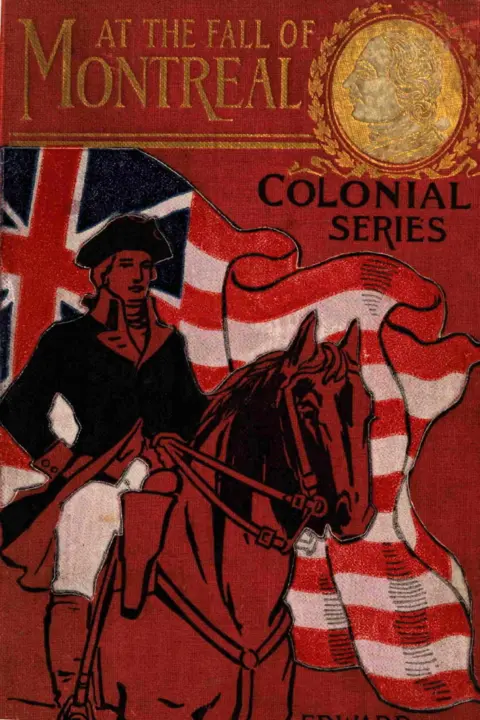
"At the Fall of Montreal; Or, A Soldier Boy's Final Victory" by Edward Stratemeyer is a historical novel written in the early 20th century. The narrative is set during the French and Indian War and follows young soldiers David and Henry Morris as they navigate treacherous circumstances, confronting enemies and making critical choices while serving in the Colonial army. The story encapsulates themes of bravery, loyalty, and the struggles faced by individuals during wartime. At the start of the tale, the cousins, who are stationed at Fort Niagara in July 1759, discuss fishing and the recent military activities. Their camaraderie is a focal point, revealing their connection to family back home amid the looming dangers of war. As they engage in fishing, they remain vigilant for enemies, foreshadowing the violence that inevitably erupts when they encounter wounded Indians, leading to their involvement in a broader conflict between the English and French forces. The opening scene sets a tone of adventure, suggesting the boys’ forthcoming challenges as historical events unfold around them.
Introduction adapted from the source catalogue; source summaries may be automatically generated.
Free to read · English · 63,967 words · No account needed
MAKE TIME FOR A GOOD BOOK
On by default. Untick to stop anonymous reading totals. Each page counts after 10 seconds in view. How this works.
Anonymous counting is on unless you have switched it off.
“The troopers!” he told himself. He wanted to flee, but there was not time. Gathering up his pistol and saber he fled up the narrow stairs leading to the sloping room above.
In a few minutes the door below was thrown open, and the three men entered. They were talking earnestly, but the sight of the smoldering fire cut short the conversation. Some excited questions followed, and presently one of the men opened the door leading to the stairs.
“Is anybody up there?” he demanded in French.
Instead of replying, Henry tiptoed his way to a corner of the room. Here was a sheltered nook, between the chimney and the sloping roof, and he squeezed himself into this.
“I say, is there anybody up there?” demanded the Frenchman once more.
He waited a moment and then slammed the door shut. More talking followed, but only an indistinct murmur reached Henry’s ears. The young soldier scarcely dared to breathe, and he tried in vain to think of what would be best to do next.
“I reckon I’ll have to drop from the window, just as I was going to do at the barn,” thought the youth, but before he could put the plan into execution, the door below was thrown open once more and the Frenchman reappeared, this time with a torch taken from the fire, which he and his companions had started up again.
“I’m in for it now,” Henry told himself, and he was right. In a moment more the Frenchman discovered him and drew a pistol.
“Who are you?” he demanded, in his native tongue.
“Don’t fire,” answered Henry.
“Ha, you are von Englishmans, hey?” cried the Frenchman, and now Henry saw that he was dressed in civilian’s clothes.
“Yes, I am an English soldier,” answered Henry recklessly. “What do you
want of me?”
“You come de stairs down, an’ you make me no trouble,” was the reply.
As there was no help for it, Henry descended to the ground floor of the farmhouse. The talking had brought the others to their feet and each Frenchman had a pistol drawn as he appeared.
“Jean Bevoir!” gasped Henry, as his eyes rested on one of the newcomers.
“Ha, you know me?” came in return. The trader gazed at Henry sharply, and uttered an imprecation in French. “It ees zat Henry Morris!”
“Henry Morris?” repeated the man who had remained below with Bevoir.
“Oui, Chalette;” and then he continued in French: “Do you not remember seeing him at Fort Niagara?”
Your reading position is saved on this browser. Take it to another device with a library code. Reading pages adapt to text, rather than matching a printed edition.
Edward Stratemeyer

Edward Stratemeyer
Edward Stratemeyer

Edward Stratemeyer
BEHIND THE BOOK
This eBook is for the use of anyone anywhere in the United States and most other parts of the world at no cost and with almost no restrictions whatsoever. You may copy it, give it away or re-use it under the terms of the Project Gutenberg License included with this eBook or online at www.gutenberg.org. If you are not located in the United States, you will have to check the laws of the country where you are located before using this eBook. Read the source licence.
The original source file, including credits and licence, is retained by this library. Request an original-format copy at no charge. Please include the book title and Project Gutenberg identifier #69501.
KEEP YOUR CURIOSITY GOING
Cécile Tormay

Moritz Busch
Coulson Kernahan
John L. Ransom

Maurice Baring
Frances Wright