THE CLASSIC COLLECTION✦An outlaw’s diary: the CommuneCLASSIC FREE BOOKS
An outlaw’s diary: the Commune
Cécile Tormay
THE CLASSIC COLLECTION · 1882
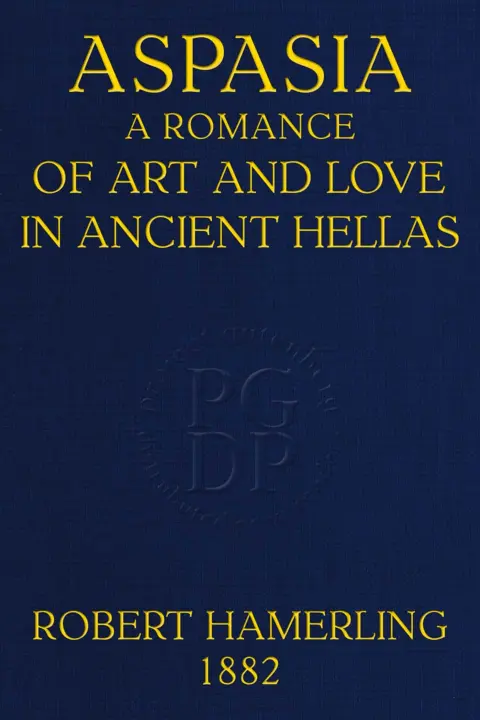
“Aspasia: A Romance of Art and Love in Ancient Hellas” by Robert Hamerling is a historical novel written in the late 19th century. The book focuses on ancient Greece, blending themes of art, politics, and romance, with central figures drawn both from historical record and imaginative reconstruction. The probable main characters include Pericles, the influential Athenian statesman, and Aspasia, the intriguing Milesian woman renowned for her beauty and intellect. The novel appears to explore the intersections of personal and national destiny, with the flourishing of Greek art, the conflicts of moral and aesthetic values, and the magnetic attraction between gifted individuals as key elements. The opening of “Aspasia” sets the scene in bustling, resurgent Athens during the age of Pericles. It introduces a cast of prominent Athenians—Pericles the statesman, Phidias the sculptor, and others in their intellectual circle—against a detailed backdrop of public life, ongoing artistic achievements, and the arrival of the Delian League’s treasure. The focus sharpens on a striking, unnamed woman (later revealed as Aspasia), whose presence stirs both fascination and artistic rivalry. The narrative moves from the city’s vibrant agora to a contest between sculptors, where debates about the nature of beauty, the divine, and the political responsibilities of art unfold. The section closes by shifting to Pericles’ household, revealing tensions between public duty and private life, as well as introducing other key figures such as Pericles’ wife Telesippe and the philosopher Anaxagoras. The early chapters establish the layered interplay between historical circumstance, artistic ambition, philosophical dialogue, and the personal entanglements at the heart of Athenian society.
Introduction adapted from the source catalogue; source summaries may be automatically generated.
Free to read · English · 191,784 words · No account needed
MAKE TIME FOR A GOOD BOOK
On by default. Untick to stop anonymous reading totals. Each page counts after 10 seconds in view. How this works.
Anonymous counting is on unless you have switched it off.
A short time after Aspasia had gone, Hipponicus was told by his servants that a slave had come from Pyrilampes, bringing a young peacock, intended for the Milesian who lived in the adjoining house.
Hipponicus hated nothing in the world so much as Pyrilampes’ peacocks, and if he had yielded to the first fleeting impulse of his heart, would have instantly ordered the bird’s neck to be twisted.
But he contented himself with saying:
“The Milesian has gone, and I don’t know where she moved. Carry the peacock to Pericles’ house. No doubt it was he who bought it.”
Meantime Aspasia had reached the Agora on her way to Pericles.
While hastily gliding through the crowd of strangers, Alcamenes
suddenly met her.
The sculptor stopped, looked into her face with his bright eyes, and
said smiling:
“Whither away, fair cithara-player? Doubtless to Pericles? May the new friends, with their claims on you and your favor, be more fortunate than the old ones.”
“To whom did I ever grant any claim upon me?” asked Aspasia.
“Among others, to me!” replied Alcamenes.
“To you?” said Aspasia. “I gave you what you wanted, what was necessary to the sculptor. Neither more nor less!”
“A woman must give all or nothing!” answered Alcamenes.
“Then forget that I have given anything!” cried Aspasia, and vanished
in the throng.
The few words had been quickly exchanged. Alcamenes laughed bitterly. Aspasia hastily continued her walk—
Telesippe was occupied that morning in a pious duty.
She hoped to obtain compensation for what, in her opinion, Pericles neglected in the management of the household, from the favor of the god Zeus Ctesius, the guardian and increaser of property, who was honored with domestic worship by all devout Athenians. No one understood holy ancestral customs so well as Telesippe. She wound woollen threads around her brow and right shoulder, took a new earthen vessel with a lid, wrapped white wool about its handles, filled it with a mixture of all kinds of fruits, pure water, and oil, and set the gift in the store-room in honor of the aforesaid god.
She had just completed her pious task, when she saw the porter admit a slave, who brought in his arms a huge foreign bird, with long tail-feathers.
The man said the bird belonged to Pericles, put it down, and went away.
Telesippe was astonished, not knowing exactly what to think of the
matter.
Had Pericles purchased the bird in the market, and was it to be plucked
and roasted?
Yet Pericles usually troubled himself very little about domestic
affairs.
Your reading position is saved on this browser. Take it to another device with a library code. Reading pages adapt to text, rather than matching a printed edition.
BEHIND THE BOOK
This eBook is for the use of anyone anywhere in the United States and most other parts of the world at no cost and with almost no restrictions whatsoever. You may copy it, give it away or re-use it under the terms of the Project Gutenberg License included with this eBook or online at www.gutenberg.org. If you are not located in the United States, you will have to check the laws of the country where you are located before using this eBook. Read the source licence.
The original source file, including credits and licence, is retained by this library. Request an original-format copy at no charge. Please include the book title and Project Gutenberg identifier #76058.
KEEP YOUR CURIOSITY GOING
Cécile Tormay

Moritz Busch
Coulson Kernahan
John L. Ransom

Maurice Baring
Frances Wright