THE CLASSIC COLLECTION✦An outlaw’s diary: the CommuneCLASSIC FREE BOOKS
An outlaw’s diary: the Commune
Cécile Tormay
THE CLASSIC COLLECTION · 1882
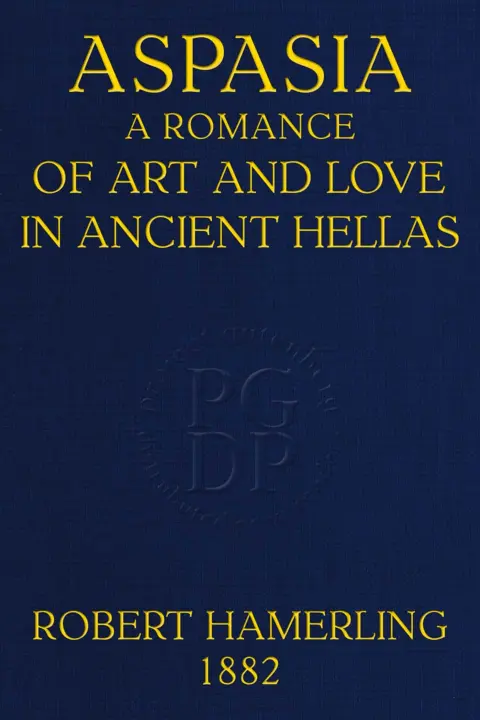
“Aspasia: A Romance of Art and Love in Ancient Hellas” by Robert Hamerling is a historical novel written in the late 19th century. The book focuses on ancient Greece, blending themes of art, politics, and romance, with central figures drawn both from historical record and imaginative reconstruction. The probable main characters include Pericles, the influential Athenian statesman, and Aspasia, the intriguing Milesian woman renowned for her beauty and intellect. The novel appears to explore the intersections of personal and national destiny, with the flourishing of Greek art, the conflicts of moral and aesthetic values, and the magnetic attraction between gifted individuals as key elements. The opening of “Aspasia” sets the scene in bustling, resurgent Athens during the age of Pericles. It introduces a cast of prominent Athenians—Pericles the statesman, Phidias the sculptor, and others in their intellectual circle—against a detailed backdrop of public life, ongoing artistic achievements, and the arrival of the Delian League’s treasure. The focus sharpens on a striking, unnamed woman (later revealed as Aspasia), whose presence stirs both fascination and artistic rivalry. The narrative moves from the city’s vibrant agora to a contest between sculptors, where debates about the nature of beauty, the divine, and the political responsibilities of art unfold. The section closes by shifting to Pericles’ household, revealing tensions between public duty and private life, as well as introducing other key figures such as Pericles’ wife Telesippe and the philosopher Anaxagoras. The early chapters establish the layered interplay between historical circumstance, artistic ambition, philosophical dialogue, and the personal entanglements at the heart of Athenian society.
Introduction adapted from the source catalogue; source summaries may be automatically generated.
Free to read · English · 191,784 words · No account needed
MAKE TIME FOR A GOOD BOOK
On by default. Untick to stop anonymous reading totals. Each page counts after 10 seconds in view. How this works.
Anonymous counting is on unless you have switched it off.
“That we will!” echoed around the circle. “Why shouldn’t the Ithyphallians allow themselves to be curbed by so charming a little hand?”
Amid extravagant gayety, the smiling, lovely Simaitha was proclaimed queen of the banquet, victorious ruler of the realm of pleasure.
A beautiful throne, richly garlanded with flowers, was erected; she was clad in purple robes, a golden diadem was pressed upon her curls, and wreaths of roses and violets were twined around her body.
She shone in the peerless magic of her youth and beauty—a true queen. Even Aspasia’s eyes rested on her admiringly.
“Aspasia ruled the present,” exclaimed Alcibiades, “to you, Simaitha, belongs the future.”
The beakers were filled with wine, and drained in honor of the radiant
queen of pleasure.
“Ruled by this sovereign,” cried the youths, “the kingdom of joy will spread throughout the whole world.”
“Take your thousand drachmæ, Callias and Demos!” cried Alcibiades. “I’ll give up the wager as lost. I shall not go to Hipponicus to-morrow. The prince of the Ithyphallians will form a new bond with the queen of beauty and pleasure! Thank the gods! She is smiling again, and her teeth glitter like one of the rows of marble pillars in the Parthenon.”
With these words the reckless youth, excited by wine and love, approached the royally-adorned maiden and, amid the cheers of his companions, threw his arm around her and tried, with a kiss, to seal the bond just concluded.
At this moment all who were looking at Simaitha, noticed a vivid flush
suffuse her face.
Waving Alcibiades back with her out-stretched hand, she complained that a sudden burning heat had attacked her head.
At the same time her parched lips seemed to long for some refreshment.
A beaker filled with wine was offered, she thrust it back, asked for water, and emptied goblet after goblet of the cooling fluid; but they seemed like mere drops falling on a mass of glowing metal.
It was now noticed that her eyes were growing red and bloodshot.
The girl’s tongue grew heavy—her voice sounded harsh and hoarse—and she began to complain of swelling of the mouth, throat and tongue.
At the same time a feeling of terror showed itself, her whole body trembled, a thin cold perspiration covered her limbs.
They wished to lead her to her room, her couch; but, as if pursued by some terrible fear, she wanted to plunge into a well, into deep cool water, tried to rush away like a lunatic, and was only restrained by force.
Pericles was summoned.
He appeared, saw the young girl’s condition, and turned pale.
“Go!” he said to the revellers.
Your reading position is saved on this browser. Take it to another device with a library code. Reading pages adapt to text, rather than matching a printed edition.
BEHIND THE BOOK
This eBook is for the use of anyone anywhere in the United States and most other parts of the world at no cost and with almost no restrictions whatsoever. You may copy it, give it away or re-use it under the terms of the Project Gutenberg License included with this eBook or online at www.gutenberg.org. If you are not located in the United States, you will have to check the laws of the country where you are located before using this eBook. Read the source licence.
The original source file, including credits and licence, is retained by this library. Request an original-format copy at no charge. Please include the book title and Project Gutenberg identifier #76058.
KEEP YOUR CURIOSITY GOING
Cécile Tormay

Moritz Busch
Coulson Kernahan
John L. Ransom

Maurice Baring
Frances Wright