THE CLASSIC COLLECTION✦An outlaw’s diary: the CommuneCLASSIC FREE BOOKS
An outlaw’s diary: the Commune
Cécile Tormay
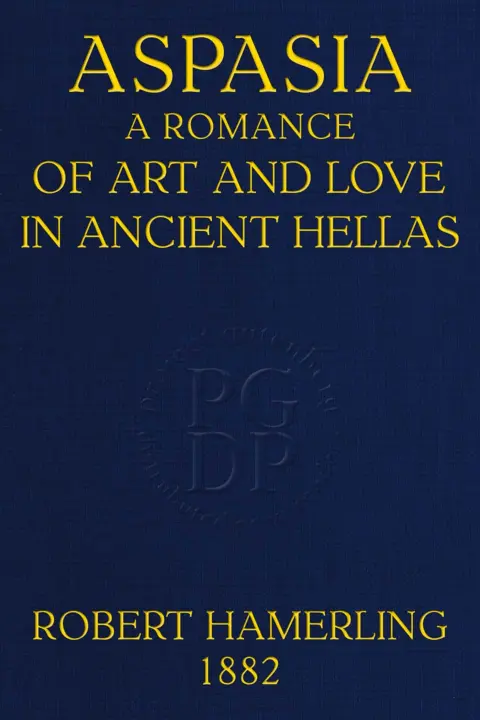
THE CLASSIC COLLECTION · 1882
“Aspasia: A Romance of Art and Love in Ancient Hellas” by Robert Hamerling is a historical novel written in the late 19th century. The book focuses on ancient Greece, blending themes of art, politics, and romance, with central figures drawn both from historical record and imaginative reconstruction. The probable main characters include Pericles, the influential Athenian statesman, and Aspasia, the intriguing Milesian woman renowned for her beauty and intellect. The novel appears to explore the intersections of personal and national destiny, with the flourishing of Greek art, the conflicts of moral and aesthetic values, and the magnetic attraction between gifted individuals as key elements. The opening of “Aspasia” sets the scene in bustling, resurgent Athens during the age of Pericles. It introduces a cast of prominent Athenians—Pericles the statesman, Phidias the sculptor, and others in their intellectual circle—against a detailed backdrop of public life, ongoing artistic achievements, and the arrival of the Delian League’s treasure. The focus sharpens on a striking, unnamed woman (later revealed as Aspasia), whose presence stirs both fascination and artistic rivalry. The narrative moves from the city’s vibrant agora to a contest between sculptors, where debates about the nature of beauty, the divine, and the political responsibilities of art unfold. The section closes by shifting to Pericles’ household, revealing tensions between public duty and private life, as well as introducing other key figures such as Pericles’ wife Telesippe and the philosopher Anaxagoras. The early chapters establish the layered interplay between historical circumstance, artistic ambition, philosophical dialogue, and the personal entanglements at the heart of Athenian society.
Introduction adapted from the source catalogue; source summaries may be automatically generated.
Free to read · English · 191,784 words · No account needed
MAKE TIME FOR A GOOD BOOK
On by default. Untick to stop anonymous reading totals. Each page counts after 10 seconds in view. How this works.
Anonymous counting is on unless you have switched it off.
“I scent the smell of tar, the creak of oars, the shouts of trierarchs, the gilding of statues of Pallas at the Piræeus,” said Sporgilus thoughtfully.
“Why not, you coward?” cried the others. “Have you no fancy for a merry naval expedition?”
“Well, the sea is such a salt, bitter thing!” replied Sporgilus.
“Feed yourself on garlic,” echoed around him, “on garlic, you coward, like the fighting-cocks, that you may grow more ardent and get courage.”
The voice of the notorious tanner, Cleon, was now heard in another dense group. “I want war, but without Pericles!” he exclaimed. “The war ought not to be allowed to make Pericles greater. How shall we demand an account from him, how shall we get at him, if he is at the head of a fleet or army? So away with Pericles! The Spartans’ demand that he should be banished from Athens as an Alcmæonid, ought to have been granted. Banish Pericles! Banish Pericles!”
Thus Cleon shouted amid clumsy, vehement gestures, for he always flung his whole body about and did not remain a moment in the same place.
“War, but without Pericles!” he repeated incessantly.
Pamphilus was of the same opinion, but vying with the other in the loudness of his shrieks, added that Pericles ought not to be banished, but called to account for his management of public affairs and thrown into prison.
Old Cratinus now came up with Hermippus and a third companion, a youth, who had the “Attic glance” to a still higher degree than the other two, and it was said would soon come forward with a comedy.
“Are you for war or peace, old satyr?” shouted one of the crowd.
“I’m for roast hares, wine in the jar, silver in the strong-box, figs in the storehouses, garlanded goats, Dionysian festivals, new wine, beakers tilted upside down, gay dancing-girls—”
“So you’re for peace?”
“Yes indeed, and against having the Megarians shut out from the Athenian market. Be sensible, you violet-wreathed Athenians! Cease suspecting that every quean, who appears in the market, is a disguised Megarian. Since you excluded the Megarians there’s not a good sucking-pig, such as the old victors of Marathon deserve, to be had. We shall soon come to eating roasted crickets. Besides, why are you quarrelling about war and peace? Did the Spartans leave the popular assembly with any other answer, than the one Pericles proposed? Let Pericles rule and others of his stamp, the tanners, wool-dealers, and sausage-makers, who comb your beards, fan the flies from your heads, clean the dust from your shoes, and brush the specks from your clothes.”
Your reading position is saved on this browser. Take it to another device with a library code. Reading pages adapt to text, rather than matching a printed edition.
BEHIND THE BOOK
This eBook is for the use of anyone anywhere in the United States and most other parts of the world at no cost and with almost no restrictions whatsoever. You may copy it, give it away or re-use it under the terms of the Project Gutenberg License included with this eBook or online at www.gutenberg.org. If you are not located in the United States, you will have to check the laws of the country where you are located before using this eBook. Read the source licence.
The original source file, including credits and licence, is retained by this library. Request an original-format copy at no charge. Please include the book title and Project Gutenberg identifier #76058.
KEEP YOUR CURIOSITY GOING
Cécile Tormay

Moritz Busch
Coulson Kernahan
John L. Ransom

Maurice Baring
Frances Wright