THE CLASSIC COLLECTION✦An outlaw’s diary: the CommuneCLASSIC FREE BOOKS
An outlaw’s diary: the Commune
Cécile Tormay
THE CLASSIC COLLECTION · 1882
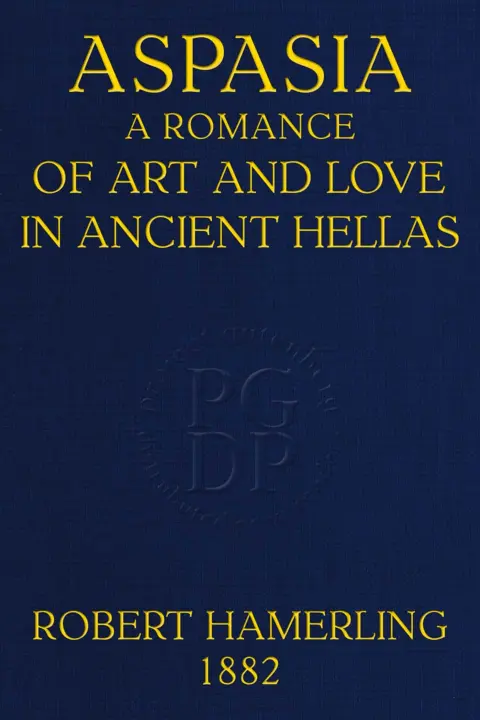
“Aspasia: A Romance of Art and Love in Ancient Hellas” by Robert Hamerling is a historical novel written in the late 19th century. The book focuses on ancient Greece, blending themes of art, politics, and romance, with central figures drawn both from historical record and imaginative reconstruction. The probable main characters include Pericles, the influential Athenian statesman, and Aspasia, the intriguing Milesian woman renowned for her beauty and intellect. The novel appears to explore the intersections of personal and national destiny, with the flourishing of Greek art, the conflicts of moral and aesthetic values, and the magnetic attraction between gifted individuals as key elements. The opening of “Aspasia” sets the scene in bustling, resurgent Athens during the age of Pericles. It introduces a cast of prominent Athenians—Pericles the statesman, Phidias the sculptor, and others in their intellectual circle—against a detailed backdrop of public life, ongoing artistic achievements, and the arrival of the Delian League’s treasure. The focus sharpens on a striking, unnamed woman (later revealed as Aspasia), whose presence stirs both fascination and artistic rivalry. The narrative moves from the city’s vibrant agora to a contest between sculptors, where debates about the nature of beauty, the divine, and the political responsibilities of art unfold. The section closes by shifting to Pericles’ household, revealing tensions between public duty and private life, as well as introducing other key figures such as Pericles’ wife Telesippe and the philosopher Anaxagoras. The early chapters establish the layered interplay between historical circumstance, artistic ambition, philosophical dialogue, and the personal entanglements at the heart of Athenian society.
Introduction adapted from the source catalogue; source summaries may be automatically generated.
Free to read · English · 191,784 words · No account needed
MAKE TIME FOR A GOOD BOOK
On by default. Untick to stop anonymous reading totals. Each page counts after 10 seconds in view. How this works.
Anonymous counting is on unless you have switched it off.
“I shall hardly get as much flesh on my limbs from them as you have!” replied Theagenes. Cnemon was really an elderly coarse fellow, who had absorbed the juices of many cattle, calves, and lambs. His ears were crushed by numerous blows, the flesh on his broad arched breast and back seemed like brass, he resembled a hammered bronze statue. The muscles on his arms stood out round and firm, like the pebbles in a river-bed, which have long been rolled and rounded by the waves.
“Do you suppose,” he cried, “that I’ll yield to any of you because I’m a little clumsy, and not so light footed? I’m no racer, but a man who can no more be overthrown than an iron column. If the earth itself trembles—I stand firm.”
Cnemon laid a disk on the ground, and continued:
“Well! Is there any one of you who can push me down?”
The athletes, one after another, vainly tried their strength. Cnemon moistened the disk with oil till it was very slippery, but still stood his ground.
Then he stretched out his right hand, holding the fingers, also extended, pressed firmly together. “Now try to separate the little finger from the rest!” he exclaimed.
They attempted to do so, but the fingers seemed soldered to each other
like metal.
“That’s nothing!” boastfully exclaimed Stenelos the Argive. “I can stop a team of four horses at full speed, by grasping the spokes of the wheels.”
“And I,” said Thermios the Elian, “once seized a stallion by the hoof at Pylus, and when he tore himself free, I held the hoof in my hand.”
“These are feats of strength,” said the Thessalian, Enagoras, “but equal what I once did at Larissa—I stole the sandals from the feet of the famous runner, Cresilas, in the midst of the race.”
“What?” cried the Spartan Anactor, “does the light-footed Thessalian boast in the presence of boxers? What will your swift legs profit you, if I hurl you face downward on the ground?”
“My fists are no worse than my legs!” exclaimed the Thessalian, “and if I should touch you, you can gather up your bones from the sand.”
“Silence!” cried the Spartan, “or I’ll crush your eyes out, as a cook mashes a cuttle-fish.”
“I’ll tear you to pieces,” replied the Thessalian, “till the ants carry you away in crumbs.”
“You fight with words!” exclaimed Cnemon the Bœotian. “That is not the custom of athletes. Put it to the test.”
“That we will!” cried both.
Your reading position is saved on this browser. Take it to another device with a library code. Reading pages adapt to text, rather than matching a printed edition.
BEHIND THE BOOK
This eBook is for the use of anyone anywhere in the United States and most other parts of the world at no cost and with almost no restrictions whatsoever. You may copy it, give it away or re-use it under the terms of the Project Gutenberg License included with this eBook or online at www.gutenberg.org. If you are not located in the United States, you will have to check the laws of the country where you are located before using this eBook. Read the source licence.
The original source file, including credits and licence, is retained by this library. Request an original-format copy at no charge. Please include the book title and Project Gutenberg identifier #76058.
KEEP YOUR CURIOSITY GOING
Cécile Tormay

Moritz Busch
Coulson Kernahan
John L. Ransom

Maurice Baring
Frances Wright