THE CLASSIC COLLECTION✦An outlaw’s diary: the CommuneCLASSIC FREE BOOKS
An outlaw’s diary: the Commune
Cécile Tormay
THE CLASSIC COLLECTION · 1882
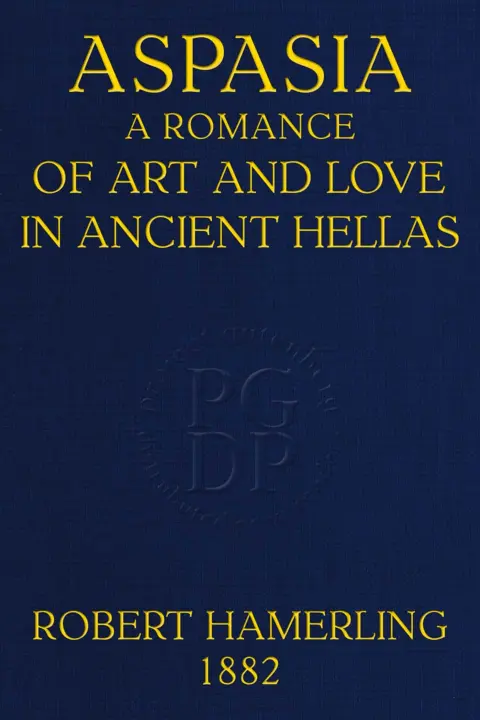
“Aspasia: A Romance of Art and Love in Ancient Hellas” by Robert Hamerling is a historical novel written in the late 19th century. The book focuses on ancient Greece, blending themes of art, politics, and romance, with central figures drawn both from historical record and imaginative reconstruction. The probable main characters include Pericles, the influential Athenian statesman, and Aspasia, the intriguing Milesian woman renowned for her beauty and intellect. The novel appears to explore the intersections of personal and national destiny, with the flourishing of Greek art, the conflicts of moral and aesthetic values, and the magnetic attraction between gifted individuals as key elements. The opening of “Aspasia” sets the scene in bustling, resurgent Athens during the age of Pericles. It introduces a cast of prominent Athenians—Pericles the statesman, Phidias the sculptor, and others in their intellectual circle—against a detailed backdrop of public life, ongoing artistic achievements, and the arrival of the Delian League’s treasure. The focus sharpens on a striking, unnamed woman (later revealed as Aspasia), whose presence stirs both fascination and artistic rivalry. The narrative moves from the city’s vibrant agora to a contest between sculptors, where debates about the nature of beauty, the divine, and the political responsibilities of art unfold. The section closes by shifting to Pericles’ household, revealing tensions between public duty and private life, as well as introducing other key figures such as Pericles’ wife Telesippe and the philosopher Anaxagoras. The early chapters establish the layered interplay between historical circumstance, artistic ambition, philosophical dialogue, and the personal entanglements at the heart of Athenian society.
Introduction adapted from the source catalogue; source summaries may be automatically generated.
Free to read · English · 191,784 words · No account needed
MAKE TIME FOR A GOOD BOOK
On by default. Untick to stop anonymous reading totals. Each page counts after 10 seconds in view. How this works.
Anonymous counting is on unless you have switched it off.
“Mine,” exclaimed another, “has procured a huge Molossian dog, which keeps guard at the door, that no lover may slip in during his absence.”
“Even the housekeeping is not entrusted to you without control!”
continued Aspasia.
“Quite true!” eagerly interposed another woman, “my husband carries the keys of the store-room about with him.”
“Don’t they go to market themselves, to buy meat and vegetables?”
exclaimed a second.
“Yes, and in time of war,” cried a third, “when the men go about armed, they can be seen in the market in suits of mail with Gorgon shields on their arms, bargaining for eggs and vegetables, or bringing meat home in a brazen helmet.”
“Since they don’t even allow you to assert your authority by the domestic hearth,” said Aspasia, “it is not surprising they don’t permit you to utter a word about public affairs. When they come from the Pnyx, where the question of peace or war has been discussed, are you even permitted to inquire what was decided there?”
“No indeed!” cried the women. “‘What is it to you?’ they say. ‘Keep to your distaff and be silent.’”
“And if you are not silent?”
“Then matters are worse!”
“My husband,” said one of the women, “repeats till I am fairly sick, the foolish old proverb: ‘Oh! woman, woman’s fairest ornament is silence.’”
“We know the proverb too! It’s in every man’s mouth,” ran through the
circle.
“Why do we have tongues?” asked one, and added: “Merely to be kissed and caressed, and talk folly.”
The women laughed, but Aspasia continued:
“They wish you to be spiritless and dull; for only then can they rule you. The moment you become clever and intelligent, conscious of the power given to women over man, that moment their tyranny would be over. You think you have done everything if you keep the house clean, wash and nurse your children, see that moths don’t gnaw the woollen garments, and the hens don’t tangle the yarn on the loom. If one of you does more and seeks to please her husband, she imagines she can gain this object with the help of a crocus-yellow robe, pointed shoes, perfume boxes, and a little cinnabar. But physical beauty and fine clothes are dangerous weapons against men only in the hands of those, who also possess a little intellect. Where could you get what I call a little intellect, except by having freer intercourse with the world, from which men shut you out as if by a brazen wall? You must in future be allowed to purify and refresh your dull minds with the vivifying atmosphere of freedom, be influenced by the external world, and receiving impressions from what is occurring there, exert a counter influence on the world and life, with the ennobling liberty of the developed feminine soul. Woman’s intellect must exert an equal influence upon the world with man’s. Then only will marriage and the whole domestic life be transformed, the arts reach their fullest development, war and all rudeness vanish from mankind. Let us form a league, a peaceful conspiracy, and take a mutual vow to do all in our power, to battle for the rights our sex requires in order to freely exert the sovereignty to which it is called.”
Your reading position is saved on this browser. Take it to another device with a library code. Reading pages adapt to text, rather than matching a printed edition.
BEHIND THE BOOK
This eBook is for the use of anyone anywhere in the United States and most other parts of the world at no cost and with almost no restrictions whatsoever. You may copy it, give it away or re-use it under the terms of the Project Gutenberg License included with this eBook or online at www.gutenberg.org. If you are not located in the United States, you will have to check the laws of the country where you are located before using this eBook. Read the source licence.
The original source file, including credits and licence, is retained by this library. Request an original-format copy at no charge. Please include the book title and Project Gutenberg identifier #76058.
KEEP YOUR CURIOSITY GOING
Cécile Tormay

Moritz Busch
Coulson Kernahan
John L. Ransom

Maurice Baring
Frances Wright