THE CLASSIC COLLECTION✦An outlaw’s diary: the CommuneCLASSIC FREE BOOKS
An outlaw’s diary: the Commune
Cécile Tormay
THE CLASSIC COLLECTION · 1882
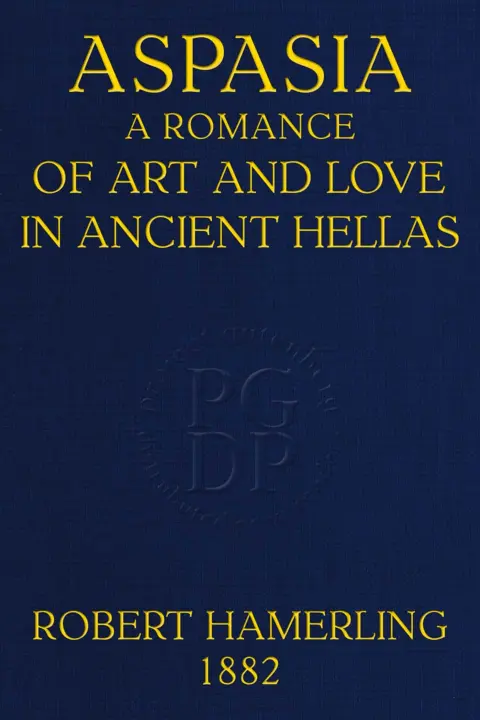
“Aspasia: A Romance of Art and Love in Ancient Hellas” by Robert Hamerling is a historical novel written in the late 19th century. The book focuses on ancient Greece, blending themes of art, politics, and romance, with central figures drawn both from historical record and imaginative reconstruction. The probable main characters include Pericles, the influential Athenian statesman, and Aspasia, the intriguing Milesian woman renowned for her beauty and intellect. The novel appears to explore the intersections of personal and national destiny, with the flourishing of Greek art, the conflicts of moral and aesthetic values, and the magnetic attraction between gifted individuals as key elements. The opening of “Aspasia” sets the scene in bustling, resurgent Athens during the age of Pericles. It introduces a cast of prominent Athenians—Pericles the statesman, Phidias the sculptor, and others in their intellectual circle—against a detailed backdrop of public life, ongoing artistic achievements, and the arrival of the Delian League’s treasure. The focus sharpens on a striking, unnamed woman (later revealed as Aspasia), whose presence stirs both fascination and artistic rivalry. The narrative moves from the city’s vibrant agora to a contest between sculptors, where debates about the nature of beauty, the divine, and the political responsibilities of art unfold. The section closes by shifting to Pericles’ household, revealing tensions between public duty and private life, as well as introducing other key figures such as Pericles’ wife Telesippe and the philosopher Anaxagoras. The early chapters establish the layered interplay between historical circumstance, artistic ambition, philosophical dialogue, and the personal entanglements at the heart of Athenian society.
Introduction adapted from the source catalogue; source summaries may be automatically generated.
Free to read · English · 191,784 words · No account needed
MAKE TIME FOR A GOOD BOOK
On by default. Untick to stop anonymous reading totals. Each page counts after 10 seconds in view. How this works.
Anonymous counting is on unless you have switched it off.
Pericles and Aspasia smiled as they listened to this peevish outburst of feeling, but Euripides, with the same sullen earnestness and emphasis, continued:
“Man’s destiny is woman. She it is who spins the thread of his
life—dark or golden.”
Pericles almost started at these words. Aspasia smiled.
“I cannot believe,” said Pericles, “that the husband is usually so dependent on the wife.”
“He will become so, if he is not now,” replied Euripides. “I see the future. Woman’s power is dangerously increasing. Do you not understand the poets and sculptors, who from ancient times have brought forward the fabulous sphinx, the mysterious woman with a soft bosom and sharp claws. The sphinx is woman. She offers us the beautiful alluring face, the beautiful alluring bosom, but the rest of her body is a beast with tiger’s paws and deadly talons!”
“Will you not make the whole feminine sex proud,” said Aspasia, “if by such comparisons you impress upon it so magnificent a character?”
“Magnificent crimes on the part of a man,” replied Euripides, “may inspire admiration, but a woman with great vices is always repulsive. A man’s sins may sometimes arise from an excess of noble qualities, but a woman’s proceed from petty, exaggerated weaknesses.”
“Yet we see women triumph with these petty weaknesses!” said Aspasia.
“Not forever!” retorted Euripides. “The avenging day comes which, with the fire of a healthy, lawful passion, extinguishes the flicker of a sickly, feeble fancy. Women are strong, only so long as we men show ourselves weak. Woman is a sphinx, it is true, but we need only cut the great claws and she becomes harmless. With uncut claws she is a tigress, when they are cut, only a cat. Our fathers did well to hold woman in check. But we innovators are too tender-hearted—including myself—we let the women’s claws grow. That is not well—”
Aspasia’s brow slightly contracted, as the peevish poet blusteringly uttered these words. Socrates noticed it and said:
“Don’t forget, friend, that you are speaking to Aspasia.”
“To Aspasia,” replied Euripides, quickly recovering himself, “but not of Aspasia. I am speaking of women. Aspasia is a woman, but women are not Aspasias.”
Socrates, as has already been mentioned, did not lack asperity in his conversations with Pericles’ wife. But he had never entered into Euripides’ tone. It is proper to state, that Euripides in talking to Aspasia, abused the whole feminine sex, but with ready courtesy excepted her, while Socrates on the contrary discharged his arrows at Aspasia personally, but willingly defended the sex in general.
Now, too, he took their part against the misogynist Euripides, by
saying:
Your reading position is saved on this browser. Take it to another device with a library code. Reading pages adapt to text, rather than matching a printed edition.
BEHIND THE BOOK
This eBook is for the use of anyone anywhere in the United States and most other parts of the world at no cost and with almost no restrictions whatsoever. You may copy it, give it away or re-use it under the terms of the Project Gutenberg License included with this eBook or online at www.gutenberg.org. If you are not located in the United States, you will have to check the laws of the country where you are located before using this eBook. Read the source licence.
The original source file, including credits and licence, is retained by this library. Request an original-format copy at no charge. Please include the book title and Project Gutenberg identifier #76058.
KEEP YOUR CURIOSITY GOING
Cécile Tormay

Moritz Busch
Coulson Kernahan
John L. Ransom

Maurice Baring
Frances Wright