THE CLASSIC COLLECTION✦An outlaw’s diary: the CommuneCLASSIC FREE BOOKS
An outlaw’s diary: the Commune
Cécile Tormay
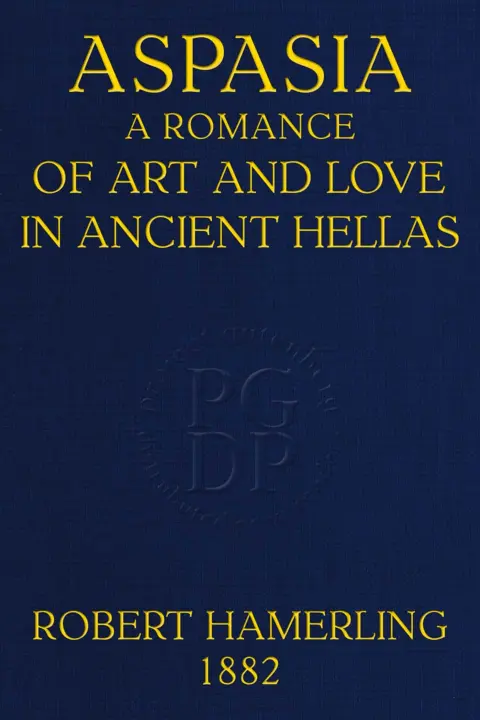
THE CLASSIC COLLECTION · 1882
“Aspasia: A Romance of Art and Love in Ancient Hellas” by Robert Hamerling is a historical novel written in the late 19th century. The book focuses on ancient Greece, blending themes of art, politics, and romance, with central figures drawn both from historical record and imaginative reconstruction. The probable main characters include Pericles, the influential Athenian statesman, and Aspasia, the intriguing Milesian woman renowned for her beauty and intellect. The novel appears to explore the intersections of personal and national destiny, with the flourishing of Greek art, the conflicts of moral and aesthetic values, and the magnetic attraction between gifted individuals as key elements. The opening of “Aspasia” sets the scene in bustling, resurgent Athens during the age of Pericles. It introduces a cast of prominent Athenians—Pericles the statesman, Phidias the sculptor, and others in their intellectual circle—against a detailed backdrop of public life, ongoing artistic achievements, and the arrival of the Delian League’s treasure. The focus sharpens on a striking, unnamed woman (later revealed as Aspasia), whose presence stirs both fascination and artistic rivalry. The narrative moves from the city’s vibrant agora to a contest between sculptors, where debates about the nature of beauty, the divine, and the political responsibilities of art unfold. The section closes by shifting to Pericles’ household, revealing tensions between public duty and private life, as well as introducing other key figures such as Pericles’ wife Telesippe and the philosopher Anaxagoras. The early chapters establish the layered interplay between historical circumstance, artistic ambition, philosophical dialogue, and the personal entanglements at the heart of Athenian society.
Introduction adapted from the source catalogue; source summaries may be automatically generated.
Free to read · English · 191,784 words · No account needed
MAKE TIME FOR A GOOD BOOK
On by default. Untick to stop anonymous reading totals. Each page counts after 10 seconds in view. How this works.
Anonymous counting is on unless you have switched it off.
“He is the first statesman,” said Diopeithes, “to whom the Athenians allow time to ruin them.”
“May the gods forbid! I am a harmless man from Eubœa, and wish the Athenians all prosperity.”
“Why dissemble?” asked Diopeithes, looking the stranger quietly in the face. “You are the Spartan, whom they turned away from the threshold of the Parthenon at the festival. I witnessed the incident and instantly recognized you, when wandering over the height of the Acropolis, you addressed a few questions to me. Ay, you are a Lacedæmonian, and when you say you wish Athens every good, you utter a falsehood. But fear nothing from me! There are Athenians whom I hate far more than the whole Spartan race. You are doubtless aware, that here in Athens the enemies of innovation, the friends of the good old times, are called friends of Sparta. Nor is it unjust.”
Almost involuntarily the Spartan extended his hand to the priest of
Erechtheus.
“Do not suppose,” continued the latter, “that the number of those, who secretly bear ill-will to Pericles in his new Athens is small. Come with me! I will show you a spot around which, no less than about the Erechtheum, implacable spirits of vengeance hover.”
With these words Diopeithes led the Spartan to the edge of the western slope of the Acropolis, and pointed to a rugged, gloomy, jagged rock, which, separated from it only by a ravine, towered opposite.
“Do you see that steep cliff, whose masses of rock seem to have been heaped together by the hands of Titans?” asked Diopeithes. “Do you see the steps hewn in the stone leading to a square chamber, which has rows of seats like the steps. From this place another flight of stairs, also cut in the rock, leads down into a deep, dark ravine, from whence gushes a black stream. In that ravine stands the sanctuary of the gloomy goddesses of vengeance, the serpent-haired Erinnyes, and the square chamber on the hill-top is the place of the meeting of the ancient, venerable tribunal, established by the gods themselves, which we call the Areopagus. The sanctuary of the Erinnyes is entrusted to the gray-haired members of this council; in their hands are placed ancient statues and relics, on which rests a mysterious obscurity, and with which is connected the welfare of the nation. They alone know what the dying sufferer Œdipus whispered into King Theseus’ ear, when on the mountain of Colonus he found in the grove of the Eumenides the goal of his long pilgrimage. The disputants, whose cause these judges decide, are placed between bleeding fragments of victims, and the magistrates take an oath, calling the most horrible curses upon themselves and their families if they determine otherwise than according to the strictest justice. After hearing the case, they silently drop their lots into two urns, the urn of mercy and the urn of death. Their duty was at first to judge intentional murder, but in former times they were also called upon to punish immorality, innovations in the government and the service of the gods, and even permitted to penetrate the inmost secrets of families, to bring hidden guilt to light. They sentenced parricides, incendiaries, those who needlessly killed a harmless beast, boys who pitilessly blinded a young bird. Permission was given them to protest against the decrees of the whole nation. Is there any cause to wonder, that this shield of ancient times, this stronghold of pious custom established on the Hill of Ares, has long been a thorn in the side of the ruler of the new Athens? Pericles was the first who ventured to defy this sacred power, limited its privileges, diminished its authority, rejected its influence in public affairs. But as the fiery arrows of the Persians flew from this very Hill of Ares against the citadel and ancient temple of the Acropolis, so now the angry glances of the Areopagites, pregnant with maledictions, rest upon Pericles’ new sanctuary.”
Your reading position is saved on this browser. Take it to another device with a library code. Reading pages adapt to text, rather than matching a printed edition.
BEHIND THE BOOK
This eBook is for the use of anyone anywhere in the United States and most other parts of the world at no cost and with almost no restrictions whatsoever. You may copy it, give it away or re-use it under the terms of the Project Gutenberg License included with this eBook or online at www.gutenberg.org. If you are not located in the United States, you will have to check the laws of the country where you are located before using this eBook. Read the source licence.
The original source file, including credits and licence, is retained by this library. Request an original-format copy at no charge. Please include the book title and Project Gutenberg identifier #76058.
KEEP YOUR CURIOSITY GOING
Cécile Tormay

Moritz Busch
Coulson Kernahan
John L. Ransom

Maurice Baring
Frances Wright