Love and liberty
Alexandre Dumas
THE CLASSIC COLLECTION · 1843
"Ascanio" by Alexandre Dumas is a historical romance written in the late 19th century. The story is set during the reign of Francis I of France and revolves around various characters, including the young artist Ascanio and his master, Benvenuto Cellini, amidst the intrigues at the French court. The narrative is rich with vivid depictions of court life, love, and artistic ambition, reflecting the complexities of the period. The opening of "Ascanio" introduces us to a young, handsome artist who is infatuated with a maiden named Colombe. Ascanio observes her from a distance, filled with longing yet unable to get her attention. He follows her, hoping to discover more about her and potentially assist her, believing she may be in a difficult situation. Concurrently, we meet Benvenuto Cellini, who is preparing to take on various challenges in his career, showing a dynamic interplay of artistic ambition, love, and the societal struggles of 16th-century France. The stage is set for a tale intertwined with romance, art, and historical intrigues.
Introduction adapted from the source catalogue; source summaries may be automatically generated.
Free to read · English · 176,715 words · No account needed
MAKE TIME FOR A GOOD BOOK
On by default. Untick to stop anonymous reading totals. Each page counts after 10 seconds in view. How this works.
Anonymous counting is on unless you have switched it off.
"Madame la Duchesse d'Etampes," Benvenuto replied, "was obliging enough to remind me that your Majesty had promised to grant me a boon in case you were content with my work."
"And the promise was made in my presence, Sire," said the constable, coming forward; "in my presence and Chancelier Poyet's. Indeed, you bade my colleague and myself remind you--"
"True, constable," interposed the king, good-humoredly; "true, if I failed to remember myself; but I remember famously, on my word! So your intervention, while it is perfectly agreeable to me, is quite useless. I promised Benvenuto to grant whatever boon he might ask when his Jupiter was cast. Was not that it, constable? Have I a good memory, chancellor? It is for you to speak, Master Cellini: I am at your service; but I beg you to think less of your own merit, which is immense, than of our power, which is limited; we make no reservations, saving our crown and our mistress."
"Very good, Sire," said Cellini, "since your Majesty is so well disposed toward your unworthy servitor, I will ask for the pardon of a poor student, who fell into a dispute upon the Quai du Châtelet with the Vicomte de Marmagne, and in self-defence passed his sword through the viscount's body."
Every one marvelled at the moderation of his request, and Madame d'Etampes most of all; she gazed at Benvenuto with an air of stupefaction, and as if she thought that she could not have heard aright.
"By Mahomet's belly!" exclaimed François, "you do well to invoke my right of pardon in that matter, for I heard the chancellor himself say yesterday that it was a hanging affair."
"Oh, Sire!" cried the duchess, "I intended to speak to you myself concerning that young man. I have had news of Marmagne, who is improving, and who sent word to me that he sought the quarrel, and the student--What is the student's name, Master Benvenuto?"
"Jacques Aubry, Madame la Duchesse."
"And the student," continued Madame d'Etampes, hurriedly, "was in no wise in the wrong; and so, Sire, instead of rebuking Benvenuto, or cavilling at him, grant his request promptly, lest he repent of having been of modest."
"Very well," said François; "what you desire shall be done, master; and as he gives twice who gives quickly,--so says the proverb,--let the order to set this young man at liberty be despatched to-night. Do you hear, my dear chancellor?"
"Yes, Sire; and your Majesty shall be obeyed."
Your reading position is saved on this browser. Take it to another device with a library code. Reading pages adapt to text, rather than matching a printed edition.
Alexandre Dumas
Alexandre Dumas & Auguste Maquet
Alexandre Dumas
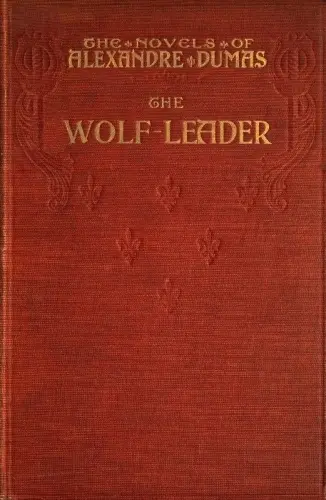
Alexandre Dumas
BEHIND THE BOOK
This eBook is for the use of anyone anywhere in the United States and most other parts of the world at no cost and with almost no restrictions whatsoever. You may copy it, give it away or re-use it under the terms of the Project Gutenberg License included with this eBook or online at www.gutenberg.org. If you are not located in the United States, you will have to check the laws of the country where you are located before using this eBook. Read the source licence.
The original source file, including credits and licence, is retained by this library. Request an original-format copy at no charge. Please include the book title and Project Gutenberg identifier #66620.
KEEP YOUR CURIOSITY GOING
Cécile Tormay

Moritz Busch
Coulson Kernahan
John L. Ransom

Maurice Baring
Frances Wright