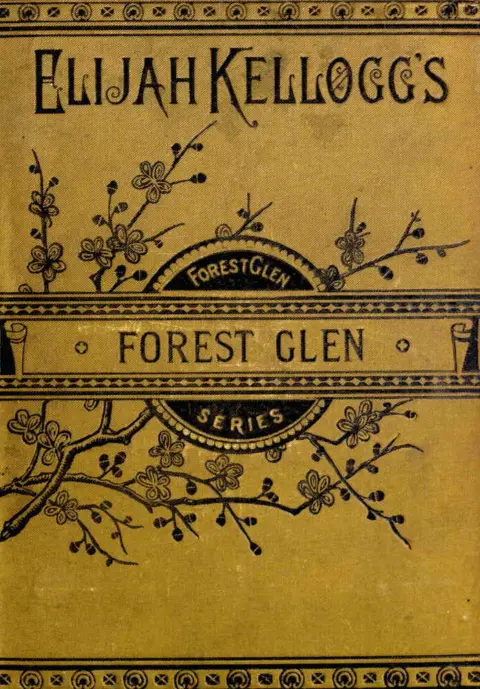
Forest Glen; or, The Mohawk’s Friendship
Elijah Kellogg
THE CLASSIC COLLECTION · 1898
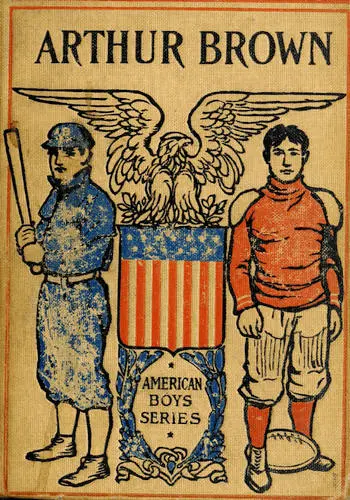
"The Young Captain" by Rev. Elijah Kellogg is a historical novel written in the late 19th century. This story follows Arthur Brown, the son of a shipmaster who perished at sea, as he navigates the challenges of life after being rescued from a shipwreck. The novel explores themes of gratitude, adventure, and the bonds formed through shared experiences, particularly as the characters confront the tumultuous backdrop of early American maritime history during a period filled with conflict and opportunity. The opening of the book introduces us to the context of Arthur Brown's story, highlighting the kindness of Captain Rhines, who saves Arthur from a precarious situation on a raft. It sets the tone for the narrative, emphasizing the concepts of gratitude and paying back debts of kindness, as Captain Rhines recognizes Arthur as the son of his benefactor, who had taken him in as a young boy. The beginnings of the plot establish intriguing elements that suggest a rich exploration of character development, as Arthur and the other young men gradually work towards their ambitions amid the historical context of maritime exploits and the relationships formed in their tight-knit community.
Introduction adapted from the source catalogue; source summaries may be automatically generated.
Free to read · English · 61,265 words · No account needed
MAKE TIME FOR A GOOD BOOK
On by default. Untick to stop anonymous reading totals. Each page counts after 10 seconds in view. How this works.
Anonymous counting is on unless you have switched it off.
One evening, just as the men were about to turn in, the captain sent Peterson ashore with some letters. In the morning, when the crew turned out, he was among the missing. There was a good fire in the fireplace,—stoves were not in use then,—the tea-kettle on, coffee pounded in the mortar, some raw potatoes and onions peeled and sliced, slices of raw pork in the frying-pan, salt beef chopped in a kid,—everything prepared to make lob-scouse.
“Was he not a drinking man?” inquired the captain.
“He was once,” said Hurd, “but left it off years ago.”
“Halloo! What’s this?” said George Hoyt.
A handkerchief lay on the fender. They brought it aboard on the point
of a boat-hook.
“It’s Peterson’s,” said Elwell; “there’s his name on it.”
“It’s just as I thought,” said the captain. “He drank last night; that waked up the old appetite, and as soon as he turned out this morning he went for more, and fell off the gangway plank.”
A grappling was procured ashore, and the crew, under the direction of the captain, who was deeply moved, grappled for the body the greater part of the day, without success. In the meanwhile, the mate was making inquiries on shore.
“The tide runs strong here,” said the captain; “it has swept him to
sea.”
“Poor Jim has gone, boys,” said Eaton, as, weary and dispirited, they
sat down to supper.
“Anybody wouldn’t have thought,” said Savage, “he’d a broke through, after being a steady man so long. The captain feels bad, but he’s done all a man could do.”
“Jim Peterson,” said Eaton, brushing away a tear with the back of his hand, “was a black fellow, raal coal black, too,—a Guinea nigger, if you please; but if he’d been washed overboard, I’d a risked my life to save him quicker than for any shipmate I ever had; and I’m not all the one would have done it.”
“That’s so, Dan. I’m sure I never thought anything about his color.”
“But I don’t believe anything about his getting drunk (though I’ve no doubt the captain thinks so); for I’ve seen him tried and tempted hard to weather, by old shipmates, time and time again. He went ashore to get something to put in the stew; a sober man might make a misdeal in a hurry. No power on earth will ever make me believe Jim was drunk.”
“Then why didn’t he sing out?”
Your reading position is saved on this browser. Take it to another device with a library code. Reading pages adapt to text, rather than matching a printed edition.
Elijah Kellogg
Elijah Kellogg
Elijah Kellogg
Elijah Kellogg
BEHIND THE BOOK
This eBook is for the use of anyone anywhere in the United States and most other parts of the world at no cost and with almost no restrictions whatsoever. You may copy it, give it away or re-use it under the terms of the Project Gutenberg License included with this eBook or online at www.gutenberg.org. If you are not located in the United States, you will have to check the laws of the country where you are located before using this eBook. Read the source licence.
The original source file, including credits and licence, is retained by this library. Request an original-format copy at no charge. Please include the book title and Project Gutenberg identifier #48904.
KEEP YOUR CURIOSITY GOING
Cécile Tormay

Moritz Busch
Coulson Kernahan
John L. Ransom

Maurice Baring
Frances Wright