
The Book of the Native
Charles G. D., Sir Roberts
THE CLASSIC COLLECTION · 1896
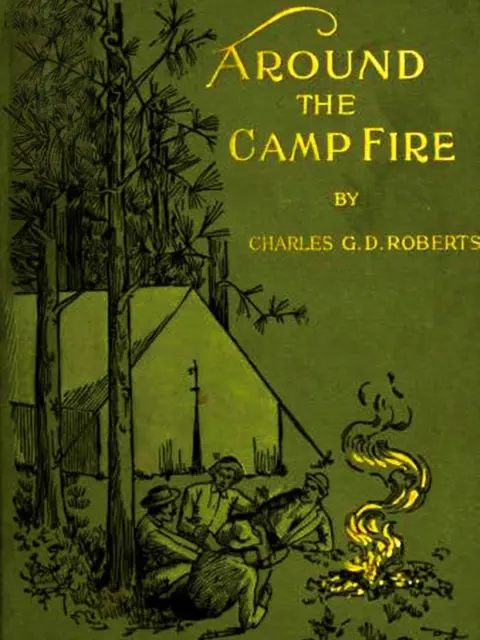
"Around the Camp-fire" by Charles G. D. Roberts is a collection of outdoor adventure stories written in the late 19th century. The book focuses on a group of canoeists embarking on a journey into the wilderness of New Brunswick, where they encounter various wildlife and engage in story-telling around the campfire. The camaraderie of the main characters—Stranion, Magnus, Queerman, Sam, Ranolf, and the narrator—underscores the themes of friendship and adventure. The opening of the book introduces the six canoeists as they escape the summer heat of Fredericton in search of the wilderness. They prepare for their journey to the Squatooks with details of their canoeing gear and the route they plan to take. On their first night camping near the Madawaska River, the group shares stories, with Stranion recounting a particularly harrowing childhood encounter with a panther at the parsonage, showcasing the blend of humor, suspense, and the natural beauty that will permeate their adventures. As they settle in for the night, each character contributes to the storytelling tradition by sharing tales of their past experiences in the wild, setting the tone for the narratives that will follow in the subsequent chapters.
Introduction adapted from the source catalogue; source summaries may be automatically generated.
Free to read · English · 84,722 words · No account needed
MAKE TIME FOR A GOOD BOOK
On by default. Untick to stop anonymous reading totals. Each page counts after 10 seconds in view. How this works.
Anonymous counting is on unless you have switched it off.
“Well,” went on Stranion, unruffled, “since the panthers got after me so early, it’s not much cause for wonder if they’ve kept it up.”
At this moment a strange, unearthly, gurgling cry broke the night’s stillness, and we started involuntarily.
“There is one of mine ancient enemies now,” said Stranion. “I’m sure to fall foul of him tomorrow, and one or the other of us will rue the day!”
“Well,” said Sam, “we all know it won’t be Stranion!”
The story done, I rose and replenished the fire, while Magnus passed around a tin of hot coffee. A whippoorwill,—
“Threshing the summer dusk
With his gold flail of song,”
was heard in a hillside thicket, and Queerman cried,—
“Listen to him, boys!”
“No,” said Stranion; “we’ll now give our very best attention while Sam tells us one of his old bear stories.”
“Indeed,” said Sam with an indignant sniff; “I’ll tell you one I never told before, and a true one at that. Now don’t interrupt, for I intend to do it up in a somewhat literary fashion, to save the Old Man trouble in writing it down.”
“Thank you kindly,” said I. I was the official scribe of the party, and familiarly known as the Old Man, or simply O. M., for short.
continued Sam, “is the title of my narrative. It was on the upper waters of the Oromocto River that the case of Bear vs. Birch-bark was decided. Thither had Alec Hammond and I betaken ourselves in our canoe to kill some Oromocto trout.
“The Oromocto is for the most part much less rapid than other trout rivers of New Brunswick; in fact, for long distances its current is quite sluggish, a characteristic finely suited to our indolence of mood. Paddling quietly, or poling when the water was swift, we soon left behind us all traces of civilization. Instead of beautiful open meadow shores shaded with here and there a mighty elm or ash, we entered the ruggedest parts of the original wilderness, where the soil was too barren and stony to tempt even a squatter, and where the banks were clothed with dark hemlocks to the water’s edge. Sometimes these sombre woods gave back a space, and a wild confusion of many kinds of trees took their place,—pines, ash, birch, basswood, larch, and beech, mixed with fallen trunks and staring white bowlders. Sometimes, again, in the midst of the most impenetrable forest a delightful little patch of interval, or dry waterside meadow, would open up before us, inviting us to pitch our tent amid its deep, soft grasses. Scattered through the grass were clumps of tall wild lilies, their orange blossoms glowing amid the green; and around the stately heads of the wild-parsnips, which made the air heavy with rich perfume, fluttered and clung the silver-throated bobolinks. What wonder we rested when we came to these wilderness gardens whose possession there was none to dispute with us! We found that as a rule we might count upon an ice-cold brook near by. Wherever such brooks flowed in, there would be a deep pool, or an eddy covered with foam-clusters, or a pebbly, musical rapid, which meant a day of activity for our rods and reels and flies.
Your reading position is saved on this browser. Take it to another device with a library code. Reading pages adapt to text, rather than matching a printed edition.
Charles G. D., Sir Roberts

Charles G. D., Sir Roberts

Charles G. D., Sir Roberts
Charles G. D., Sir Roberts
BEHIND THE BOOK
This eBook is for the use of anyone anywhere in the United States and most other parts of the world at no cost and with almost no restrictions whatsoever. You may copy it, give it away or re-use it under the terms of the Project Gutenberg License included with this eBook or online at www.gutenberg.org. If you are not located in the United States, you will have to check the laws of the country where you are located before using this eBook. Read the source licence.
The original source file, including credits and licence, is retained by this library. Request an original-format copy at no charge. Please include the book title and Project Gutenberg identifier #48986.
KEEP YOUR CURIOSITY GOING
Coulson Kernahan

Maurice Baring
Frances Wright
Cécile Tormay

Frederic Jesup Stimson

W. H. P. (William Henry Pope) Jarvis