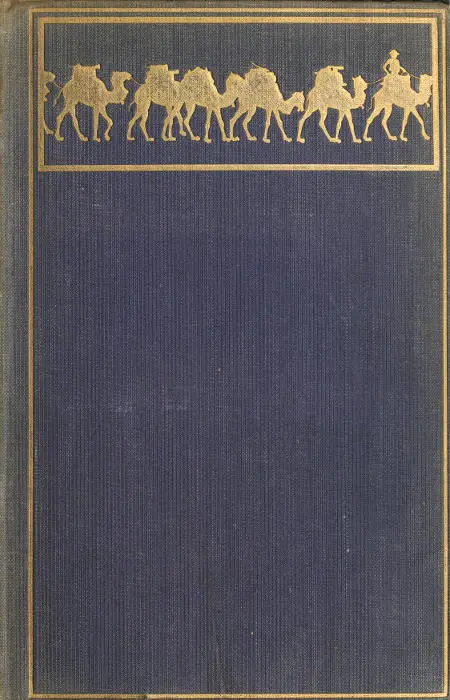
The story of my struggles: the memoirs of Arminius Vambéry, Volume 2
Ármin Vámbéry
THE CLASSIC COLLECTION · 1886
"Árminius Vambéry, his life and adventures" by Ármin Vámbéry is an autobiographical account written in the late 19th century. The book captures the life and travels of Vambéry, a linguist and adventurer, detailing his experiences and explorations across Europe and Asia. The narrative explores his unique journey from a modest childhood in Hungary to becoming a prominent figure in exploration and cultural exchange, particularly in the context of Central Asia. The beginning of the narrative introduces Vambéry's early life, showcasing his struggles with poverty and physical limitations but emphasizing his relentless spirit and determination to explore the world. In the introductory chapter, he expresses a profound longing for foreign lands and recounts his first steps toward achieving this dream, including the pivotal moment he discards his crutch, symbolizing his desire for independence and adventure. Vambéry illustrates the curiosity that propelled him towards Asia, indicating a blend of personal aspirations and cultural connections to the East, where he aimed to immerse himself in the customs and languages he had been studying.
Introduction adapted from the source catalogue; source summaries may be automatically generated.
Free to read · English · 98,367 words · No account needed
MAKE TIME FOR A GOOD BOOK
On by default. Untick to stop anonymous reading totals. Each page counts after 10 seconds in view. How this works.
Anonymous counting is on unless you have switched it off.
It is true that there is good cause here for fear and caution, but the absurd pusillanimity of the Iranians is the main source of their misfortunes. Their caravans are wont to assemble here in large masses. They are protected by soldiers with drawn swords, and cannons with their matches burning. Often their numbers are very considerable. No sooner, however, do a few desperate desert robbers make their appearance than caravan and escort alike lose their courage and presence of mind, fling away their weapons, offer all their property to the enemy, and putting out their hands to be fettered, allow themselves to be carried away into painful, often lifelong, captivity and slavery. I rode from station to station with my Tartar for my only escort--a journey which no European had ever made before me. Of course I was warned not to do so. But in my Turkoman dress what cared I for Turkoman robbers? As for my Tartar, he looked wistfully around in hope that he might espy a countryman of his. If we had fallen in with some of those Sunnite sons of the desert, travelling as we were in a Shi-ite land, I believe that so far from injuring a mollah of their own faith, they would have rewarded us richly for the fatiha which we would have bestowed on them. For four days I wandered in the steppe; once in the dusk of the evening I lost my way, yet not a single Turkoman crossed my path. I met no one except a few scared Persian travellers.
The reader will easily imagine the eagerness with which the traveller's eyes look out for the gardens which surround Shahrud. As this town is situated at the foot of a mountain, it is visible for miles off on the plain. The wearied horseman thinks he has already reached the end of his day's journey, when it is in reality five German miles distant. The road is as monotonous as can possibly be imagined. It affords nothing whatsoever to attract the eye. In summer, owing to utter want of water, it must be very unpleasant to travel over it. Unfortunately I had mistaken a village which lies in the vicinity of Shahrud for the town itself, which at the point of the road was concealed in a hollow. My anger when I discovered my mistake may be easily conceived. It was in truth no joke to have added to the long day's journey a good half-hour's additional ride. I had mounted my horse before twelve o'clock the night before, and it was already past six o'clock in the evening, when I at last gained the badly paved streets of Shahrud, and dismounted in one of its principal caravansaries. My poor beast was utterly exhausted, and I myself scarcely less so. But as I looked around the square of the caravansary, how great was my astonishment at beholding a son of Britain, yes, actually an unmistakable living Englishman, with a genuine John Bull physiognomy, sitting at the door of one of the cells. An Englishman alone here in Shahrud--that is certainly a rarity, almost a miracle. I rushed towards him. He also, although apparently absorbed in deep thought, regarded me with wondering eyes. My Bokhariot dress, and my evident fatigue had attracted his attention. Who knows what he thought of me then? For myself, in spite of my extreme exhaustion, I hastened as well as I could to this extraordinary rencontre. I dragged myself towards him, and staring at him with weary eyes, addressed him with a "How are you, sir?" He appeared not to have understood me, so I repeated my question. At this he sprang from his seat in surprise, the greatest astonishment depicted in his countenance, while he gave vent to his feelings with "Well I----. Where have you learned English?" asked he, stammering with emotion; "perhaps in India." I should have liked to have screwed up his curiosity a peg or two higher, and at any other time might have enjoyed a mystification amazingly. But my long ride had so thoroughly tired me out that I had not the spirits required for carrying on the joke. I made a plain confession of what and who I was. His joy was indescribable. To the great astonishment of my Tartar, who until now had always regarded me as a true believer, he embraced me and took me into his quarters. We spent a famous evening together, and I allowed myself to be induced to rest there the whole of next day; for it did the poor fellow no end of good to be able to speak of the West after six months' separation from European society. A few months after our strange meeting he was robbed and murdered on the road. His name was Longfield, and he was agent for a large Lancashire house, for which he had to purchase cotton. He had to carry a great deal of money about him, and unfortunately forgot, as do too many, that Persia is not the civilized land which the glowing representations of its lying agents in Europe would lead us to suppose, and that one cannot place much reliance on passports and royal firmans.
Your reading position is saved on this browser. Take it to another device with a library code. Reading pages adapt to text, rather than matching a printed edition.
Ármin Vámbéry
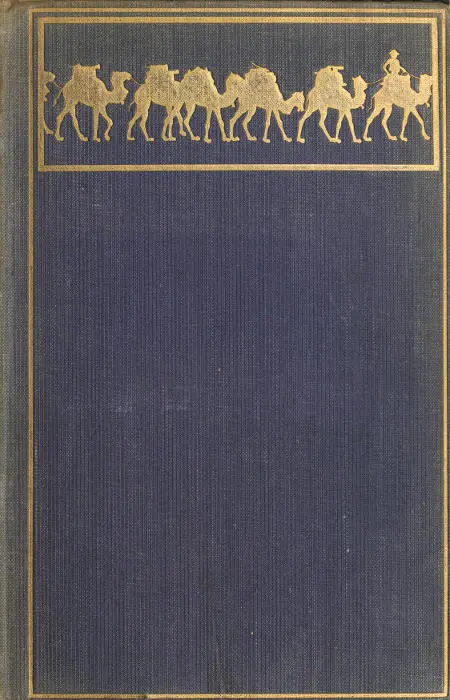
Ármin Vámbéry
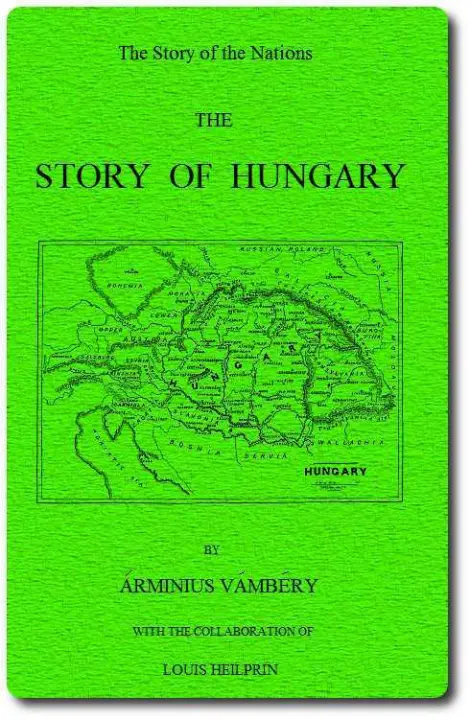
Ármin Vámbéry
Ármin Vámbéry
BEHIND THE BOOK
This eBook is for the use of anyone anywhere in the United States and most other parts of the world at no cost and with almost no restrictions whatsoever. You may copy it, give it away or re-use it under the terms of the Project Gutenberg License included with this eBook or online at www.gutenberg.org. If you are not located in the United States, you will have to check the laws of the country where you are located before using this eBook. Read the source licence.
The original source file, including credits and licence, is retained by this library. Request an original-format copy at no charge. Please include the book title and Project Gutenberg identifier #40163.
KEEP YOUR CURIOSITY GOING
Wilfrid Scawen Blunt
Wilfrid Scawen Blunt

E. W. (Edgar Watson) Howe
Francis Greenleaf Allinson & Anne C. E. (Anne Crosby Emery) Allinson
Cyrenus Cole

John Martineau