THE CLASSIC COLLECTION✦Less than kinCLASSIC FREE BOOKS
Less than kin
Alice Duer Miller
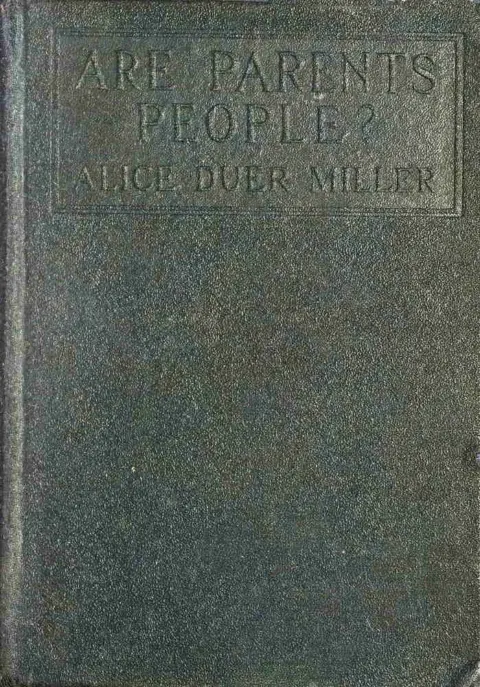
THE CLASSIC COLLECTION · 1914
"Are Parents People?" by Alice Duer Miller is a novel written in the early 20th century. The story centers around Lita Hazlitt, a young girl navigating her complicated relationships with her divorced parents, who exhibit a deep-seated animosity toward each other. Set in a boarding school context, the book explores themes of family dynamics, childhood innocence, and the emotional turmoil faced by a child caught between two feuding parents. The opening of the novel introduces Lita during a school chapel service, where she grapples with the tension of her parents' presence at the school. Her mother and father, despite their long-standing divorce, harbor unresolved feelings toward each other, creating a difficult situation for Lita, who has to navigate her loyalties. As tensions between her parents rise, Lita’s reflections reveal her feelings of obligation and confusion about affection, showcasing her struggle to assert her own identity amid the emotional manipulations of her parents. Through Lita's experiences, the novel promises an exploration of the complexities of love, loyalty, and the pressures of parental expectation.
Introduction adapted from the source catalogue; source summaries may be automatically generated.
Free to read · English · 78,788 words · No account needed
MAKE TIME FOR A GOOD BOOK
On by default. Untick to stop anonymous reading totals. Each page counts after 10 seconds in view. How this works.
Anonymous counting is on unless you have switched it off.
Hearing a note of pitiable weakness in her voice, he offered to come in
himself.
He came that afternoon about three--an excellent time, for Lita was upstairs and Dacer was occupied with office hours. Mrs. Hazlitt sent Freebody to ask her daughter to come down, while she apologized to her former husband for troubling him again.
"But the fact is," she said, "turning a young man out of the house--that really is a father's job."
"Even if it isn't the father's house?"
"It's no affair of Doctor Dacer's whose house it is," answered Mrs. Hazlitt with dignity. "You see, a mother's relation with a daughter is too intimate, too tender--"
"I hope a father's may be both."
"I suppose it might, but it's not like a mother's. She respects you deeply, Jim. I've brought her up to that."
"Have you, Alita?"
A hint of skepticism in his voice wounded Mr. Hazlitt.
"Of course I have," she answered. "Why, what do you mean? Are you trying to suggest--how unjust! Lita," she added, as her daughter entered, "have I ever said a word that could in any way reflect on your father? Haven't I always brought you up to respect him?"
Lita looked at them reflectively. She had, in her time, told a great many untruths for their sake. Now that she had them here together, she rather thought it would be a good idea to tell them the truth. As she paused, her mother repeated her question even more emphatically: "Have I ever said anything to prejudice you against your father?"
"Why, of course you have, mother," she said. Her father gave a short, bitter laugh, and she turned on him. "And so have you, Pat--only not so often as mother."
"How can you be so disloyal?" cried her mother, her eyes getting larger
than ever.
"How can I be anything else? You two make me disloyal."
"Remember you are speaking to your mother," said Hazlitt protectingly.
"And to you, too, Pat," answered his daughter calmly. "You've each wanted me to hate the other one, and you've both been as open about it as you dared to be. It was always like giving mother a Christmas present if I said anything disagreeable about you. And your cold gray eye would light up, Pat, if I criticized anything about her."
"Divorced or not, we are your parents, please remember," said Hazlitt.
"You don't always remember it yourselves," the girl answered. "Parents! You seem sometimes as if you were just two enemies trying to injure each other through me."
Mrs. Hazlitt was already standing, and she drew a step nearer her
former husband.
Your reading position is saved on this browser. Take it to another device with a library code. Reading pages adapt to text, rather than matching a printed edition.
Alice Duer Miller
Alice Duer Miller
Alice Duer Miller
Alice Duer Miller
BEHIND THE BOOK
This eBook is for the use of anyone anywhere in the United States and most other parts of the world at no cost and with almost no restrictions whatsoever. You may copy it, give it away or re-use it under the terms of the Project Gutenberg License included with this eBook or online at www.gutenberg.org. If you are not located in the United States, you will have to check the laws of the country where you are located before using this eBook. Read the source licence.
The original source file, including credits and licence, is retained by this library. Request an original-format copy at no charge. Please include the book title and Project Gutenberg identifier #64917.
KEEP YOUR CURIOSITY GOING
Coulson Kernahan

Maurice Baring
Frances Wright
Cécile Tormay

Frederic Jesup Stimson

W. H. P. (William Henry Pope) Jarvis