THE CLASSIC COLLECTION✦Less than kinCLASSIC FREE BOOKS
Less than kin
Alice Duer Miller
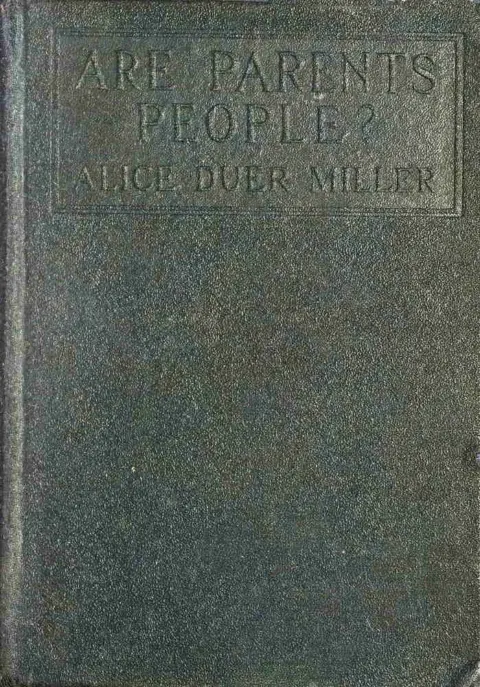
THE CLASSIC COLLECTION · 1914
"Are Parents People?" by Alice Duer Miller is a novel written in the early 20th century. The story centers around Lita Hazlitt, a young girl navigating her complicated relationships with her divorced parents, who exhibit a deep-seated animosity toward each other. Set in a boarding school context, the book explores themes of family dynamics, childhood innocence, and the emotional turmoil faced by a child caught between two feuding parents. The opening of the novel introduces Lita during a school chapel service, where she grapples with the tension of her parents' presence at the school. Her mother and father, despite their long-standing divorce, harbor unresolved feelings toward each other, creating a difficult situation for Lita, who has to navigate her loyalties. As tensions between her parents rise, Lita’s reflections reveal her feelings of obligation and confusion about affection, showcasing her struggle to assert her own identity amid the emotional manipulations of her parents. Through Lita's experiences, the novel promises an exploration of the complexities of love, loyalty, and the pressures of parental expectation.
Introduction adapted from the source catalogue; source summaries may be automatically generated.
Free to read · English · 78,788 words · No account needed
MAKE TIME FOR A GOOD BOOK
On by default. Untick to stop anonymous reading totals. Each page counts after 10 seconds in view. How this works.
Anonymous counting is on unless you have switched it off.
"I'm sure it's true you lead a great, free, ramping life, Norma," said
her aunt.
"Yes, and that's why I'm so healthy," answered Norma, and she danced a little on her flat-heeled shoes. They were large shoes, but then, she was a large woman.
Aunt Georgy was surprised to find herself a partisan. It annoyed her to hear her favorite niece dismissed as attractive to other men but not to this reader of human hearts.
She said almost pettishly, "Evie is healthy, too--one of the healthiest
people I ever knew."
"I bet she has dreams," said Norma.
"I doubt it."
"Everybody dreams, Aunt Georgy," said Norma, really astonished at her aunt's ignorance of the facts of life. "If you don't remember your dreams, that only shows that they are so awful that you don't allow them to come up into your conscious at all."
Aunt Georgy was opening her mouth to contradict, but found that Lisburn
was speaking.
"That's the theory, Miss Hadley," he said, less positively than Norma; "that everyone dreams, and that our dreams represent our unfulfilled and unacknowledged desires. A type like--like Miss--"
"Like Evie," said Norma, a foe to last names.
"That type," Lisburn went on--"so restrained, so inhibited, so what is called well-bred, is particularly likely to have dreams and almost certain to be unwilling to admit having them."
He stopped as a slight sound at the door that led to the garden made them all turn. Little Evie was standing there--had evidently been standing there for some time. She had on a sky-blue dress, a large childish hat and her arms were full of cherry blossoms. She looked more than usually like a fashion plate of the '40's.
Norma immediately shouted at her, "You do dream, don't you, Evie? Be honest for once in your life."
Aunt Georgy, who was herself an honest person, was aware of an utterly unsuppressed wish that, whatever the facts were, Evie would say that she had never had a dream in her life. Instead the girl, with her blue eyes fixed on Lisburn, was nodding slowly.
"I've begun to dream lately," she said in a low tone.
Norma was delighted.
"I knew it," she said. "I'd have bet on it. It's extraordinary how one gets to know these things. Tell us what your dream is about, Evie."
"Mercy!" exclaimed Aunt Georgy. "Isn't a person allowed more than one
dream nowadays?"
Evie sank down on the sofa at her aunt's feet.
"Mine's always the same," she murmured.
"Ah," said Lisburn, "a recurrent dream." He looked at her with
interest. "Does it trouble you?"
Your reading position is saved on this browser. Take it to another device with a library code. Reading pages adapt to text, rather than matching a printed edition.
Alice Duer Miller
Alice Duer Miller
Alice Duer Miller
Alice Duer Miller
BEHIND THE BOOK
This eBook is for the use of anyone anywhere in the United States and most other parts of the world at no cost and with almost no restrictions whatsoever. You may copy it, give it away or re-use it under the terms of the Project Gutenberg License included with this eBook or online at www.gutenberg.org. If you are not located in the United States, you will have to check the laws of the country where you are located before using this eBook. Read the source licence.
The original source file, including credits and licence, is retained by this library. Request an original-format copy at no charge. Please include the book title and Project Gutenberg identifier #64917.
KEEP YOUR CURIOSITY GOING
Coulson Kernahan

Maurice Baring
Frances Wright
Cécile Tormay

Frederic Jesup Stimson

W. H. P. (William Henry Pope) Jarvis