
Last letters from the living dead man
David Patterson (Spirit) Hatch
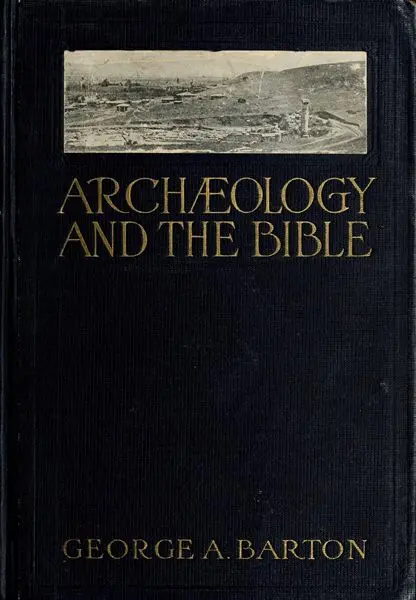
THE CLASSIC COLLECTION · 1916
"Archæology and the Bible" by George A. Barton is a scholarly work that intertwines archaeology with biblical studies, written in the early 20th century. The book systematically explores how archaeological findings illuminate and enrich our understanding of the Bible, particularly in the context of the biblical lands including Egypt and Palestine. Barton aims to provide valuable insights into the historical backdrop of scripture, offering translations of ancient texts that confirm or enhance biblical narratives. The opening of the book introduces the significance of archaeological exploration over the previous century, which has dramatically changed perceptions of biblical history. The author explains that discoveries in regions like Egypt and Palestine have uncovered artifacts and texts that bring clarity and vividness to biblical accounts, especially those related to key figures and events. Barton outlines his intention to collate this vast array of findings into a single volume that serves as a comprehensive reference for pastors and educators, while simultaneously inviting wider readership to appreciate the depth and context that archaeology adds to the biblical text.
Introduction adapted from the source catalogue; source summaries may be automatically generated.
Free to read · English · 195,167 words · No account needed
MAKE TIME FOR A GOOD BOOK
On by default. Untick to stop anonymous reading totals. Each page counts after 10 seconds in view. How this works.
Anonymous counting is on unless you have switched it off.
Unto the land of No-return, the land of darkness, Ishtar, the daughter of Sin, determined to go, The daughter of Sin determined to go, Unto the house of darkness, the dwelling of Irkalla, 5. Unto the house whose enterer never comes out, Along the way whose going has no return, Unto the house whose enterer is deprived of light, Where dust is their food, their sustenance, clay, Light they do not see, in darkness they dwell; 10. They are clothed, like birds, with a covering of wings. Over door and bolt the dust is spread. Ishtar, when she arrived at the gate of the land of No-return To the keeper of the gate addressed a word: “Keeper of the waters, open thy gate! 15. Open thy gate! Let me enter! If thou dost not open thy gate, that I may enter, I will shatter the door, I will break the bolt, I will shiver the threshold, break down the doors; I will bring up the dead to devour the living!” 20. The keeper opened his mouth and spake, He said to Ishtar, the great: “Stay, my lady, do not destroy it, Let me go, let me announce thy name to Queen Allat.” The keeper went in, he spake [to Allat]: 25. “This water thy sister, Ishtar, [has crossed] As a servant of great powers [she comes].” When Allat heard this, Like the cutting of the tamarisk [was her laugh], 30. Like the crackling of reeds. [She cried]: “What has turned her mind to me? .......... These waters I with .......... For food I will eat clay, for drink I will drink .......... I will weep for men who have abandoned their wives, 35. I will weep for maidens torn from their husbands’ bosoms, I will weep for children snatched away before their time. Go, keeper, open thy gate to her; Do to her according to the ancient custom.” The keeper went and opened to her his gate: 40. “Enter, my lady; the under-world is glad, The palace of the land of No-return rejoices at thy coming.” He brought her through the first gate, made it wide, he took the great crown from her head. “Why, O keeper, hast thou taken the great crown from my head?” “Enter, my lady, such are the commands of Allat.” 45. He brought her through the second gate, he made it wide, he took the ornaments from her ears. “Why, O keeper, hast thou taken the ornaments from my ears?” “Enter, my lady, for such are the commands of Allat.” He brought her through the third gate, he made it wide, he took the necklace from her neck. “Why, O keeper, hast thou taken the necklace from my neck?” 50. “Enter, O lady, for such are the commands of Allat.” He brought her through the fourth gate, he made it wide, he took the ornaments from her breasts. “Why, O keeper, hast thou taken the ornaments from my breast?” “Enter, my lady, for such are the commands of Allat.” He brought her through the fifth gate, he made it wide, he took the girdle with birth-stones from her waist. 55. “Why, O keeper, hast thou taken the girdle with birth-stones from my waist?” “Enter, my lady, for such are the commands of Allat.” He brought her through the sixth gate, he made it wide, he took the bracelets from her hands and feet. “Why, O keeper, hast thou taken the bracelets from my hands and feet?” “Enter, my lady, for such are the commands of Allat.” 60. He brought her through the seventh gate, he made it wide, he took the breech-cloth from her body. “Why, O keeper, hast thou taken the breech-cloth from my body?” “Enter, my lady, for such are the commands of Allat.” When Ishtar had gone down to the land of No-return, Allat saw her and became enraged at her. 65. Ishtar took no heed; she sat down above her. Allat opened her mouth and spake, To Namtar, her messenger, she addressed a word: “Go, Namtar, lock [her in my palace], Bring out against her sixty diseases .......... Ishtar, 70. Disease of the eyes against her [eyes], Disease of the side against her [sides], Disease of the feet against her [feet], Disease of the heart against [her heart], Disease of the head against [her head], 75. Against her altogether ..........” After Ishtar, the lady, [went down to the land of No-return] The bull with the cow did not unite, nor the ass approach the she-ass; The man in the street no more approached the maid; The man slept in his chamber, 80. The maid slept by her oven. Papsukal, messenger of the great gods, was sad of countenance before [Shamash], Clad in mourning, wearing foul garments. Then went Shamash into the presence of Sin, his father; he wept, Before Ea, the king, his tears flowed: 85. “Ishtar has gone down into the earth; she has not come up. Since Ishtar went down to the land of No-return, The bull with the cow does not unite, nor the ass approach the she-ass; The man no more approaches the maid in the street; The man sleeps in his chamber, 90. The maid sleeps by her oven. Then Ea in the wisdom of his heart created a man, He created Asushunamir, the priest. “Go, Asushunamir, to the gate of the land without return set thy face, The seven gates of the land without return shall be opened before thee, 95. Allat shall behold thee, and shall rejoice in thy presence. When her heart has been appeased, and her soul revived, Conjure her also by the name of the great gods. Turn thy thoughts to the skin which pours forth life: ‘O lady, give me the skin which pours forth life, that I may drink water from it.’” 100. When Allat heard this, She beat upon her thigh, she bit her finger: “Thou hast uttered a wish not to be wished. Go, Asushunamir; I curse thee with a great curse. The sewage of the gutters of the city shall be thy food, 105. The cesspools of the city shall be thy drink, The shadow of the walls shall be thy dwelling, The thresholds shall be thy habitation, Confinement and privation shall shatter thy strength.” Allat opened her mouth and spoke, 110. To Namtar, her messenger, she addressed the word: “Go, Namtar, knock at the palace of justice, Tap at the thresholds of gleaming (?) stones, Bring out the Annunaki,[602] seat them on golden thrones, Sprinkle Ishtar with the water of life and bring her before me.” 115. Namtar went, he knocked at the palace of justice, He tapped at the thresholds of gleaming (?) stones, He brought forth the Annunaki, he seated them on golden thrones, He sprinkled Ishtar with the water of life, he brought her forth. He brought her out of the first gate, he restored to her the breech-cloth of her body; 120. He brought her through the second gate, he restored to her the bracelets of her hands and feet; He brought her through the third gate, he restored to her the girdle with birth-stones for her waist; He brought her through the fourth gate, he restored to her the ornaments of her breasts; He brought her through the fifth gate, he restored to her the necklace of her neck; He brought her through the sixth gate, he restored to her the ornaments of her ears; 125. He brought her through the seventh gate, he restored to her the crown of her head. (End of legend. The priest begins:) “If she does not grant to thee her release, turn to her again; To Tammuz, the beloved of her youth, Pour out water, offer good oil, With red clothing clothe him, let him play a flute of lapis lazuli. 130. Let the joyful maidens turn, ..................... When Belili has established her ritual, With precious stones her bosom is filled.” The wailing for her brother she heard; Belili interrupted the ritual of .... With precious stones she filled the front of .......... (Voice from the dead.) 135. “My only brother, harm me not; On the day of Tammuz, play for me the lapis lazuli flute, play the Santu-flute with it, When the wailing men and women play with it, Let the dead return, let them smell incense.”
Your reading position is saved on this browser. Take it to another device with a library code. Reading pages adapt to text, rather than matching a printed edition.
BEHIND THE BOOK
This eBook is for the use of anyone anywhere in the United States and most other parts of the world at no cost and with almost no restrictions whatsoever. You may copy it, give it away or re-use it under the terms of the Project Gutenberg License included with this eBook or online at www.gutenberg.org. If you are not located in the United States, you will have to check the laws of the country where you are located before using this eBook. Read the source licence.
The original source file, including credits and licence, is retained by this library. Request an original-format copy at no charge. Please include the book title and Project Gutenberg identifier #43070.
KEEP YOUR CURIOSITY GOING
David Patterson (Spirit) Hatch

David Patterson (Spirit) Hatch

David Patterson (Spirit) Hatch

Edwin Abbott Abbott

Richard Watson
T. G. (Theophilus Gould) Steward