THE CLASSIC COLLECTION✦A Moslem seeker after GodCLASSIC FREE BOOKS
A Moslem seeker after God
Samuel Marinus Zwemer
THE CLASSIC COLLECTION · 1900
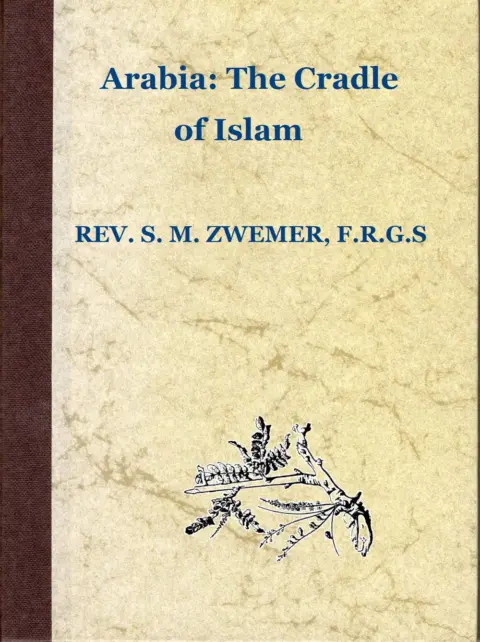
"Arabia: The Cradle of Islam" by Samuel Marinus Zwemer is a historical account written in the late 19th century. The book explores the geography, people, and politics of the Arabian Peninsula, alongside an examination of Islam and the missionary work associated with it. The author aims to enlighten readers about the complexities and historical significance of Arabia as the birthplace of Islam and to emphasize the need for missionary efforts in the region. The opening of the work sets the stage for the importance of Arabia not only within the context of Islamic history but also as a geographic region of interest. Zwemer discusses the misconceptions surrounding Arabia, highlighting its rich diversity in terms of landscape and climate. He elaborates on how Arabia has been historically perceived as a vast desert yet emphasizes the fertile regions within it, particularly in Yemen. The introduction sketches the historical figures of missionaries preceding him and outlines the existing gaps in Western knowledge about the area, foreshadowing the detailed investigation into Arabia's cultural and religious heritage that follows.
Introduction adapted from the source catalogue; source summaries may be automatically generated.
Free to read · English · 140,876 words · No account needed
MAKE TIME FOR A GOOD BOOK
On by default. Untick to stop anonymous reading totals. Each page counts after 10 seconds in view. How this works.
Anonymous counting is on unless you have switched it off.
[83] He speaks of it as follows in his Histoire des Langues Semitques, p. 342 “Cette langue, auparavant inconnue, se montre à nous soudainement dans toute sa perfection, avec sa flexibilite, sa richesse infinie, tellemen-complete, en un mot, que depnis ce temps jusqu’a nos jours elle n’a subi ancune modification importante. Il n’y a pour elle ni enfance, ni vieillesse; une fois qu’on a signalé son apparition et ses prodijieuses cont quêtes, tout est dit sur son compte. Je ne sais si l’on trouverait un autre exemple d’un idiome entrant dans le monde comme celui-ci, sans état archaïque, sans degrés intermediaires ni tatonnements.”
[84] Von Kremer, Guidi, Hommel.
[85] Sayce, Sprenger, Schrader, De Goeje, Wright.
[86] Assyrian Grammar, p. 13.
[87] An account of this language or dialect was given by Surgeon H. J. Carter in Journal Roy. Asiat. Soc., July, 1847.
[88] Lansing.
[89] Found in the Edinburgh Review for July, 1866, article “Mohammed.”
[90] “It would take a long list to exhaust the religious, literary and scientific contributions to the Arabic language from the missionaries in Syria. They include the translation of the Scriptures and the stereotyping of the same in numerous styles; the preparation of a Scripture guide, commentaries, a concordance, and a complete hymn and tune book; text-books in history, algebra, geometry, trigonometry, logarithms, astronomy, meteorology, botany, zoölogy, physics, chemistry, anatomy, physiology, hygiene, materia medica, practice of physic, surgery, and a periodical literature which has proved the stimulus to a very extensive native journalism. The Protestant converts of the mission, educated by the missionaries, have written elaborate works on history, poetry, grammar, arithmetic, natural science, and the standard dictionary of the language, and a cyclopædia which will make a library by itself, consisting of about twenty volumes of from six hundred to eight hundred pages each.”—Dr. G. E. Post, in New York Evangelist.
[91] Gen. xxv. 16.
[92] In the Edinburgh Review, July, 1866.
[93] International Routes of Asia, by Elisée Reclus, in New York
Independent, May 4, 1899.
[94] Smith’s Kinship and Marriage in Early Arabia, pp. 9, 17, 131.
[95] What the boys and girls of the towns can study we have described
in our chapter on Mecca.
[96] This is the testimony of Burckhardt and Doughty.
[97] Arabia Deserta, Vol. I., p. 238.
[98] Translation from Mekka, Vol. II., p. 187.
[99] See Burckhardt’s book for further particulars.
[100] Signifying “Allah.”
[101] Baidhawi’s Commentary in loco.
[102] For on account of these ancient superstitions and idolatries still practiced, see W. Robertson Smith’s “Religion of the Semites” and his “Kinship and marriage in Early Arabia.” The mass of purely Mohammedan superstition can be studied in books like the Arabian Nights and Lane’s “Modern Egyptians.”
Your reading position is saved on this browser. Take it to another device with a library code. Reading pages adapt to text, rather than matching a printed edition.
Samuel Marinus Zwemer
Samuel Marinus Zwemer & Amy E. Zwemer
Samuel Marinus Zwemer & Amy E. Zwemer
BEHIND THE BOOK
This eBook is for the use of anyone anywhere in the United States and most other parts of the world at no cost and with almost no restrictions whatsoever. You may copy it, give it away or re-use it under the terms of the Project Gutenberg License included with this eBook or online at www.gutenberg.org. If you are not located in the United States, you will have to check the laws of the country where you are located before using this eBook. Read the source licence.
The original source file, including credits and licence, is retained by this library. Request an original-format copy at no charge. Please include the book title and Project Gutenberg identifier #63928.
KEEP YOUR CURIOSITY GOING

David Patterson (Spirit) Hatch

David Patterson (Spirit) Hatch

David Patterson (Spirit) Hatch
Cécile Tormay

Moritz Busch
John L. Ransom