THE CLASSIC COLLECTION✦A Moslem seeker after GodCLASSIC FREE BOOKS
A Moslem seeker after God
Samuel Marinus Zwemer
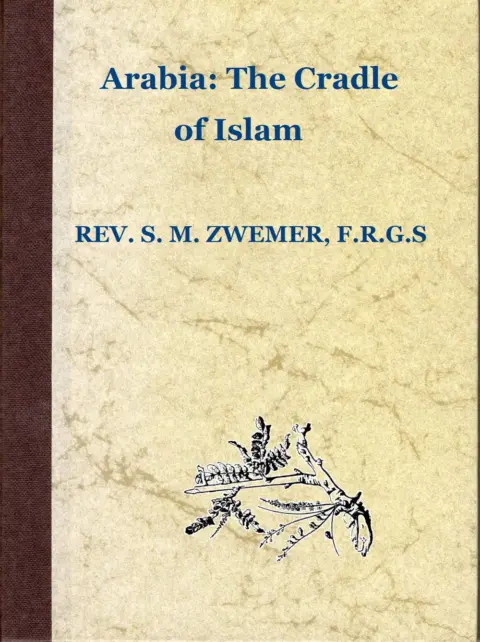
THE CLASSIC COLLECTION · 1900
"Arabia: The Cradle of Islam" by Samuel Marinus Zwemer is a historical account written in the late 19th century. The book explores the geography, people, and politics of the Arabian Peninsula, alongside an examination of Islam and the missionary work associated with it. The author aims to enlighten readers about the complexities and historical significance of Arabia as the birthplace of Islam and to emphasize the need for missionary efforts in the region. The opening of the work sets the stage for the importance of Arabia not only within the context of Islamic history but also as a geographic region of interest. Zwemer discusses the misconceptions surrounding Arabia, highlighting its rich diversity in terms of landscape and climate. He elaborates on how Arabia has been historically perceived as a vast desert yet emphasizes the fertile regions within it, particularly in Yemen. The introduction sketches the historical figures of missionaries preceding him and outlines the existing gaps in Western knowledge about the area, foreshadowing the detailed investigation into Arabia's cultural and religious heritage that follows.
Introduction adapted from the source catalogue; source summaries may be automatically generated.
Free to read · English · 140,876 words · No account needed
MAKE TIME FOR A GOOD BOOK
On by default. Untick to stop anonymous reading totals. Each page counts after 10 seconds in view. How this works.
Anonymous counting is on unless you have switched it off.
[6] The first account of a European visiting Mecca is that of Ludovico Bartema, a gentleman of Rome, who visited the city in 1503; his narrative was published in 1555. The first Englishman was Joseph Pitts, the sailor from Exeter, in 1678; then followed the great Arabian traveller, John Lewis Burckhardt, 1814; Burton in 1853 visited both Mecca and Medina; H. Bicknell made the pilgrimage in 1862 and T.F. Keane in 1880. The narratives of each of these pilgrims have been published, and from them, and the travels of Ali Bey, and others, we know something of the Holy Land of Arabia. Ali Bey was in reality a Spaniard, called Juan Badia y Seblich, who visited Mecca and Medina in 1807 and left a long account of his travels in two volumes illustrated by many beautiful engravings. Burton’s account of his pilgrimage is best known, but Burckhardt’s is more accurate and scholarly. Of modern books, that of the Dutch scholar, Snouck Hurgronje, who resided in Mecca for a long time, is by far the best. His Mekka, in two volumes, is accompanied by an atlas of photographs and gives a complete history of the city as well as a full account of its inhabitants and of the Java pilgrimage.
[7] Vol. II., p. 157.
(From Blunt’s “Future of Islam.”)
──────────────────────────┬──────────┬──────────┬───────────────── NATIONALITY OF PILGRIMS. │ Arriving │ Arriving │ Total Moslem │ by Sea. │ by Land. │ Pop. represented. ──────────────────────────┼──────────┼──────────┼───────────────── Ottoman Subjects │ │ │ (excluding Arabia) │ 8,500 │ 1,000 │ 22,000,000 Egyptians │ 5,000 │ 1,000 │ 5,000,000 From “Barbary States” │ 6,000 │ —— │ 18,000,000 Yemen Arabs │ 3,000 │ —— │ 2,500,000 Oman and Hadramaut │ 3,000 │ —— │ 3,000,000 Nejd, etc., Arabs │ —— │ 5,000 │ 4,000,000 Hejaz (including Mecca) │ —— │ 22,000 │ 2,000,000 Negroes from Sudan │ 2,000 │ —— │ 10,000,000 ” ” Zanzibar │ 1,000 │ —— │ 1,500,000 Malabari from Cape │ │ │ of G. Hope │ 150 │ —— │ ———— Persians │ 6,000 │ 2,500 │ 8,000,000 Indians (British Subjects)│ 15,000 │ —— │ 40,000,000 Malays and Javanese │ 12,000 │ —— │ 30,000,000 Chinese │ 100 │ —— │ 15,000,000 Mongols } │ —— │ —— │ 6,000,000 Russians, Tartars, etc.} │ —— │ —— │ 5,000,000 Afghans and Baluchis } │ —— │ —— │ 3,000,000 (included in Ottoman Haj)├──────────┼──────────┤ │ 61,750 │ 31,500 │ ══════════════════════════╤═════════════════════╤═════════════════ Total pilgrims present │ 93,250 │ 175,000,000 at Arafat │ │ ──────────────────────────┴─────────────────────┴─────────────────
[9] Professor Hankin in the British Medical Journal for June, 1894, published the result of his analysis of Zemzem water as follows: “Total solid in a gallon, 259; Chlorine, 51.24; Free ammonia, parts per million, 0.93; Albuminoid ammonia, .45. It contains an amount of solids greater than that in any well water used for potable purposes.”
[10] Its measurements, according to Ali Bey, are 37 ft. 2 in., 31 ft. 7 in., 38 ft 4 in., 29 ft. and its height is 34 ft. 4 in.
[11] This religion which denies an atonement and teaches that Christ was not crucified yet has for its great festival a feast of sacrifice to commemorate the obedience of Abraham and the substitute provided by God!
[12] This is the testimony of Captain Burton, the man who translated an unexpurgated text of the Arabian nights and left behind a book in manuscript which his wife had the good sense to destroy and so prevent its publication.
[13] Hurgronje, p. 5, Vol. II.
[14] Ibid., p. 102.
[15] Ibid, p 11.
[16] Ibid., pp. 61-64.
Your reading position is saved on this browser. Take it to another device with a library code. Reading pages adapt to text, rather than matching a printed edition.
Samuel Marinus Zwemer
Samuel Marinus Zwemer & Amy E. Zwemer
Samuel Marinus Zwemer & Amy E. Zwemer
BEHIND THE BOOK
This eBook is for the use of anyone anywhere in the United States and most other parts of the world at no cost and with almost no restrictions whatsoever. You may copy it, give it away or re-use it under the terms of the Project Gutenberg License included with this eBook or online at www.gutenberg.org. If you are not located in the United States, you will have to check the laws of the country where you are located before using this eBook. Read the source licence.
The original source file, including credits and licence, is retained by this library. Request an original-format copy at no charge. Please include the book title and Project Gutenberg identifier #63928.
KEEP YOUR CURIOSITY GOING

David Patterson (Spirit) Hatch

David Patterson (Spirit) Hatch

David Patterson (Spirit) Hatch
Cécile Tormay

Moritz Busch
John L. Ransom