The justice of Gideon
Eleanor Gates
THE CLASSIC COLLECTION · 1917
"Apron-Strings" by Eleanor Gates is a novel written in the early 20th century. The story explores the complex dynamics between mothers and daughters, illuminating the various types of mothers that exist. Central to the narrative are the characters of Mrs. Milo and her daughter, Susan, along with a cast of supporting characters, including a bride named Hattie and the parish’s new rector, Mr. Farvel, weaving together themes of familial love and societal expectation. The opening of the book introduces us to the setting of a parish rectory as preparations are made for Hattie's wedding. Various conversations unfold, revealing the personalities and backgrounds of the characters, particularly focusing on Mrs. Milo, who exhibits a controlling and somewhat judgmental nature, contrasting with the more open-hearted and nurturing qualities of Susan. As Sue interacts with the orphan boys from the nearby orphanage, the underlying tensions between her and her mother become evident, suggesting deeper themes of maternal expectations and social responsibilities. The dialogue is rich with humor and light-heartedness, juxtaposed with poignant moments, setting the stage for the emotional developments to follow.
Introduction adapted from the source catalogue; source summaries may be automatically generated.
Free to read · English · 53,037 words · No account needed
MAKE TIME FOR A GOOD BOOK
On by default. Untick to stop anonymous reading totals. Each page counts after 10 seconds in view. How this works.
Anonymous counting is on unless you have switched it off.
A wise smile spread upon Miss St. Clair's derouged face. She dropped her lashes and lifted them again. "Long," she replied significantly, "and intimate."
The blue eyes danced. "My daughter seems interested in her. And I
have a mother's anxiety."
Tottie was blessed with a sense of humor, but she conquered her desire to laugh. The daughter in question was a woman older than herself; under the circumstances, a "mother's anxiety" was hardly deserving of sympathy. Nevertheless, the landlady answered in a voice that was deep with condolence. "Oh, I understand how y' feel," she declared.
"We know very little about her. I wonder--can you--tell
me--something."
Tottie let her eyes fall--to the modish dress, with its touches of lace; to a pearl-and-amethyst brooch that held Mrs. Milo's collar; to the fresh gloves and the smart shoes. She recognized good taste even though she did not choose to subscribe to it; also, she recognized cost values. She looked up with a mysterious smile. "Well," she said slowly, "I don't like to--knock anybody."
"A-a-ah!" triumphed the elder woman; "I thought so!--Now, you won't let me be imposed upon! Please! Quick!" A white glove was laid on a chiffon sleeve.
"Sh!--Later! Later!" The landlady drew away, pointing toward the back-parlor warningly. The situation was to her taste. She seemed to be a part of one of those very scenes for which her soul yearned--melodramatic scenes such as she had witnessed across footlights, with her husky-voiced favorite in the principal role.
"I'll come back," whispered Mrs. Milo.
"No. I'll 'phone you." With measured tread, Tottie stalked to the double door, her eyes shifting, and one hand outstretched with spraddling fingers to indicate caution.
Mrs. Milo trotted after her. "But I think I'd better come back."
Tottie whirled. "What's your 'phone number?"
"Stuyvesant--three, nine, seven,"--this before she could remember that she was not planning to sleep under the Rectory roof again.
"Don't I git more'n a number?" persisted Tottie. "Whom 'm I to ask
for?"
"Just say 'Mrs. Milo.'"
"Stuyvesant--three, nine, seven, Mrs. Milo," repeated Tottie, leaning down at the table to note the data. Then with the information safely registered, "Of course, it'll be worth somethin' to you."
Mrs. Milo almost reeled. She opened her mouth for breath. "Why--why--you mean----" All her boasted poise was gone.
Tottie grinned--with a slanting look from between half-lowered lashes. "I mean--money," she said softly; and gave Mrs. Milo a playful little poke.
"Money!"--too frightened, now, even to resent familiarity. "Money! Oh, you wouldn't----! You don't----!"
"Yes, ma'am! You want somethin' from me, and I can give it to y', but you're goin' to pay for it!"
Your reading position is saved on this browser. Take it to another device with a library code. Reading pages adapt to text, rather than matching a printed edition.
Eleanor Gates
Eleanor Gates
Eleanor Gates
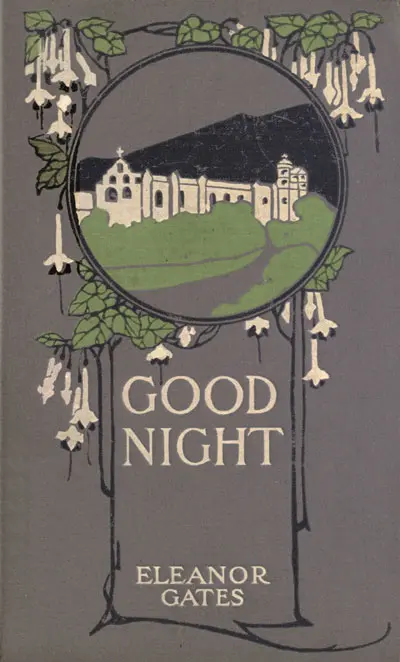
Eleanor Gates
BEHIND THE BOOK
This eBook is for the use of anyone anywhere in the United States and most other parts of the world at no cost and with almost no restrictions whatsoever. You may copy it, give it away or re-use it under the terms of the Project Gutenberg License included with this eBook or online at www.gutenberg.org. If you are not located in the United States, you will have to check the laws of the country where you are located before using this eBook. Read the source licence.
The original source file, including credits and licence, is retained by this library. Request an original-format copy at no charge. Please include the book title and Project Gutenberg identifier #22804.
KEEP YOUR CURIOSITY GOING
Coulson Kernahan

Maurice Baring
Frances Wright
Cécile Tormay

Frederic Jesup Stimson

W. H. P. (William Henry Pope) Jarvis