
Letters to a Friend, Written to Mrs. Ezra S. Carr, 1866-1879
John Muir
THE CLASSIC COLLECTION · 1900
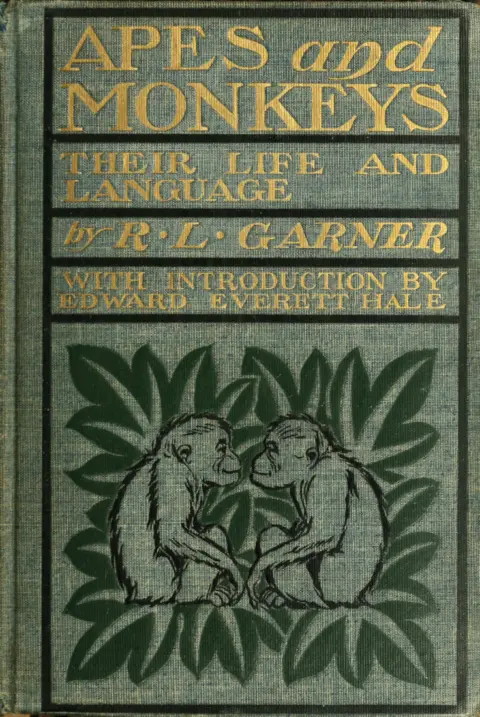
"Apes and Monkeys: Their Life and Language" by R. L. Garner is a scientific publication written in the late 19th century. The book explores the physical, mental, and social habits of apes and monkeys, aiming to provide a better understanding of these animals and their communication methods. Through the author's detailed observations and studies, readers can expect to gain insights into the similarities and differences between these creatures and humans. The opening portion of the book introduces readers to the author's extensive research background, highlighting his belief in the interconnectedness of all living beings. Garner emphasizes the importance of recognizing the complex behaviors and potential cognitive abilities of monkeys and apes. He also mentions his unique opportunity to study these animals in their natural habitats, which contrasts with the more common observational practices in captivity. The author expresses his goal of enriching human appreciation for nature and to inform readers about the intricacies of simian life, laying the groundwork for deeper explorations into their language and social behaviors in the subsequent chapters.
Introduction adapted from the source catalogue; source summaries may be automatically generated.
Free to read · English · 80,735 words · No account needed
MAKE TIME FOR A GOOD BOOK
On by default. Untick to stop anonymous reading totals. Each page counts after 10 seconds in view. How this works.
Anonymous counting is on unless you have switched it off.
Both of these apes are possessed, in a degree, of savage and resentful instincts; but these are much stronger in the gorilla than in the chimpanzee. The gorilla, therefore, requires firm and consistent treatment. This can be used without severity or cruelty, but the intellect of the gorilla must not be underrated. He studies with a keen perception the motives and intentions of man, and is seldom mistaken in his interpretation of them. He often manifests a violent dislike for certain persons, and when this is discovered to be the case, the object of his dislike should not be permitted in his presence, for the result is to enrage the ape and excite his nervous nature. When he becomes sullen or obstinate, he should not be coaxed or indulged, nor yet used with harshness. He should either be left alone for a time or be diverted by a change of treatment.
“Aaron”
his intelligent expression, 144, 146, 147
his capture, 145
on the journey, 147, 148
his tricks, 148
” one aversion, 148, 149
” sympathy for Moses, 149-152
realization of death, 151, 152
loses his mate, 170
his illness and death, 172-174
“Aaron” with “Elisheba”
acts as a protector, 156
his reliance on human aid, 157, 158-159
driving the cow, 158, 159
we start for Liverpool, 159
the bogie on the steamer, 159
solicitude of the apes, 159-160
their ingenuity, 161
the ape in the mirror, 161-162
Aaron’s jealousy, 162-165
the rivals, 163-165
arrival at Liverpool, 167, 168
Elisheba’s illness, 168
Aaron again becomes nurse, 170
Abstract ideas in simians, Lack of, 20, 36
Affection in animals not mere instinct, 58-59, 173
Age of maturity in apes, 98, 191, 192
Amusement (of captives)
captives should have, 55-56, 283
means of, 20-21, 33, 35, 54-56
Angola, 268
Anthropoid or manlike apes (see also Chimpanzee, Gorilla,
Gibbon, Orang, and references under Chimpanzee captives)
the group, 3
superior intelligence, 35, 60
Apes (see also Simians and references under Anthropoid apes)
resemblance to man, 2
described, 3, 92-98, 223 ff.
anthropoid or manlike group, 3
skeleton a duplicate of man’s, 4, 7
superior intelligence of anthropoid, 35, 60
travelers’ stories untrue, 71-72, 235-236, 266 ff.
do not act in concert, 268
Approval, Apes’ love of, 197, 203
Arboreal habit, The, 96-97, 224-225, 245
Baboon, The, 3, 14, 15, 196-197, 224, 266, 277
relative plane, 3, 277
Bailey, Mr. James A., New York City
his valuable apes, 190-191
corroborative testimony, 268
“Banquo,” 28-29
Battel, Henry (1590), 267, 268
Batuna (plant), 77, 245
Bellevue Gardens, Manchester, England (see also Consul II)
Consul II, 193
a pugnacious ape, 198-200
chimpanzee and orang, 200
Borneo, 274
Buffalo (N. Y.) Museum, Specimens in, 104
Cage in the jungle, The
idea first conceived, 60
exceptional opportunities it afforded, 60, 71, 260
its construction, 62-64
its furniture, 64-66
date of occupancy, 71
length of occupancy, 71
my chimpanzee companion, 71
(see also Moses)
the native boy, 71, 120, 121, 125, 148-149
program for the day, 73 ff.
my menu, 73, 77, 79, 84
wild visitors, 75 ff., 186-190, 252-260
the tornado, 79 ff.
Cameroon (valley), 85, 213, 215, 267
Capuchin monkey, The (see also under Monkey), 18-19, 28, 29, 38, 39,
42, 52
Your reading position is saved on this browser. Take it to another device with a library code. Reading pages adapt to text, rather than matching a printed edition.
BEHIND THE BOOK
This eBook is for the use of anyone anywhere in the United States and most other parts of the world at no cost and with almost no restrictions whatsoever. You may copy it, give it away or re-use it under the terms of the Project Gutenberg License included with this eBook or online at www.gutenberg.org. If you are not located in the United States, you will have to check the laws of the country where you are located before using this eBook. Read the source licence.
The original source file, including credits and licence, is retained by this library. Request an original-format copy at no charge. Please include the book title and Project Gutenberg identifier #67517.
KEEP YOUR CURIOSITY GOING
John Muir

Asa Gray
Asa Gray

Florence Nightingale
Elizabeth Robins Pennell
Denison Olmsted