THE CLASSIC COLLECTION✦The Sin of Monsieur Pettipon, and other humorous talesCLASSIC FREE BOOKS
The Sin of Monsieur Pettipon, and other humorous tales
Richard Edward Connell
THE CLASSIC COLLECTION · 1924
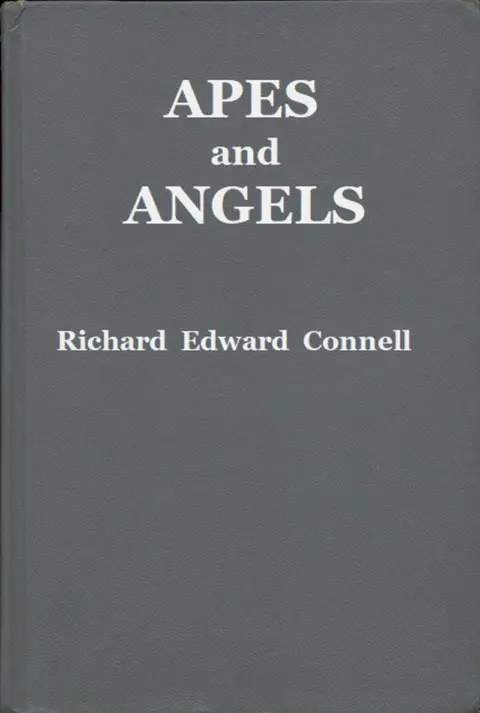
"Apes and Angels" by Richard Edward Connell is a collection of light tragedies written in the early 20th century. The stories delve into themes of love, friendship, and the complexities of human nature through whimsical narratives and colorful characters. The opening story, "A Friend of Napoleon," introduces readers to Papa Chibou, a night watchman at the Museum Pratoucy in Paris, who shares an unconventional friendship with a wax figure of Napoleon. At the start of "A Friend of Napoleon," we meet Papa Chibou, a cheerful and dedicated night watchman who treats the wax figures in the museum as friends. His conversations with them, particularly his friendship with the figure of Napoleon, highlight both the absurdity and poignancy of his lonely existence. As Papa Chibou observes the lives and loves of the museum visitors, he becomes deeply invested in the unfolding romance between an American girl and a young Frenchman, vowing to help them find happiness. However, as the museum faces closure and potential destruction of its exhibits, including Napoleon, Papa Chibou's loyalty to his wax companion drives him to desperate measures that culminate in action that puts him at odds with the law.
Introduction adapted from the source catalogue; source summaries may be automatically generated.
Free to read · English · 61,637 words · No account needed
MAKE TIME FOR A GOOD BOOK
On by default. Untick to stop anonymous reading totals. Each page counts after 10 seconds in view. How this works.
Anonymous counting is on unless you have switched it off.
It was the waxen figure of a fair-haired, smiling young man in polo
costume.
“Why, it’s I!” exclaimed the prince, who, mumps or no mumps, surprised or not, always expressed himself correctly.
“They do make those dummies more perfectly all the time,” remarked the king, who was admiringly examining the figure. “That nose is exactly like Ernie’s, now isn’t it?”
The prince lay staring at his effigy.
“I don’t see——” he began as distinctly as the mumps would let him.
“Oh, you will,” said the king. “Duffus, did Madame Hassler make much of
a fuss?”
“Oh, naturally,” replied the count. “She thought I was balmy in the crumpet, probably. She said it was the prize figure in the waxworks. Big drawing card and all that. I had to pay her a hundred and seventy goobecs before she’d part with it.”
“That’s a lot of money,” said the king, a careful soul; “but it will be worth it tomorrow. I’ll make you a duke for this, Duffus.”
“Thanks awfully. Oh, look here, Your Majesty! You can move its arms!”
“Better and better!” exclaimed the king. “We can make it salute.” The king turned to his son, who was still more than a little bewildered. “Ernie,” said the king, “where do you keep your uniform as honorary colonel of the Royal Purple Bombardiers?”
“Whatever for, father?”
“For your understudy here, of course.”
The king’s expression just then indicated that he did not consider that his son was a lightning calculator.
“Don’t you get the idea, Ernie?”
“I think I begin to,” said the prince; “and, father, I don’t like it.”
The king shrugged well-nourished shoulders.
“It’s the only way,” he said. “We can’t risk even the appearance of slighting that touchy old hippopotamus.”
“Hippopotamus, father? I was not aware——”
“Oh, I mean that venerable muffin, the Emperor of Zabonia,” cut in the king with a trace of impatience.
“But, father,” said the prince, and his eyes showed that he was shocked,
“he is a king!”
The king was contrite.
“Sorry, son,” he said. “I shouldn’t speak like that of royalty, I know. But I have so much on my mind these days, with this tiresome visit and your mumps and the shadow of war and heaven knows what.”
“But, father,” said the prince, following up his advantage, “please don’t ask me to permit this monstrous thing. It’s not honorable. It’s not princely.”
The king patted his son’s silk pajamaed shoulder.
Your reading position is saved on this browser. Take it to another device with a library code. Reading pages adapt to text, rather than matching a printed edition.
BEHIND THE BOOK
This eBook is for the use of anyone anywhere in the United States and most other parts of the world at no cost and with almost no restrictions whatsoever. You may copy it, give it away or re-use it under the terms of the Project Gutenberg License included with this eBook or online at www.gutenberg.org. If you are not located in the United States, you will have to check the laws of the country where you are located before using this eBook. Read the source licence.
The original source file, including credits and licence, is retained by this library. Request an original-format copy at no charge. Please include the book title and Project Gutenberg identifier #65201.
KEEP YOUR CURIOSITY GOING
Coulson Kernahan

Maurice Baring
Frances Wright
Cécile Tormay

Frederic Jesup Stimson

W. H. P. (William Henry Pope) Jarvis