THE CLASSIC COLLECTION✦The Sin of Monsieur Pettipon, and other humorous talesCLASSIC FREE BOOKS
The Sin of Monsieur Pettipon, and other humorous tales
Richard Edward Connell
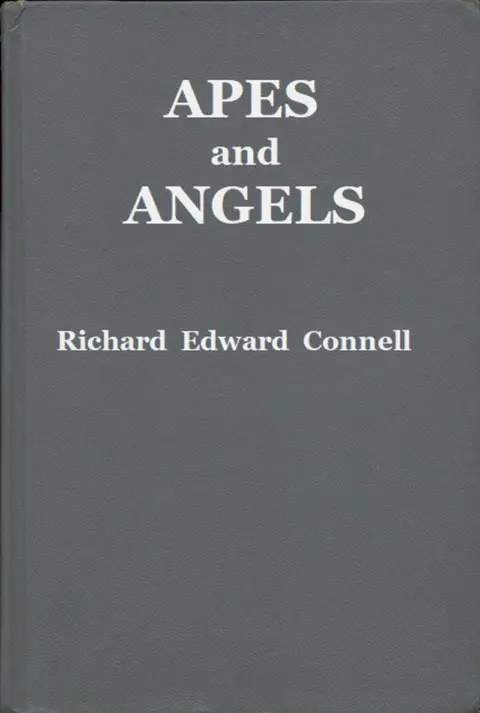
THE CLASSIC COLLECTION · 1924
"Apes and Angels" by Richard Edward Connell is a collection of light tragedies written in the early 20th century. The stories delve into themes of love, friendship, and the complexities of human nature through whimsical narratives and colorful characters. The opening story, "A Friend of Napoleon," introduces readers to Papa Chibou, a night watchman at the Museum Pratoucy in Paris, who shares an unconventional friendship with a wax figure of Napoleon. At the start of "A Friend of Napoleon," we meet Papa Chibou, a cheerful and dedicated night watchman who treats the wax figures in the museum as friends. His conversations with them, particularly his friendship with the figure of Napoleon, highlight both the absurdity and poignancy of his lonely existence. As Papa Chibou observes the lives and loves of the museum visitors, he becomes deeply invested in the unfolding romance between an American girl and a young Frenchman, vowing to help them find happiness. However, as the museum faces closure and potential destruction of its exhibits, including Napoleon, Papa Chibou's loyalty to his wax companion drives him to desperate measures that culminate in action that puts him at odds with the law.
Introduction adapted from the source catalogue; source summaries may be automatically generated.
Free to read · English · 61,637 words · No account needed
MAKE TIME FOR A GOOD BOOK
On by default. Untick to stop anonymous reading totals. Each page counts after 10 seconds in view. How this works.
Anonymous counting is on unless you have switched it off.
“Oh, very well,” said the man on the bed. “I don’t think much of it as a bed, anyhow. I wouldn’t have it in my house.”
Saying this, he rose from the bed and I saw that he was Hosmer Appleby.
“Oh, you wouldn’t, wouldn’t you?” said the attendant, loyal to his charge. “Well, it was good enough for Napoleon, that there bed was.”
“Steel beds are more sanitary,” said Appleby. Then turning to me, “Don’t you think so?”
He spoke as if I’d been with him all the time. He had the same absorbed expression, the same intent, intense look.
“How’s the house?” I asked. “Are you enjoying living in it?”
“Living in it? Why, I haven’t started to build it yet!” he told me as we strolled through the collection of Sheraton furniture, which he now and then stopped to poke.
“No,” he continued, “I haven’t found a site. Haven’t the money, anyhow. But I’m looking. I suppose I’ve looked at five hundred sites since I saw you, and have got forty earaches listening to real-estate agents. I’m in no great hurry. The perfect house on the perfect site—that’s my plan.”
He said it as if he were annunciating a religious principle.
“And the dolls?” I asked.
He made a wry face.
“Oh, I still sell the little beasts,” he replied. “I’m assistant sales manager now, you know.”
“Good work!”
“Beastly grind,” he said. “I detest dolls. But they’re going to build me a house in the country.”
“A doll house?” I suggested.
He did not smile; his look said that his house was too sacred a matter
for facetiousness.
“How are you, anyhow? Married, or anything like that?” I inquired.
“The living room is going to be thirty-five by twenty,” he said.
I stopped to admire a Fuller landscape.
“Aren’t those shadows lovely?” I said.
“My living room is going to be very bright,” said Hosmer Appleby. “Splotches of brilliant color everywhere. Old Spanish.” He said this in a confidential whisper, as if he were imparting a secret. “And, do you know,” he concluded, “I’ve earned almost enough to furnish the living room.”
I congratulated him. He shook a rather woeful head.
“It’s fearfully slow work,” he said. “Sometimes I think I’ll never make it. Sometimes I fear that the house is a mirage that can never be reached. But I conquer these fits of despair; I put on full steam and sell dolls like a fiend incarnate.” He made a face. “Little bores,” he added. We had reached the front door of the museum.
Your reading position is saved on this browser. Take it to another device with a library code. Reading pages adapt to text, rather than matching a printed edition.
BEHIND THE BOOK
This eBook is for the use of anyone anywhere in the United States and most other parts of the world at no cost and with almost no restrictions whatsoever. You may copy it, give it away or re-use it under the terms of the Project Gutenberg License included with this eBook or online at www.gutenberg.org. If you are not located in the United States, you will have to check the laws of the country where you are located before using this eBook. Read the source licence.
The original source file, including credits and licence, is retained by this library. Request an original-format copy at no charge. Please include the book title and Project Gutenberg identifier #65201.
KEEP YOUR CURIOSITY GOING
Coulson Kernahan

Maurice Baring
Frances Wright
Cécile Tormay

Frederic Jesup Stimson

W. H. P. (William Henry Pope) Jarvis