THE CLASSIC COLLECTION✦The Sin of Monsieur Pettipon, and other humorous talesCLASSIC FREE BOOKS
The Sin of Monsieur Pettipon, and other humorous tales
Richard Edward Connell
THE CLASSIC COLLECTION · 1924
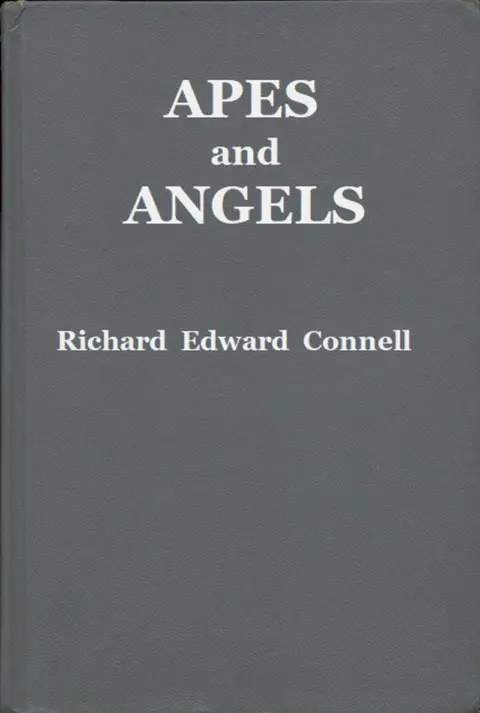
"Apes and Angels" by Richard Edward Connell is a collection of light tragedies written in the early 20th century. The stories delve into themes of love, friendship, and the complexities of human nature through whimsical narratives and colorful characters. The opening story, "A Friend of Napoleon," introduces readers to Papa Chibou, a night watchman at the Museum Pratoucy in Paris, who shares an unconventional friendship with a wax figure of Napoleon. At the start of "A Friend of Napoleon," we meet Papa Chibou, a cheerful and dedicated night watchman who treats the wax figures in the museum as friends. His conversations with them, particularly his friendship with the figure of Napoleon, highlight both the absurdity and poignancy of his lonely existence. As Papa Chibou observes the lives and loves of the museum visitors, he becomes deeply invested in the unfolding romance between an American girl and a young Frenchman, vowing to help them find happiness. However, as the museum faces closure and potential destruction of its exhibits, including Napoleon, Papa Chibou's loyalty to his wax companion drives him to desperate measures that culminate in action that puts him at odds with the law.
Introduction adapted from the source catalogue; source summaries may be automatically generated.
Free to read · English · 61,637 words · No account needed
MAKE TIME FOR A GOOD BOOK
On by default. Untick to stop anonymous reading totals. Each page counts after 10 seconds in view. How this works.
Anonymous counting is on unless you have switched it off.
Edwin Dell reached the studio of Valerie Keat late Christmas night. Inside he could hear the sounds of revelry—unrestrained laughter, bursts of song, a jazzing phonograph, the bursting of toy balloons, the popping of corks. Valerie Keat was holding high carnival. His heart was no bigger than a pea as he knocked. The door opened and a wave of hot air laden with confetti, tobacco smoke, incense and the fumes of alcohol rushed out and engulfed him. Inside he saw a mad whirlpool of gala-dressed dancers. Valerie Keat herself had opened the door; she stood there in an artful evening gown of shimmering silver, with no back whatsoever.
“Well?” she snapped.
“It is I. Edwin. Ned,” he said.
“So I see. What of it.” Her voice was icy.
“Where shall I put my goloshes?” he asked.
She pointed down the stairs behind him.
“That way. One after another,” she said.
He staggered as if from a blow.
“But you don’t mean . . . you can’t mean . . . Auntie has turned me
out.”
“So do I. That makes it unanimous,” she said, puffing mockingly her
cigaret.
“But it was because of . . . you,” he stammered. “Have you forgotten
. . . so soon.”
“I’ve a poor memory,” she said unconcernedly.
“But you don’t mean . . . you can’t mean . . . Oh, think of your
promises. . . .”
“Bah,” said Valerie Keat.
“Have you no compassion?”
“Not a bit.”
“No honor?”
“Nope.”
“Valerie Keat, think of your father!”
She flushed beneath her painted mask.
“You keep his name out of this,” she flashed. “Run along now to your
damnation infants.”
“You say this to me?” His voice was wild. “To me? After my sacrifice?”
“Your sacrifice?” she jeered. “Do you tell all the others that?”
He reeled.
“The others?” he exclaimed aghast, “it’s a lie, a shameful lie, I tell
you.”
“They all pull that one,” she gibed.
“All? All? Then there have been others, Valerie Keat? Then I was naught but the plaything of an idle hour?”
“Naught,” she replied.
“And you would fling me aside like a discarded glove?”
“That is just what I would fling you aside like,” she answered, unmoved.
“I see it all now,” said Edwin Dell, his voice the voice of one utterly crushed. “The veil lifts from my eyes. I’m just a man girls forget. You have drained the cup of pleasure, but it is I . . . I . . . who must pay . . . and pay.”
“Fair enough,” said Valerie Keat, in a voice like a file rasping steel. “Pay away. Good night.”
“Then you would have me go . . . out of your life . . . forever?”
“Or longer,” she said. “Shut the outside door after you.”
Your reading position is saved on this browser. Take it to another device with a library code. Reading pages adapt to text, rather than matching a printed edition.
BEHIND THE BOOK
This eBook is for the use of anyone anywhere in the United States and most other parts of the world at no cost and with almost no restrictions whatsoever. You may copy it, give it away or re-use it under the terms of the Project Gutenberg License included with this eBook or online at www.gutenberg.org. If you are not located in the United States, you will have to check the laws of the country where you are located before using this eBook. Read the source licence.
The original source file, including credits and licence, is retained by this library. Request an original-format copy at no charge. Please include the book title and Project Gutenberg identifier #65201.
KEEP YOUR CURIOSITY GOING
Coulson Kernahan

Maurice Baring
Frances Wright
Cécile Tormay

Frederic Jesup Stimson

W. H. P. (William Henry Pope) Jarvis