THE CLASSIC COLLECTION✦The Sin of Monsieur Pettipon, and other humorous talesCLASSIC FREE BOOKS
The Sin of Monsieur Pettipon, and other humorous tales
Richard Edward Connell
THE CLASSIC COLLECTION · 1924
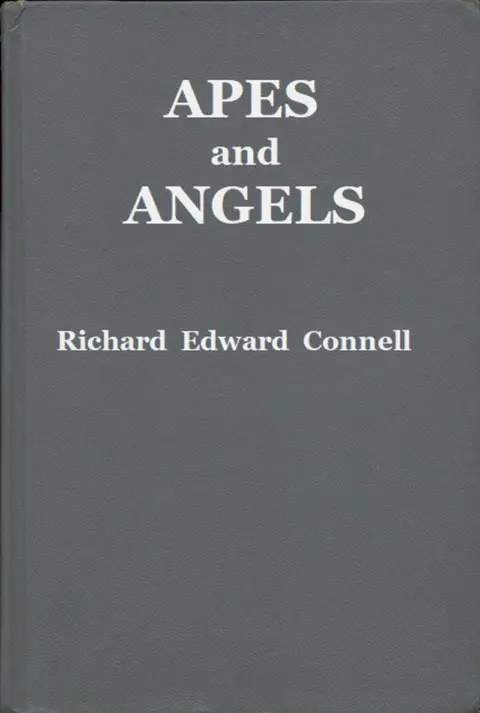
"Apes and Angels" by Richard Edward Connell is a collection of light tragedies written in the early 20th century. The stories delve into themes of love, friendship, and the complexities of human nature through whimsical narratives and colorful characters. The opening story, "A Friend of Napoleon," introduces readers to Papa Chibou, a night watchman at the Museum Pratoucy in Paris, who shares an unconventional friendship with a wax figure of Napoleon. At the start of "A Friend of Napoleon," we meet Papa Chibou, a cheerful and dedicated night watchman who treats the wax figures in the museum as friends. His conversations with them, particularly his friendship with the figure of Napoleon, highlight both the absurdity and poignancy of his lonely existence. As Papa Chibou observes the lives and loves of the museum visitors, he becomes deeply invested in the unfolding romance between an American girl and a young Frenchman, vowing to help them find happiness. However, as the museum faces closure and potential destruction of its exhibits, including Napoleon, Papa Chibou's loyalty to his wax companion drives him to desperate measures that culminate in action that puts him at odds with the law.
Introduction adapted from the source catalogue; source summaries may be automatically generated.
Free to read · English · 61,637 words · No account needed
MAKE TIME FOR A GOOD BOOK
On by default. Untick to stop anonymous reading totals. Each page counts after 10 seconds in view. How this works.
Anonymous counting is on unless you have switched it off.
At the very moment that night when Valerie Keat in écru satin pajamas, sank down on her twenty-four cushions, lit a Persian narghil, and opened a French novel by Gyp, Edwin Dell, in his unpretentious white muslin nightshirt, was lying on his plain iron cot; was rereading a sentence from a letter he had just received from his aunt. Half aloud he read the words in Aunt Charity’s precise, virginal script:
“Some people New York ennobles; others, it drags straight down
to H——.”
With his eyes resting on the picture of Emerson, Edwin Dell said the word “Fortitude.” He repeated the word—“Fortitude, fortitude, fortitude, fortitude, fortitude,” until the gentle, dreamless sleep of innocence wrapped him in its platonic embrace. Valerie Keat dreamed of wild horses, rushing water, satyrs. . . .
For his frugal dinner next evening Edwin Dell avoided the Scarlet Hyena and went instead to the Esoteric Pussy-Cat, in a damp, artistic basement on Washington Square, South. It was so full of young men and older women eating the dollar dinner and discussing intimate problems that only one seat was left and that was in the window, where Edwin, perforce, had to eat his dinner in the most distressingly public fashion, while rude passers-by stopped to stare at him, presumably under the impression that he was advertising a dyspepsia cure. One passerby stopped much longer than the rest and pressed a retroussé nose against the window-pane. Edwin Dell’s heart began to knock like a poor motor taking a high hill.
Valerie Keat, for she it was, came bounding into the restaurant and greeted him like an old friend. She conjured up a chair and drew it to his table, uninvited. He looked appealingly at the other diners, seeking in all that throng one wise, kind, understanding face. He sought in vain. The faces of New Yorkers are hard, hard.
“Still damnationing the infants?” asked Valerie Keat, breezily.
“Levity on that subject is most unbecoming,” he said.
Unexpectedly her face grew sober under its film of cosmetics.
“You are right, Edwin,” said Valerie Keat. “I am too facetious. Perhaps you think I take nothing in life seriously. But I do, I assure you I do.”
“Ah, do you?” he said, hoping to convey the idea that it didn’t in the least matter to him. Then, to his surprise, he found himself adding the word “What?”
Her green eyes bored into his light blue eyes.
“Love,” she said, in a low, poignant voice.
Edwin beckoned the Japanese waiter.
“My bill, please, at once,” he directed.
Your reading position is saved on this browser. Take it to another device with a library code. Reading pages adapt to text, rather than matching a printed edition.
BEHIND THE BOOK
This eBook is for the use of anyone anywhere in the United States and most other parts of the world at no cost and with almost no restrictions whatsoever. You may copy it, give it away or re-use it under the terms of the Project Gutenberg License included with this eBook or online at www.gutenberg.org. If you are not located in the United States, you will have to check the laws of the country where you are located before using this eBook. Read the source licence.
The original source file, including credits and licence, is retained by this library. Request an original-format copy at no charge. Please include the book title and Project Gutenberg identifier #65201.
KEEP YOUR CURIOSITY GOING
Coulson Kernahan

Maurice Baring
Frances Wright
Cécile Tormay

Frederic Jesup Stimson

W. H. P. (William Henry Pope) Jarvis