THE CLASSIC COLLECTION✦The Sin of Monsieur Pettipon, and other humorous talesCLASSIC FREE BOOKS
The Sin of Monsieur Pettipon, and other humorous tales
Richard Edward Connell
THE CLASSIC COLLECTION · 1924
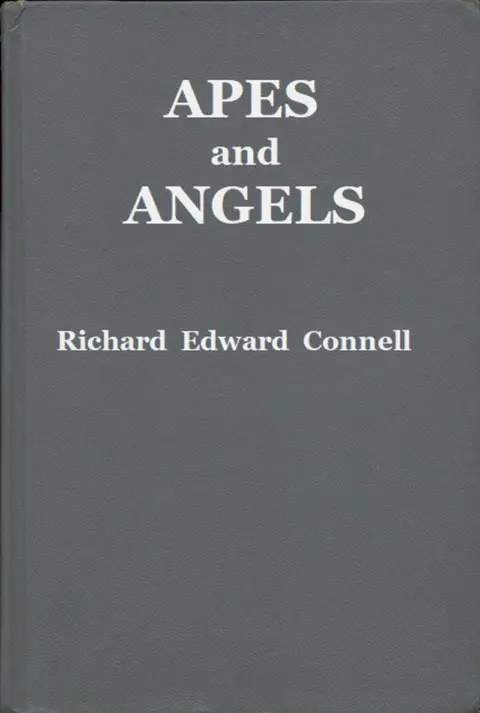
"Apes and Angels" by Richard Edward Connell is a collection of light tragedies written in the early 20th century. The stories delve into themes of love, friendship, and the complexities of human nature through whimsical narratives and colorful characters. The opening story, "A Friend of Napoleon," introduces readers to Papa Chibou, a night watchman at the Museum Pratoucy in Paris, who shares an unconventional friendship with a wax figure of Napoleon. At the start of "A Friend of Napoleon," we meet Papa Chibou, a cheerful and dedicated night watchman who treats the wax figures in the museum as friends. His conversations with them, particularly his friendship with the figure of Napoleon, highlight both the absurdity and poignancy of his lonely existence. As Papa Chibou observes the lives and loves of the museum visitors, he becomes deeply invested in the unfolding romance between an American girl and a young Frenchman, vowing to help them find happiness. However, as the museum faces closure and potential destruction of its exhibits, including Napoleon, Papa Chibou's loyalty to his wax companion drives him to desperate measures that culminate in action that puts him at odds with the law.
Introduction adapted from the source catalogue; source summaries may be automatically generated.
Free to read · English · 61,637 words · No account needed
MAKE TIME FOR A GOOD BOOK
On by default. Untick to stop anonymous reading totals. Each page counts after 10 seconds in view. How this works.
Anonymous counting is on unless you have switched it off.
“It seems too bad,” she said. “You are still so young.”
He smiled a smile of practised cynicism.
“In years, perhaps,” he said.
He saw that he had moved her.
Decidedly, this new rôle of his was worth playing, said Saunders Rook to himself as he donned his dinner-jacket that night in preparation for his dinner with Max Skye at the Authors’ Club. He was pleased with himself. In retrospect were the sympathetic blue eyes of Margery Storey; in prospect, a dinner among the celebrities of the Authors’ Club, into which sacred premises he had never gone physically, but solely in his most roseate imaginings.
Max Skye, who was a poet of no mean repute, introduced Saunders Rook to
a group of notable men.
“This,” said Max Skye, with the air of a showman, “is Mr. Saunders Rook, who is going to commit suicide on the Fourth of July.”
Saunders Rook bowed to them; gravely they bowed back and stared at him,
fascinated.
“In Central Park,” continued Max Skye.
Saunders Rook bowed deeply.
“As a protest against the rotten state of our civilization,” added Max
Skye.
Saunders Rook again bowed.
They returned his bows with marked deference, he noted delightedly. He
managed, however, to maintain an air of great world-weariness as he
said:
“When one feels as I do about it, what else can one do?”
He had rehearsed this coming up in the taxicab.
“Mr. Rook is writing a series of six essays for ‘The Liberal Voice,’” announced Max Skye, plainly proud to be the discoverer and friend of so remarkable a man.
“But,” objected Deline, the novelist, a man Saunders Rook had long admired from afar, “how can you publish six essays? It’s June now. When could the last three be published?”
“Posthumously,” said Saunders Rook, with a touch of pride.
“Posthumously?”
They all repeated the word as if there was magic in it.
“But why do you feel that the state of civilization requires so drastic
a protest?”
Deline asked this question as Saunders Rook was enjoying the third
course, tender roast young guinea-fowl with mushrooms; Rook loved good
food.
“Because,” said Saunders Rook, with fork poised, “it’s rotten.”
Around the table went murmurs of approbation and interest.
“But, my dear fellow,” exclaimed Deline, warmly laying his hand on Saunders Rook’s arm, “we need men like you.”
“Yes, yes,” cried others about the table. “America needs men with the courage of their convictions.”
“You see,” said Deline, with a wave of his hand. “You’re needed.”
Your reading position is saved on this browser. Take it to another device with a library code. Reading pages adapt to text, rather than matching a printed edition.
BEHIND THE BOOK
This eBook is for the use of anyone anywhere in the United States and most other parts of the world at no cost and with almost no restrictions whatsoever. You may copy it, give it away or re-use it under the terms of the Project Gutenberg License included with this eBook or online at www.gutenberg.org. If you are not located in the United States, you will have to check the laws of the country where you are located before using this eBook. Read the source licence.
The original source file, including credits and licence, is retained by this library. Request an original-format copy at no charge. Please include the book title and Project Gutenberg identifier #65201.
KEEP YOUR CURIOSITY GOING
Coulson Kernahan

Maurice Baring
Frances Wright
Cécile Tormay

Frederic Jesup Stimson

W. H. P. (William Henry Pope) Jarvis