THE CLASSIC COLLECTION✦The Sin of Monsieur Pettipon, and other humorous talesCLASSIC FREE BOOKS
The Sin of Monsieur Pettipon, and other humorous tales
Richard Edward Connell
THE CLASSIC COLLECTION · 1924
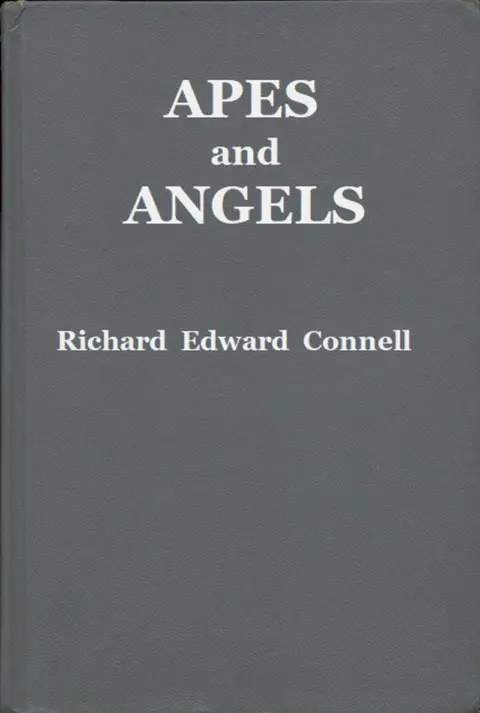
"Apes and Angels" by Richard Edward Connell is a collection of light tragedies written in the early 20th century. The stories delve into themes of love, friendship, and the complexities of human nature through whimsical narratives and colorful characters. The opening story, "A Friend of Napoleon," introduces readers to Papa Chibou, a night watchman at the Museum Pratoucy in Paris, who shares an unconventional friendship with a wax figure of Napoleon. At the start of "A Friend of Napoleon," we meet Papa Chibou, a cheerful and dedicated night watchman who treats the wax figures in the museum as friends. His conversations with them, particularly his friendship with the figure of Napoleon, highlight both the absurdity and poignancy of his lonely existence. As Papa Chibou observes the lives and loves of the museum visitors, he becomes deeply invested in the unfolding romance between an American girl and a young Frenchman, vowing to help them find happiness. However, as the museum faces closure and potential destruction of its exhibits, including Napoleon, Papa Chibou's loyalty to his wax companion drives him to desperate measures that culminate in action that puts him at odds with the law.
Introduction adapted from the source catalogue; source summaries may be automatically generated.
Free to read · English · 61,637 words · No account needed
MAKE TIME FOR A GOOD BOOK
On by default. Untick to stop anonymous reading totals. Each page counts after 10 seconds in view. How this works.
Anonymous counting is on unless you have switched it off.
“Why, his name is Book or Cook or something,” was the whispered answer.
He smiled. He hoped they would think it the quiet, resolute smile of
martyrdom.
“But Mr.—er—Rook,” said Lucile Davega, “have you made all your plans?”
Here was another contingency for which he had not prepared. He slowly
cleared his throat.
“I have,” he said gravely. Then, with a touch of mystery, added, “And I haven’t.” He hoped they would probe no further. But the Heterogeneous Club is composed of inveterate probers.
“Oh, won’t you tell us all about them?” As Lucile Davega said this she clasped her hands. Mr. Rook frowned ever so slightly. They acted as if he were planning a trip to Bermuda. He’d have to show them how deadly in earnest he was.
“If you insist,” he said, his mind groping wildly for plans.
Unanimously, they insisted.
“Mind you it must go no further than this room,” he said. They all said that of course it wouldn’t.
“Well,” said Saunders Rook, speaking very deliberately, “of course, you see, since it is to be a protest, it must have a certain amount of publicity.”
Everyone nodded approvingly.
“So I thought,” he felt his way along, “that I should do it in some rather public place.”
“Central Park?” suggested Max Skye.
“Exactly,” replied Saunders Rook, grasping at the idea. “The very place
I had in mind.”
There were murmurs of “Splendid!” “A big thought!” “There’s a lot more to these quiet chaps than meets the eye.”
Saunders Rook, hearing, glowed.
Just then Oscar Findlater made one of his infrequent appearances at the club. The members were proud of belonging to the same club as Oscar Findlater, who was editor of “The Liberal Voice,” most advanced and oracular of weeklies. He was a vastly serious person of Jovian demeanor. Usually the members flocked about him to catch the pronouncements that dropped from his lips, but on this evening they only nodded toward him and continued to gaze expectantly at Saunders Rook. To Saunders Rook, Oscar Findlater had always seemed a god, despite the fact that “The Liberal Voice” had rejected numerous choice essays on pipe-smoking by the fireplace and kindred topics over which Saunders Rook had toiled. He had mildly envied the attention paid to the editorial Olympian. Now he, Saunders Rook, was actually stealing the spotlight from the great man. It was most pleasant.
“Good evening, Findlater,” said Max Skye. “You know Saunders Rook, don’t
you?”
The editor murmured something about never having had that pleasure.
“Rook,” announced Max Skye, impressively, “is going to commit suicide.”
“On the Fourth of July,” added Judy Atwater.
Your reading position is saved on this browser. Take it to another device with a library code. Reading pages adapt to text, rather than matching a printed edition.
BEHIND THE BOOK
This eBook is for the use of anyone anywhere in the United States and most other parts of the world at no cost and with almost no restrictions whatsoever. You may copy it, give it away or re-use it under the terms of the Project Gutenberg License included with this eBook or online at www.gutenberg.org. If you are not located in the United States, you will have to check the laws of the country where you are located before using this eBook. Read the source licence.
The original source file, including credits and licence, is retained by this library. Request an original-format copy at no charge. Please include the book title and Project Gutenberg identifier #65201.
KEEP YOUR CURIOSITY GOING
Coulson Kernahan

Maurice Baring
Frances Wright
Cécile Tormay

Frederic Jesup Stimson

W. H. P. (William Henry Pope) Jarvis