THE CLASSIC COLLECTION✦The Sin of Monsieur Pettipon, and other humorous talesCLASSIC FREE BOOKS
The Sin of Monsieur Pettipon, and other humorous tales
Richard Edward Connell
THE CLASSIC COLLECTION · 1924
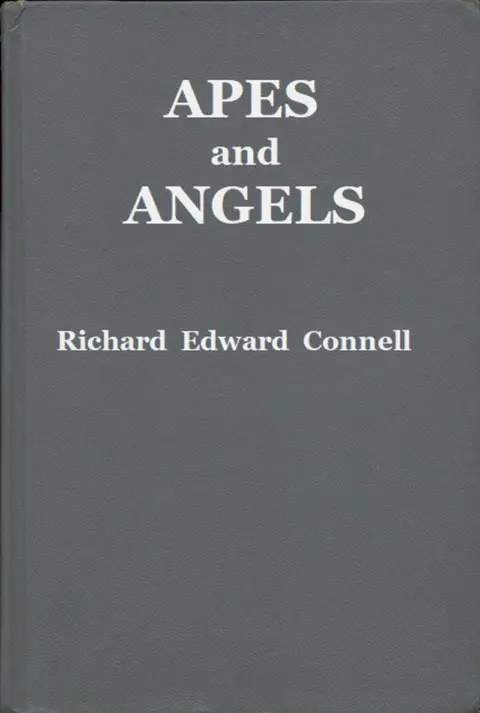
"Apes and Angels" by Richard Edward Connell is a collection of light tragedies written in the early 20th century. The stories delve into themes of love, friendship, and the complexities of human nature through whimsical narratives and colorful characters. The opening story, "A Friend of Napoleon," introduces readers to Papa Chibou, a night watchman at the Museum Pratoucy in Paris, who shares an unconventional friendship with a wax figure of Napoleon. At the start of "A Friend of Napoleon," we meet Papa Chibou, a cheerful and dedicated night watchman who treats the wax figures in the museum as friends. His conversations with them, particularly his friendship with the figure of Napoleon, highlight both the absurdity and poignancy of his lonely existence. As Papa Chibou observes the lives and loves of the museum visitors, he becomes deeply invested in the unfolding romance between an American girl and a young Frenchman, vowing to help them find happiness. However, as the museum faces closure and potential destruction of its exhibits, including Napoleon, Papa Chibou's loyalty to his wax companion drives him to desperate measures that culminate in action that puts him at odds with the law.
Introduction adapted from the source catalogue; source summaries may be automatically generated.
Free to read · English · 61,637 words · No account needed
MAKE TIME FOR A GOOD BOOK
On by default. Untick to stop anonymous reading totals. Each page counts after 10 seconds in view. How this works.
Anonymous counting is on unless you have switched it off.
On his return from his honeymoon, Hervey Deyo threw himself into his bird labors at the Museum with energy; he was a bird man, even a first-class bird man, and so far his ambition was gratified; but it still burned with a hot unappeased flame. He wanted to be the biggest bird man in the world. However, after his marriage he permitted himself certain digressions from the relentless pursuit of this aim. There was a constant demand for him socially and, as Mina was fond of teas and parties and bridge and balls, he found himself giving rather less time to his birds than formerly. He was by no means averse to a measure of social life.
“A great scientist can afford to have his human side,” he assured
himself.
Wherever he went with Mina, be it tea, party, bridge, or ball, he was invariably pressed to give his imitation of a bee. He would bow; he would let them insist a bit; invariably he gave it.
“Bzzzzzzzzzzzz, bzzzzzzzzzzzzz, bzzzzzrf!”
No stranger ever came to the city who did not, sooner or later, hear “that screamingly funny fellow, Deyo, and his perfectly killing imitation of a bee.” His fame spread.
He had been married a number of years and had a child or two when he came home one evening visibly excited.
“My dear,” he called to his wife, his voice full of excitement tinged with awe, “tonight I am to meet Professor Schweeble. He just came to town. Think of it! Karl Humperdinck Schweeble!”
“Schweeble?” said Mina, blankly.
“You don’t mean to say you never heard of Schweeble!”
“I’m afraid not.”
“But I’ve spoken of him score of times.”
“Oh, perhaps you have,” she said, yawning. “I thought he was a bird.”
“Why, Schweeble is the biggest bird man in the world,” he exclaimed. “It will be a big night in ornithology when Schweeble and Deyo shake hands. He must know my work; of course he must. He can’t have missed that great auk monograph and the cuckoo book.”
He was so excited he could hardly tie his dinner tie.
“Schweeble,” he kept repeating, “the great Schweeble. I’ve wanted to meet him all my life. He comes just at the right time, too, just when my paper on the Pyrrhula Europaea—bull-finch, my dear—is causing talk.”
“Don’t forget your goloshes,” admonished Mina.
Hervey Deyo, red, proud and flustered, was introduced half an hour later to that great Bohemian savant, Professor Schweeble, at the University Club. Professor Schweeble made him a courtly bow.
“Charmed, Doctor Deyo,” he said. “I haff heard much gebout you.”
Your reading position is saved on this browser. Take it to another device with a library code. Reading pages adapt to text, rather than matching a printed edition.
BEHIND THE BOOK
This eBook is for the use of anyone anywhere in the United States and most other parts of the world at no cost and with almost no restrictions whatsoever. You may copy it, give it away or re-use it under the terms of the Project Gutenberg License included with this eBook or online at www.gutenberg.org. If you are not located in the United States, you will have to check the laws of the country where you are located before using this eBook. Read the source licence.
The original source file, including credits and licence, is retained by this library. Request an original-format copy at no charge. Please include the book title and Project Gutenberg identifier #65201.
KEEP YOUR CURIOSITY GOING
Coulson Kernahan

Maurice Baring
Frances Wright
Cécile Tormay

Frederic Jesup Stimson

W. H. P. (William Henry Pope) Jarvis