THE CLASSIC COLLECTION✦The Sin of Monsieur Pettipon, and other humorous talesCLASSIC FREE BOOKS
The Sin of Monsieur Pettipon, and other humorous tales
Richard Edward Connell
THE CLASSIC COLLECTION · 1924
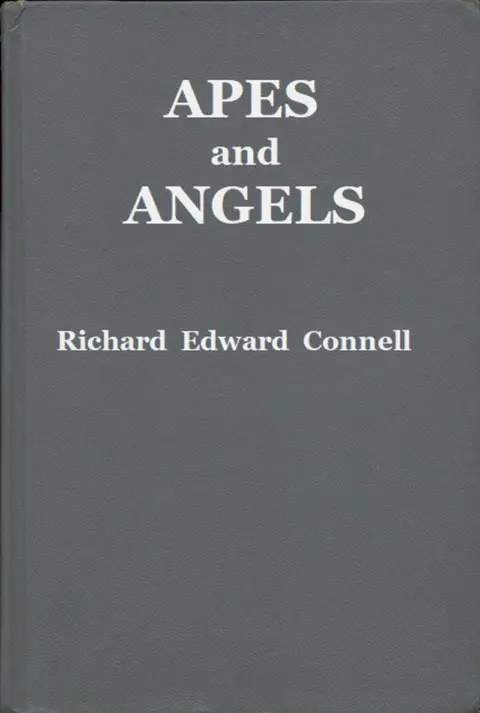
"Apes and Angels" by Richard Edward Connell is a collection of light tragedies written in the early 20th century. The stories delve into themes of love, friendship, and the complexities of human nature through whimsical narratives and colorful characters. The opening story, "A Friend of Napoleon," introduces readers to Papa Chibou, a night watchman at the Museum Pratoucy in Paris, who shares an unconventional friendship with a wax figure of Napoleon. At the start of "A Friend of Napoleon," we meet Papa Chibou, a cheerful and dedicated night watchman who treats the wax figures in the museum as friends. His conversations with them, particularly his friendship with the figure of Napoleon, highlight both the absurdity and poignancy of his lonely existence. As Papa Chibou observes the lives and loves of the museum visitors, he becomes deeply invested in the unfolding romance between an American girl and a young Frenchman, vowing to help them find happiness. However, as the museum faces closure and potential destruction of its exhibits, including Napoleon, Papa Chibou's loyalty to his wax companion drives him to desperate measures that culminate in action that puts him at odds with the law.
Introduction adapted from the source catalogue; source summaries may be automatically generated.
Free to read · English · 61,637 words · No account needed
MAKE TIME FOR A GOOD BOOK
On by default. Untick to stop anonymous reading totals. Each page counts after 10 seconds in view. How this works.
Anonymous counting is on unless you have switched it off.
The group appeared to have as its center the fattish young man and it was growing distinctly hilarious. Hervey Deyo had a pressing, but, he told himself, wholly scientific interest in learning what conversational charm or topic made the fattish young man so much more interesting than himself. He edged his chair within earshot.
The fattish young man was not talking; he appeared to be making a series of odd noises through his nose, varied now and then by throaty bellows.
“Norrrrrrrrrk. Norrrrrk. Wurrrrr. Wurrrrr.”
The trained ear of Hervey Deyo was puzzled; clearly they were not bird noises, yet they had a scientific sound; perhaps the fattish young man was a scientist after all, a mammal man.
“Norrrrrrrrrk. Norrrrrk. Wurrrrr. Wurrrrr.”
The girl with the attentive smile solved the mystery. She called across
the room.
“Oh, Bernice, do come over here. You simply must hear Mr. Mullett
imitate a trained seal!”
Hervey Deyo felt actually ill. So that was the secret of Mr. Mullett’s powers; that was the magnet!
“Norrrrrrrrr. Norrrrrk. Wurrrr. Wurrrr.”
Hervey Deyo couldn’t stand it. Stiffly he went out and as he took his hat and stick he could still hear the laughter and the fainter,
“Norrrrrrrrr. Norrrrrk. Wurrrr. Wurrrr.”
In a fury of disgust he went to his laboratory and so violently stuffed a grackle (Euphagus Ferrugineus) that it burst.
Next day he realized that something annoying had happened, was happening to him; he could not keep his mind on his work; it kept straying, despite him, to the little girl with the attentive smile. She had been interested in his talk of birds until the accomplished Mr. Mullett, imitator of trained seals, had made his untimely appearance. His teeth gritted together at the thought.
That afternoon he surprised his mother by suggesting that he accompany her to a tea; she was glad his social consciousness seemed to be aroused at last. They went.
“Who is Mr. Mullett?” he asked her as they rode tea-ward in her motor car, a product of the seriousness applied by Mr. Deyo, senior, to his brick business.
“Mr. Mullett? Why, he’s one of the Brookline Mulletts,” his mother said.
“Why?”
“Is he an animal man?”
“No; he sells insurance.”
“He seems popular.”
“Oh, he has some parlor tricks.”
“I beg pardon, mother? The allusion escapes me.”
“Parlor tricks,” repeated his mother. “He imitates a trained seal; it appears to strike the younger people as excessively comical. I believe he can also swallow a lighted cigaret.”
Hervey emitted a polite moan.
“Must one do parlor tricks?”
“They have their uses,” said his mother.
Your reading position is saved on this browser. Take it to another device with a library code. Reading pages adapt to text, rather than matching a printed edition.
BEHIND THE BOOK
This eBook is for the use of anyone anywhere in the United States and most other parts of the world at no cost and with almost no restrictions whatsoever. You may copy it, give it away or re-use it under the terms of the Project Gutenberg License included with this eBook or online at www.gutenberg.org. If you are not located in the United States, you will have to check the laws of the country where you are located before using this eBook. Read the source licence.
The original source file, including credits and licence, is retained by this library. Request an original-format copy at no charge. Please include the book title and Project Gutenberg identifier #65201.
KEEP YOUR CURIOSITY GOING
Coulson Kernahan

Maurice Baring
Frances Wright
Cécile Tormay

Frederic Jesup Stimson

W. H. P. (William Henry Pope) Jarvis