
His Little World: The Story of Hunch Badeau
Samuel Merwin
THE CLASSIC COLLECTION · 1914
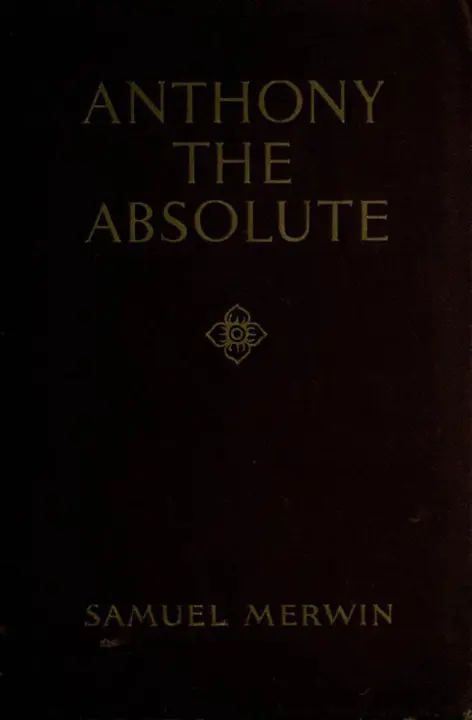
"Anthony the Absolute" by Samuel Merwin is a novel written in the early 20th century. The story follows Anthony Ives Eckhart, a scientific man deeply interested in music and ethnomusicology, as he embarks on a voyage to the East, navigating the complex interactions with the various characters onboard, especially the boastful Sir Robert and a rugged fellow traveler, Archibald Crocker. As Eckhart attempts to assert the value of musical intervals—drawing distinctions between Eastern and Western music—his journey evolves into a profound exploration of culture, personal relationships, and human emotions against the backdrop of early 20th century transoceanic travel. At the start of the novel, we find Eckhart uncomfortable aboard a ship headed to Yokohama, troubled by Sir Robert's pretentious monologues and the chaos surrounding him. He wrestles with his own thoughts and dismisses the boisterous conversations around him, instead reflecting on the varied passengers' motives for their travels across the globe. Eckhart's ire ignites when Sir Robert belittles the music of Eastern cultures, propelling him into a passionate argument defending the native sounds. This confrontation hints at Eckhart's deeper commitments to his scientific pursuits, setting the stage for an encounter with the complexities of human desire and connection, particularly in the emerging context of East-West interactions. The opening illustrates not only Eckhart's intellectual rigor but also foreshadows the emotional trials he will face in his pursuit to understand the intrinsic nature of music and culture.
Introduction adapted from the source catalogue; source summaries may be automatically generated.
Free to read · English · 69,211 words · No account needed
MAKE TIME FOR A GOOD BOOK
On by default. Untick to stop anonymous reading totals. Each page counts after 10 seconds in view. How this works.
Anonymous counting is on unless you have switched it off.
Some China boys were bringing a cot. They lifted Crocker, very carefully, and laid him on it, then carried him into the office. He must have been suffering intense pain; but he only set his teeth hard, and once or twice drew in a quick, hissing breath.
I followed them in, and stood over him. After a moment he rolled his head around and looked at me. I could see that he was puzzled.
“Where am I, Eckhart?” he asked.
“At the Hôtel de Chine.”
“The Hôtel de--That's where--”
“It is where I am stopping,” said I.
He whitened, and winced; whether in physical or mental pain I am unable
to say.
“My leg is broken,” he observed, a little later.
I nodded.
“Who did it?”
“I did.”
He knit his brows. Then he saw the knife in my hand, and bit his lip. It did not occur to me, then, to put the knife away.
We were silent again. Then--“Take me to the Wagon-lits,” he said.
“Oh, no,” I cried, “we will take care of you here,”
He shook his head, and again bit his lip. “I want to go to the
Wagon-lits,” he repeated.
“In one moment, sir.” It was the manager, talking over my shoulder. I stared; for I had not heard him approach. “In a moment, sir. The automobile, it will be here.”
After all, it was better so, if he could stand it. And doubtless he
could.
He was looking again at the knife in my hand. I held it up and stared at it. There was a little blood on it, near the point. He reached out, and I gave it to him. It was his property, not mine Very deliberately he drew the sheath from his pocket, put the knife into it, and thrust it into his side pocket. But he thought differently of this; for a moment later, when he thought I was not looking, he transferred it to his inside breast pocket. I wondered a little at this. Then it occurred to me that he feared it might be observed by others, there in the side pocket.
An automobile drew up before the building.
“I have telephone for the doctor,” said the manager. “It is that he will await us at the Wagon-lits.”
Then we carried Crocker out on his cot--the manager, three Chinamen, and I. He was very heavy. And they took him away. He did not look at me again, or speak to me. And I, of course, said nothing.
Your reading position is saved on this browser. Take it to another device with a library code. Reading pages adapt to text, rather than matching a printed edition.
Samuel Merwin
Samuel Merwin
Samuel Merwin
Samuel Merwin
BEHIND THE BOOK
This eBook is for the use of anyone anywhere in the United States and most other parts of the world at no cost and with almost no restrictions whatsoever. You may copy it, give it away or re-use it under the terms of the Project Gutenberg License included with this eBook or online at www.gutenberg.org. If you are not located in the United States, you will have to check the laws of the country where you are located before using this eBook. Read the source licence.
The original source file, including credits and licence, is retained by this library. Request an original-format copy at no charge. Please include the book title and Project Gutenberg identifier #52507.
KEEP YOUR CURIOSITY GOING
Wilfrid Scawen Blunt
Wilfrid Scawen Blunt

E. W. (Edgar Watson) Howe
Coulson Kernahan

Maurice Baring
Frances Wright