A backwoods princess
Hulbert Footner
THE CLASSIC COLLECTION · 1926
"Antennae" by Hulbert Footner is a novel written in the early 20th century. The book introduces two main characters, Wilfred Pell and Joe Kaplan, who navigate their tumultuous coming-of-age experiences in the contrasting environments of New York City. As the story unfolds, it explores themes of identity, societal expectations, and the stark realities of youth. The opening portion of the novel sets the stage with a detailed account of Wilfred's furtive nighttime escapades as he grapples with the pressures of adolescence. He is marked by a sense of isolation and self-doubt as he ventures into the city, observing various facets of life and encountering others who embody different paths and choices. Meanwhile, Joe Kaplan, depicted in the subsequent sections, is characterized as street-smart and resourceful, showcasing a contrasting perspective shaped by his hard upbringing. The interplay of their journeys establishes a rich tapestry of youthful ambition and the quest for belonging in the urban landscape, inviting readers to reflect on the complexities of growing up in a world rife with challenges and opportunities.
Introduction adapted from the source catalogue; source summaries may be automatically generated.
Free to read · English · 88,045 words · No account needed
MAKE TIME FOR A GOOD BOOK
On by default. Untick to stop anonymous reading totals. Each page counts after 10 seconds in view. How this works.
Anonymous counting is on unless you have switched it off.
“That was a nice little rise we had just before the close of the
market.”
This diverted what Gillett was about to say. He looked disconcerted.
Joe occupied himself with a cigarette. “I hope you all sold while the selling was good,” he remarked.
“I’m already short forty thousand shares,” grumbled Gillett.
“The shorter you are, the more money you’ll make,” said Joe.
“How about Monday?”
“She’ll rise a couple of points more. Sell every share you can find a buyer for! . . . It wasn’t such a bad move to hold off for awhile. You’ll have a better market, Monday, because of it.”
An uncertain look came into Gillett’s red face. Joe caused his own face to look wooden. The stockbroker lowered his eyes. He could see that the current was already setting the other way.
“How about that item on the news ticker to-day?” asked Judge Keep. “It was stated that our new machine, wouldn’t work.”
“And it won’t either,” grumbled Shriver. “I can’t do anything with it.”
“I instigated that story,” said Joe, flicking the ash off his cigarette.
Gillett stared. “What the deuce for?” he demanded.
“To bring buyers for Mattison’s stock into the market,” said Joe. “We can’t continue to sell the stock short if there are no buyers. The thing was beginning to stagnate.”
“But we got all our publicity on that new machine. . . .”
“What of it?” said Joe. “They can’t take it away from us now. A new invention is news, but the failure of a new invention isn’t news. We’ll tap new sources of publicity.”
“But suppose I gave the order to sell, and Mattison’s stock still rises on Monday?” said Gillett.
“An hour or two after the opening she’ll flop,” said Joe casually.
“How do you know?”
Taking a paper from his pocket, he spread it out on the table. It was the page proof of a Sunday article for the newspapers, embellished with photographs. Joe, grinning, read out the headlines:
“Cooper Gillett buys another big factory! The young financier hot-foot on the trail of the trust!”
“Me, young?” said Gillett grinning, too.
“It endears you to the public,” said Joe.
“I didn’t buy the factory. I only have an option on it.”
“What’s in a word! It ’ll all be forgotten in a couple of days. . . . This will appear to-morrow in five of the biggest cities in the country. A whole page, see? It recapitulates the story of our other three factories. . . .”
“Which have never manufactured anything . . .” put in Shriver.
“The public doesn’t know that.”
Your reading position is saved on this browser. Take it to another device with a library code. Reading pages adapt to text, rather than matching a printed edition.
Hulbert Footner
Hulbert Footner
Hulbert Footner
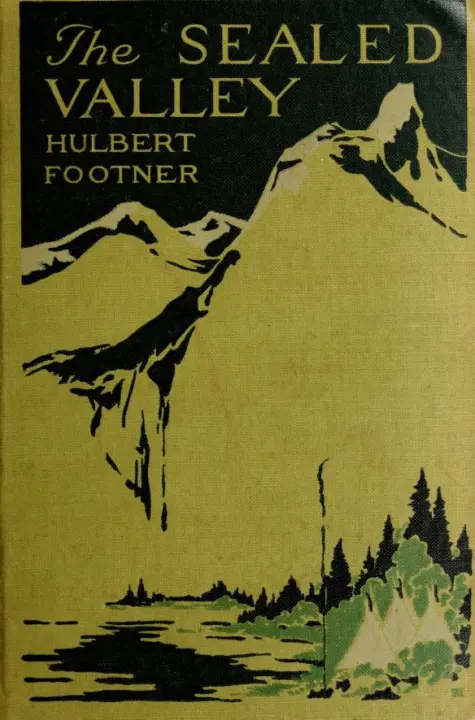
Hulbert Footner
BEHIND THE BOOK
This eBook is for the use of anyone anywhere in the United States and most other parts of the world at no cost and with almost no restrictions whatsoever. You may copy it, give it away or re-use it under the terms of the Project Gutenberg License included with this eBook or online at www.gutenberg.org. If you are not located in the United States, you will have to check the laws of the country where you are located before using this eBook. Read the source licence.
The original source file, including credits and licence, is retained by this library. Request an original-format copy at no charge. Please include the book title and Project Gutenberg identifier #69701.
KEEP YOUR CURIOSITY GOING
Coulson Kernahan

Maurice Baring
Frances Wright
Cécile Tormay

Frederic Jesup Stimson

W. H. P. (William Henry Pope) Jarvis