A backwoods princess
Hulbert Footner
THE CLASSIC COLLECTION · 1926
"Antennae" by Hulbert Footner is a novel written in the early 20th century. The book introduces two main characters, Wilfred Pell and Joe Kaplan, who navigate their tumultuous coming-of-age experiences in the contrasting environments of New York City. As the story unfolds, it explores themes of identity, societal expectations, and the stark realities of youth. The opening portion of the novel sets the stage with a detailed account of Wilfred's furtive nighttime escapades as he grapples with the pressures of adolescence. He is marked by a sense of isolation and self-doubt as he ventures into the city, observing various facets of life and encountering others who embody different paths and choices. Meanwhile, Joe Kaplan, depicted in the subsequent sections, is characterized as street-smart and resourceful, showcasing a contrasting perspective shaped by his hard upbringing. The interplay of their journeys establishes a rich tapestry of youthful ambition and the quest for belonging in the urban landscape, inviting readers to reflect on the complexities of growing up in a world rife with challenges and opportunities.
Introduction adapted from the source catalogue; source summaries may be automatically generated.
Free to read · English · 88,045 words · No account needed
MAKE TIME FOR A GOOD BOOK
On by default. Untick to stop anonymous reading totals. Each page counts after 10 seconds in view. How this works.
Anonymous counting is on unless you have switched it off.
An adorable look of anxiety came into Frances Mary’s face. It gave Wilfred a pleasant sense of power. She came to a stop; looking at him; biting her lip. “I . . . I thought I had improved it,” she faltered.
“Your vice is, never knowing when to leave a thing alone,” he said severely. “You lose sight of the whole in the parts.”
“I expect I do,” she said with a disarming humility. “Your criticism is awfully good for me. . . . What are you doing?”
Wilfred relapsed into the depths. “Nothing,” he said. The blackness was real enough; but he equivocated respecting its cause. For days past he had not even tried to write. “I’m still stuck in the middle of my restaurant story.”
“What’s the matter with it?”
“Too damn sentimental!”
Frances Mary was silent.
Wilfred found he was not so deadened, but that he could still feel the pin-pricks of wounded self-love. “You don’t say anything,” he said bitterly. “You think it’s tripe, too.”
“Oh, not as bad as that!” she said. “The sentimentality was implicit in the original design. . . .”
“Why didn’t you tell me so then?”
“I tried to, but you wouldn’t have it so. . . . Why not finish it now, frankly in a sentimental vein; and go on to something else.”
“Why not advise me to tear it up?”
“But it has charm. It will sell readily.”
“You think that’s all I’m good for!”
She shook her head. “You can be as brutal as you like, next time. Your Rivington street story wasn’t sentimental.”
“Ah! don’t throw that up to me! I’ve never been able to equal it!”
“Every artist knows that feeling!”
“You manage to maintain the level of your stuff. It makes me sore, you write so much better than I do!”
Frances Mary smiled somewhat dryly. “I’ve been at it longer than you.”
“That hasn’t got anything to do with it. You have an instinct for perfection, while I’m all over the place!”
“Perfect stories of perfect ladies to adorn the chaste pages of our leading family magazine!” she said, smiling still.
“It doesn’t matter what they’re about, they’re well done!” said Wilfred.
“I suppose I do write better than you do now,” she said, ceasing to smile. “But my work is much the same as it was ten years ago when I began. There is more hope in your unevenness than in my dead level.”
“I truckle to the editors,” said Wilfred glooming.
“So you do,” admitted Frances Mary—and laughed when he looked up resentfully. “But as long as you know it, the case is not hopeless.”
Your reading position is saved on this browser. Take it to another device with a library code. Reading pages adapt to text, rather than matching a printed edition.
Hulbert Footner
Hulbert Footner
Hulbert Footner
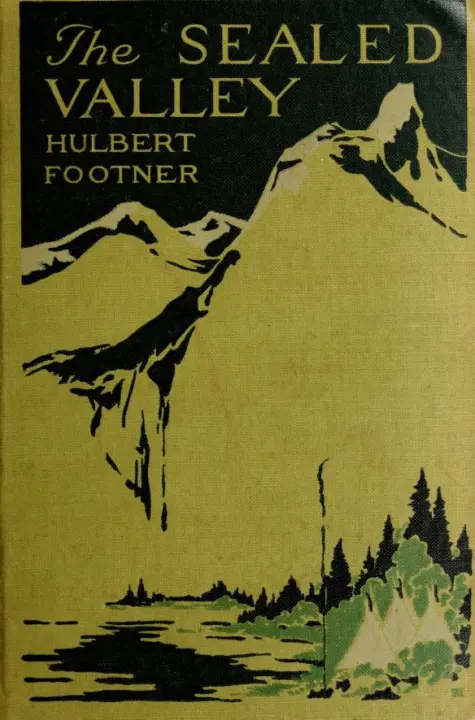
Hulbert Footner
BEHIND THE BOOK
This eBook is for the use of anyone anywhere in the United States and most other parts of the world at no cost and with almost no restrictions whatsoever. You may copy it, give it away or re-use it under the terms of the Project Gutenberg License included with this eBook or online at www.gutenberg.org. If you are not located in the United States, you will have to check the laws of the country where you are located before using this eBook. Read the source licence.
The original source file, including credits and licence, is retained by this library. Request an original-format copy at no charge. Please include the book title and Project Gutenberg identifier #69701.
KEEP YOUR CURIOSITY GOING
Coulson Kernahan

Maurice Baring
Frances Wright
Cécile Tormay

Frederic Jesup Stimson

W. H. P. (William Henry Pope) Jarvis