A backwoods princess
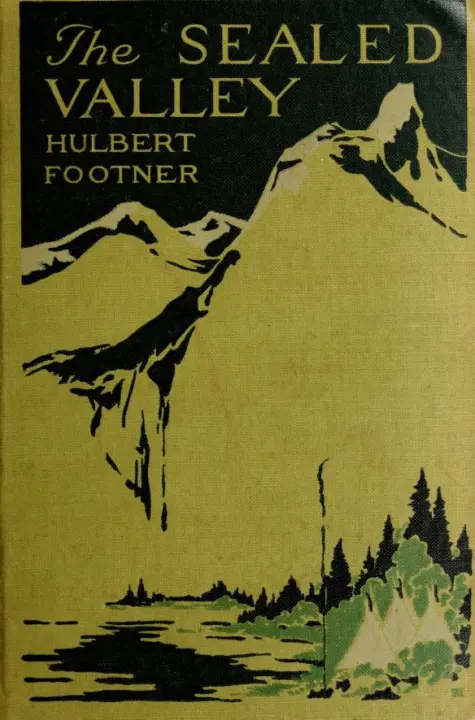
Hulbert Footner
THE CLASSIC COLLECTION · 1926
"Antennae" by Hulbert Footner is a novel written in the early 20th century. The book introduces two main characters, Wilfred Pell and Joe Kaplan, who navigate their tumultuous coming-of-age experiences in the contrasting environments of New York City. As the story unfolds, it explores themes of identity, societal expectations, and the stark realities of youth. The opening portion of the novel sets the stage with a detailed account of Wilfred's furtive nighttime escapades as he grapples with the pressures of adolescence. He is marked by a sense of isolation and self-doubt as he ventures into the city, observing various facets of life and encountering others who embody different paths and choices. Meanwhile, Joe Kaplan, depicted in the subsequent sections, is characterized as street-smart and resourceful, showcasing a contrasting perspective shaped by his hard upbringing. The interplay of their journeys establishes a rich tapestry of youthful ambition and the quest for belonging in the urban landscape, inviting readers to reflect on the complexities of growing up in a world rife with challenges and opportunities.
Introduction adapted from the source catalogue; source summaries may be automatically generated.
Free to read · English · 88,045 words · No account needed
MAKE TIME FOR A GOOD BOOK
On by default. Untick to stop anonymous reading totals. Each page counts after 10 seconds in view. How this works.
Anonymous counting is on unless you have switched it off.
“Oh, you needn’t get funny,” she retorted. “It’s something to know that you don’t know anything. . . . I mean. . . . What do I mean? I mean I don’t know anything in my head. I know lots of things by intuition. I think I know more than you do, that way. . . .”
“Not a doubt of it,” said Wilfred.
“But the voice of intuition is dumb,” Elaine went on. “I act as I act without knowing why. There is no residue. Intuition prompts you how to act at the moment; but it doesn’t help you to lay out a course.”
How exactly, sometimes, unconscious people can convey what is in their minds! thought Wilfred enviously. “What about books?” he suggested.
“Books! Pshaw! Books are a kind of dope!” said Elaine.
“You read only novels—and those, not the best.”
“I do read the best!” she said indignantly.
“I don’t mean the latest best,” said Wilfred.
“I read poetry, too. . . . But poetry just lifts you up—and lets you drop again. Oh, I suppose it’s my fault. Really serious books bore me.”
“There are good novels,” said Wilfred.
“They get on so slowly!” said Elaine with a sigh. “And when you do disentangle the meaning, it’s only what you know already.”
“What is it, exactly, that you are after?” asked Wilfred.
“Knowledge of life,” she said promptly. “Old people pretend that they have all the knowledge. I feel that they are wrong.”
“In what, for instance?”
“Well, it’s a platitude amongst old people that love always dies.”
“I don’t know of any book that would assure you that it doesn’t,” said Wilfred, lowering his eyes.
“Never mind books. What do you think? Does love die?”
“What kind of love?” he asked with a sinking heart.
“What kind?” she repeated staring. “I mean love between a man and a
woman, of course.”
“Passion burns itself out,” said Wilfred, “but I suppose something fine
may come of it.”
“Oh, that’s just like an old person,” said Elaine. “The cooling-off process is hideous to me! I don’t want any left-overs!”
“Well, what are you going to do about it?” he asked.
“It doesn’t help to be cynical!”
“What does your own heart tell you?”
“My heart tells me that love dies,” murmured Elaine unexpectedly. She was staring into the fire. “I was hoping for some reassurance.”
“I hope it does,” said Wilfred flippantly. He observed that his teeth were clenched together.
She ignored this. “Even though love is transitory, should we not stake everything on it, anyway?” she murmured.
“Everybody must decide that for themselves,” he said composedly, feeling like a little waxy-faced oracle.
Your reading position is saved on this browser. Take it to another device with a library code. Reading pages adapt to text, rather than matching a printed edition.
Hulbert Footner
Hulbert Footner
Hulbert Footner
Hulbert Footner
BEHIND THE BOOK
This eBook is for the use of anyone anywhere in the United States and most other parts of the world at no cost and with almost no restrictions whatsoever. You may copy it, give it away or re-use it under the terms of the Project Gutenberg License included with this eBook or online at www.gutenberg.org. If you are not located in the United States, you will have to check the laws of the country where you are located before using this eBook. Read the source licence.
The original source file, including credits and licence, is retained by this library. Request an original-format copy at no charge. Please include the book title and Project Gutenberg identifier #69701.
KEEP YOUR CURIOSITY GOING
Coulson Kernahan

Maurice Baring
Frances Wright
Cécile Tormay

Frederic Jesup Stimson

W. H. P. (William Henry Pope) Jarvis