The diary of a superfluous man, and other stories
Ivan Sergeevich Turgenev
THE CLASSIC COLLECTION · 1884
"Annouchka: A Tale" by Ivan Sergeevich Turgenev is a novel written in the late 19th century. The narrative follows a young man who, at 25, is reflecting on his past experiences while traveling through Germany, where he becomes entangled with a spirited girl named Annouchka and her brother Gaguine. The book explores themes of youth, love, and the complexities of social class, as well as the bittersweet nature of relationships. The opening of the tale introduces the protagonist, a young man seeking solitude after a heartbreak, who finds himself in a quaint German town, enchanted by its charm and the people around him. Through his interactions with Gaguine and the lively Annouchka, the initial bonds of friendship form amidst their lighthearted explorations. As the narrative unfolds, hints of deeper emotional currents between the characters emerge, setting the stage for conflict and the intricacies of love and identity. Their encounters reveal not just the playful nature of youth but also the weight of societal expectations and personal histories that threaten to complicate their relationships. The stage is set for a rich exploration of longing, joy, and the very real challenges posed by love and cultural constraints.
Introduction adapted from the source catalogue; source summaries may be automatically generated.
Free to read · English · 19,496 words · No account needed
MAKE TIME FOR A GOOD BOOK
On by default. Untick to stop anonymous reading totals. Each page counts after 10 seconds in view. How this works.
Anonymous counting is on unless you have switched it off.
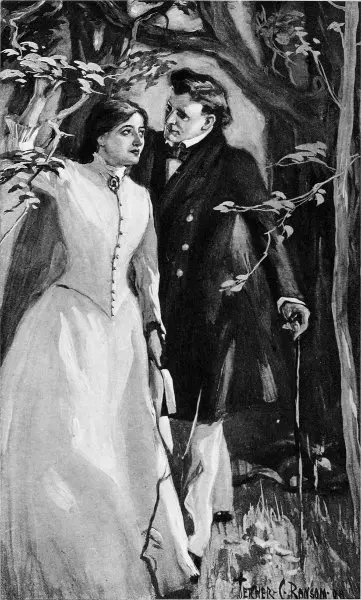
"Come, tell me about your trip," she said, arranging the folds of her dress over her knees, as if to install herself there for a long time; "begin or recite something to me, that which you read from Onéguine."[4]
[Footnote 4: Poem of Pouchkina.]
She suddenly became pensive, and murmured in a low voice,--
"Où sont aujourd'hui la croix et l'ombrage
Qui marquaient la tombe de ma pauvre mère."
"That's not exactly the way that Pouchkina[5] expressed himself," I
said.
[Footnote 5: Instead of "mère," the Russian text says "nourrice."]
"I should like to be Tatiana,"[6] continued she, still pensive. "Come, speak," she said with vivacity.
[Footnote 6: Heroine of the poem.]
But that was far from my thoughts. I looked at her; inundated by the warm light of the sun, she seemed to me so calm, so serene.--About us, at our feet, above our heads, the country, the river, the heavens,--all were radiant; the air seemed to me quite saturated with splendor.
"See, how beautiful it is," I said, lowering my voice involuntarily.
"Oh, yes, very beautiful," she replied in the same tone, without looking at me. "If you and I were birds, how we would dart forth into space--into all that infinite blue! But we are not birds."
"Yes, but we can bring forth wings."
"How's that?"
"Life will teach you. There are many feelings that will raise you above this earth; never fear, the wings will come to you."
"Have you had any?"
"What shall I say? I don't think that I have taken wing so far."
Annouchka became thoughtful once more. I was leaning over her.
"Can you waltz?" she said to me suddenly.
"Yes," I replied, a little surprised at the question.
"Then come quickly; come. I am going to beg my brother to play us a waltz. We will pretend that the wings have appeared, and that we are flying into space."
She ran towards the house. I quickly followed her, and a few moments had hardly elapsed before we were whirling about the narrow room, to the sounds of a waltz of Lanner's. Annouchka danced with much grace and animation. I do not know what womanly charm suddenly appeared upon her girlish face. Long afterwards the charm of her slender figure still lingered about my hand; for a long time I felt her quick breathing near me, and I dreamed of her dark eyes, motionless and half closed, with her face animated, though pale, about which waved the curls of her sweet hair.
Your reading position is saved on this browser. Take it to another device with a library code. Reading pages adapt to text, rather than matching a printed edition.
Ivan Sergeevich Turgenev
Ivan Sergeevich Turgenev
Ivan Sergeevich Turgenev
Ivan Sergeevich Turgenev
BEHIND THE BOOK
This eBook is for the use of anyone anywhere in the United States and most other parts of the world at no cost and with almost no restrictions whatsoever. You may copy it, give it away or re-use it under the terms of the Project Gutenberg License included with this eBook or online at www.gutenberg.org. If you are not located in the United States, you will have to check the laws of the country where you are located before using this eBook. Read the source licence.
The original source file, including credits and licence, is retained by this library. Request an original-format copy at no charge. Please include the book title and Project Gutenberg identifier #39427.
KEEP YOUR CURIOSITY GOING
Coulson Kernahan

Maurice Baring
Frances Wright
Cécile Tormay

Frederic Jesup Stimson

W. H. P. (William Henry Pope) Jarvis