THE CLASSIC COLLECTION✦The SetonsCLASSIC FREE BOOKS
The Setons
O. Douglas
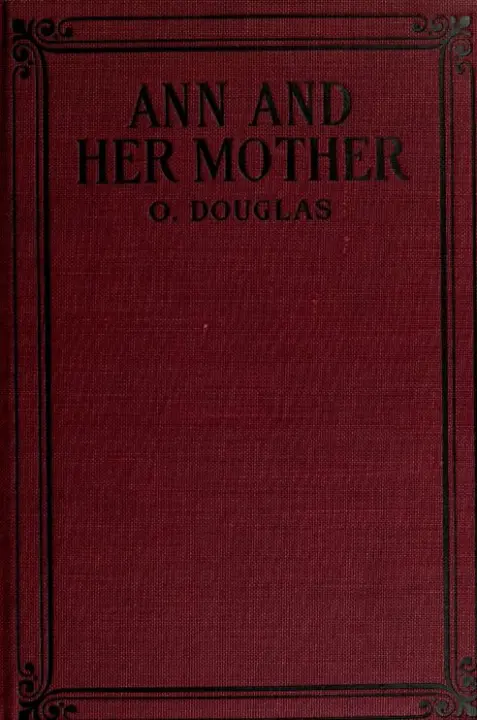
THE CLASSIC COLLECTION · 1922
"Ann and Her Mother" by O. Douglas is a novel written in the early 20th century. The story revolves around the lives of Ann and her mother, Mrs. Douglas, as they adapt to their new life in the countryside after moving to a home called "Dreams" in the Green Glen. The narrative explores themes of family, the simplicity of country life, and the characters' reflections on memories, aspirations, and the importance of companionship. At the start of the novel, we meet Mrs. Douglas and Ann in their cozy living room on a November evening, engaged in conversation about gardening and their new home. Ann expresses her excitement about creating a beautiful garden filled with flowers, while her mother, still knitting, shares a wistful longing for the busier life they left behind. As they discuss their hopes and the challenging aspects of their rural existence, we get a glimpse into their mother-daughter dynamic, which is filled with warmth, humor, and a touch of melancholy. The opening sets the stage for a reflective journey through their lives, emphasizing the importance of connection and the contrasting joys and hardships of their surroundings.
Introduction adapted from the source catalogue; source summaries may be automatically generated.
Free to read · English · 68,619 words · No account needed
MAKE TIME FOR A GOOD BOOK
On by default. Untick to stop anonymous reading totals. Each page counts after 10 seconds in view. How this works.
Anonymous counting is on unless you have switched it off.
"Oh dear, yes. It was terribly gaunt at first, but before we left it I thought it was pretty nearly perfect. When we got fresh paper and paint, and the wide upper landing and staircase carpeted with crimson, and curtains shading the high staircase window, everyone said how pretty it was. The drawing-room was always a pleasant room, with two sunny windows, and all my treasures (you would call them atrocities) in the way of gilt and alabaster clocks with glass shades, and marble-topped chiffonier, and red rep furniture. But the big night nursery was the nicest room of all, with its row of little beds, each with a gay counterpane! There was a small room opening from it where your clothes stayed, with a bath and a wash-hand basin--a very handy place."
"Yes," said Ann; "and in one corner stood a very tall basket for soiled clothes. I remember Robbie, after hearing of someone's marriage, coming to you and saying so earnestly, 'I'll stay with you always, Mums, and if anyone comes to marry me I'll hide in the dirty-clothes basket.'"
Robbie's mother looked into the dancing flames. "That was always his promise," she said softly, "I'll stay with you always.... It wouldn't have been so bad beginning in a new place, with a new baby (and me so utterly new myself!) if Mark hadn't been so fragile. I daresay he suffered from my inexperience, I almost smothered him with wraps, and hardly dared let him out of the warm nursery, but he must have been naturally delicate as well. He got bronchitis on the smallest provocation, and my heart was perpetually in my mouth with the frights I got. I spent hours listening to his breathing and touching him to see if he felt hot, and I kept your father racing for the doctor until both he and the doctor struck. I was so wrapped up in my baby that I simply never turned my head to look at the congregation; but they understood and were patient. I really was very absurd. Some people gave a dinner-party for us, and your father said I simply must go. On the night of the party I was certain Mark was taking croup, and I could hardly be dragged from him to dress. I was determined that anyway I must be home in good time, and I ordered the cab to come back for us at a quarter to nine! We had hardly finished dinner when it was announced, but I rose at once to go. The hostess, astonished but kind, said on hearing my excuses, 'Ah, well, experience teaches.' 'Finish your proverb, Mrs. Smeaton,' my dinner neighbour (a clergyman from a neighbouring parish) broke in, 'Experience teaches fools.' Now I realise that the man was embittered--and little wonder!--by having tried to make conversation to me for a dreary hour, but at the moment I hated him. When we left Kirkcaple he and his wife were our greatest friends.... There were four houses in our road. The large one nearest the Den belonged to one of the linoleum people, we came next, and then there was a low, bungalow sort of house where the Mestons lived with their three little girls, and at the end of the road lived one of the elders in the church--Goskirk was the name--with his wife and eight sons. How they all got into that small house I know not, but it was always comfortable, and there was always a welcome, and Mrs. Goskirk was the busiest, happiest little woman in Kirkcaple, and a great stand-by to me. 'How's baby to-day?' she would come in saying, every word tilted up at the end as is the accent of Fife. As rich in experience as I was poor, she could soothe my fears and laugh at my forebodings. She prescribed simple, homely remedies and told me not to fuss. She gave me a new interest in life, and kept me happily engaged by teaching me how to make clothes for Mark. Her little boys trotted in and out, coming to show me all their treasures, and going away pleased with a sweetie or a sugar biscuit! They did much to make me feel at home.... When I went back to Etterick in summer I thought Mark was a lovely baby, and that he had a wonderful mother! He wore a pelisse I had made him (under Mrs. Goskirk's eye), cream cashmere, with a wide band of lavender velvet, and a soft, white felt hat with a lavender feather round it. I paid fifteen shillings for the feather and thought it a great price.... For three years we had only Mark, then you and Robbie quite close together. But Mark was never put in the 'stirk's stall'; for you were a healthy, placid baby, and my dear Robbie was just like you. I remember his coming so well. It was a February morning, and Mrs. Perm, the nurse, said: 'Another deil o' a laddie.' She much preferred girls. Robbie was such a caller baby, so fat and good-natured and thriving."
Your reading position is saved on this browser. Take it to another device with a library code. Reading pages adapt to text, rather than matching a printed edition.
BEHIND THE BOOK
This eBook is for the use of anyone anywhere in the United States and most other parts of the world at no cost and with almost no restrictions whatsoever. You may copy it, give it away or re-use it under the terms of the Project Gutenberg License included with this eBook or online at www.gutenberg.org. If you are not located in the United States, you will have to check the laws of the country where you are located before using this eBook. Read the source licence.
The original source file, including credits and licence, is retained by this library. Request an original-format copy at no charge. Please include the book title and Project Gutenberg identifier #53522.
KEEP YOUR CURIOSITY GOING
Coulson Kernahan

Maurice Baring
Frances Wright
Cécile Tormay

Frederic Jesup Stimson

W. H. P. (William Henry Pope) Jarvis