THE CLASSIC COLLECTION✦An outlaw’s diary: the CommuneCLASSIC FREE BOOKS
An outlaw’s diary: the Commune
Cécile Tormay
THE CLASSIC COLLECTION · 1918
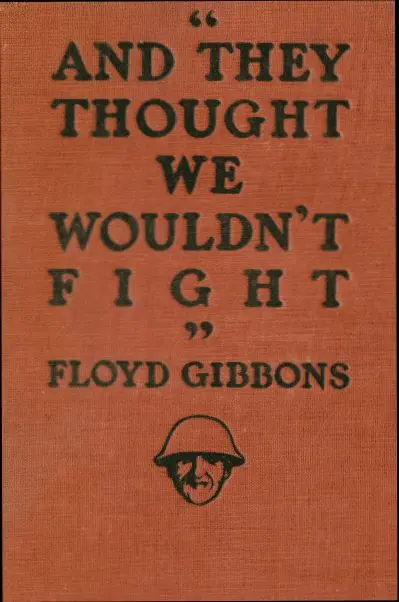
"And They Thought We Wouldn't Fight" by Floyd Phillips Gibbons is a historical account written in the early 20th century, specifically during the years surrounding World War I. The book chronicles Gibbons’ experiences as a war correspondent with the American Expeditionary Forces in France, detailing the remarkable stories of bravery and American resolve as part of the larger narrative of the war. The primary focus is on the American soldiers who fought against Germany, capturing the valor and duty instilled in them through Gibbons’ firsthand observations. At the start of the narrative, Gibbons recounts the harrowing experience of traveling across the Atlantic on the Cunard liner "Laconia", which was torpedoed by a German submarine. He vividly describes the chaos and fear during the sinking, as well as his own desperate fight for survival in the life-boat amidst the icy waters. In the aftermath, Gibbons shares insights into how this event served as a potent reminder of the mortal dangers facing American troops abroad and the urgency of their mission. As he delves into the arrival of American forces and their initial experiences in France, the opening sets the stage for exploring themes of courage, sacrifice, and the realities of war.
Introduction adapted from the source catalogue; source summaries may be automatically generated.
Free to read · English · 115,905 words · No account needed
MAKE TIME FOR A GOOD BOOK
On by default. Untick to stop anonymous reading totals. Each page counts after 10 seconds in view. How this works.
Anonymous counting is on unless you have switched it off.
"Sir, Sergeant Ransom reports with message from Liaison officer. All groups reached the objectives. No enemy encountered on the right, but a party on the left is believed to be returning with prisoners. We blew up their dugouts and left their front line in flames."
"Good work, boy," says the Colonel, rising and shaking the runner's hand. "You got here damn quick. Did you come by the Lincoln trench?"
"No, sir, I came over the top from the battalion post. Would have been here quicker, but two of us had to carry back one boy to that point before I could get relieved."
"Wounded?"
"No, sir,--dead."
"Who was it?" asks the young lieutenant.
"Private Kater, sir, my squad mate."
As the sergeant raised his hand in parting salute, all of us saw suspended from his right wrist a most formidable weapon, apparently of his own construction. It was a pick handle with a heavy iron knob on one end and the same end cushioned with a mass of barbed wire rolled up like a ball of yarn. He smiled as he noticed our gaze.
"It's the persuader, sir," he said. "We all carried them."
He had hardly quitted the door when another heavily breathing figure with shirt half torn off by barbed wire appeared.
"K Company got there, sir; beg pardon, sir. I mean sir, Sergeant Wiltur reports, sir, with message from Liaison officer. All groups reached the objectives. They left their dugouts blazing and brought back one machine gun and three prisoners."
"Very good, Sergeant," said the Colonel. "Orderly, get some coffee for
these runners."
"I'd like to see the doctor first, sir," said the runner with the torn shirt. "Got my hand and arm cut in the wire."
"Very well," said the Colonel, turning to the rest of the party, "I knew my boys would bring back bacon."
More footsteps on the entrance stairway and two men entered carrying something between them. Sweat had streaked through the charcoal coating on their faces leaving striped zebra-like countenances.
"Lieutenant Burlon's compliments, sir," said the first man. "Here's one
of their machine guns."
"Who got it?" inquired the Colonel.
"Me and him, sir."
"How did you get it?"
"We just rolled 'em off it and took it."
"Rolled who off of it?"
"Two Germans, sir."
"What were they doing all that time?"
"Why, sir, they weren't doing anything. They were dead."
"Oh, very well, then," said the Colonel. "How did you happen to find the
machine gun?"
Your reading position is saved on this browser. Take it to another device with a library code. Reading pages adapt to text, rather than matching a printed edition.
BEHIND THE BOOK
This eBook is for the use of anyone anywhere in the United States and most other parts of the world at no cost and with almost no restrictions whatsoever. You may copy it, give it away or re-use it under the terms of the Project Gutenberg License included with this eBook or online at www.gutenberg.org. If you are not located in the United States, you will have to check the laws of the country where you are located before using this eBook. Read the source licence.
The original source file, including credits and licence, is retained by this library. Request an original-format copy at no charge. Please include the book title and Project Gutenberg identifier #31086.
KEEP YOUR CURIOSITY GOING
Cécile Tormay

Moritz Busch
John L. Ransom
Frances Wright
Cécile Tormay

Mabel Potter Daggett