THE CLASSIC COLLECTION✦ToleranceCLASSIC FREE BOOKS
Tolerance
Hendrik Willem Van Loon
THE CLASSIC COLLECTION · 1920
"Ancient Man: The Beginning of Civilizations" by Hendrik Willem Van Loon is a historical account written in the early 20th century. The text embarks on a journey through the evolution of humanity from prehistoric times to the emergence of complex civilizations, tracing the remarkable developments over six thousand years of human history. The opening portion of the book introduces the author’s dedication to his children, outlining his intention to write a history that is more accessible and engaging than a traditional textbook. He evokes imagery of exploring ancient landscapes and the challenges faced by early humans, such as survival in harsh climates and the discovery of tools and fire. Delving into the life of prehistoric man, Van Loon paints a vivid picture of their struggles, primal living conditions, and eventual transition into settled agriculture and the dawn of civilization. By establishing relatable themes of discovery and resilience, the author sets up a narrative that promises to intertwine the growth of human societies with the lessons learned from their past endeavors.
Introduction adapted from the source catalogue; source summaries may be automatically generated.
Free to read · English · 26,862 words · No account needed
MAKE TIME FOR A GOOD BOOK
On by default. Untick to stop anonymous reading totals. Each page counts after 10 seconds in view. How this works.
Anonymous counting is on unless you have switched it off.
950 B.C. The Jewish state divided into two Kingdoms, that of Judah and that of Israel.
900-600 B.C. The age of the great Prophets.
722 B.C. The Assyrians conquer Palestine.
586 B.C. Nebuchadnezzar conquers Palestine.
The Babylonian captivity.
537 B.C. Cyrus, King of the Persians, allows
the Jews to return to Palestine.
167-130 B.C. Last period of Jewish independence
under the Maccabees.
63 B.C. Pompeius makes Palestine part
of the Roman Empire.
40 B.C. Herod King of the Jews.
70 A.D. The Emperor Titus destroys Jerusalem.
4000 B.C. The Sumerians take possession of
the land between the Tigris and
the Euphrates.
2200 B.C. Hammurapi, King of Babylon, gives
his people a famous code of law.
1900 B.C. Beginning of the Assyrian State,
with Nineveh as its capital.
950-650 B.C. Assyria becomes the master of
western Asia.
700 B.C. Sargon, the ruler of the Assyrians, conquers Palestine, Egypt and Arabia.
640 B.C. The Medes revolt against the
Assyrian rule.
530 B.C. The Scythians attack Assyria.
There are revolutions all over
the Kingdom.
608 B.C. Nineveh is destroyed. Assyria
disappears from the map.
608-538 B.C. The Chaldeans reestablish the
Babylonian Kingdom.
604-561 B.C. Nebuchadnezzar destroys Jerusalem,
takes Phoenicia and makes
Babylon the center of civilization.
538 B.C. Mesopotamia becomes a Persian province.
330 B.C. Alexander the Great conquers Mesopotamia.
1500-1200 B.C. The city of Sklon is the chief
Phoenician center of trade.
1100-950 B.C. Tyre becomes the commercial
center of Phoenicia.
1000-600 B.C. Development of the Phoenician
colonial Empire.
850 B.C. Carthage is founded.
586-573 B.C. Siege of Tyre by Nebuchadnezzar. The city is captured and destroyed.
538 B.C. Phoenicia becomes a Persian province.
60 B.C. Phoenicia becomes part of the Roman Empire.
At an unknown date the Indo-European
people began their march into Europe and
into India.
The year 1000 B.C. is usually given for
Zarathustra, the great teacher of the Persians,
who gave an excellent moral law.
650-B.C. The Indo-European Medes found
a state along the eastern boundaries
of Babylonia.
550-330 B.C. The Kingdom of the Persians.
Beginning of the struggle
between Indo-Europeans and Semites.
525-8.C. Cambyses, King of the Persians, takes Egypt.
520-485 B.C. Rule of Darius, King of the
Persians, who conquers Babylon
and attacks Greece.
485-465 B.C. Rule of King Xerxes, who tries to establish himself in eastern Europe but fails.
330 B.C. The Greek, Alexander the Great,
conquers all of western Asia and
Egypt and Persia becomes a
Greek Province.
The ancient world which was dominated by Semitic peoples lasted almost forty centuries. In the fourth century before the birth of Christ it died of old age.
Your reading position is saved on this browser. Take it to another device with a library code. Reading pages adapt to text, rather than matching a printed edition.
Hendrik Willem Van Loon
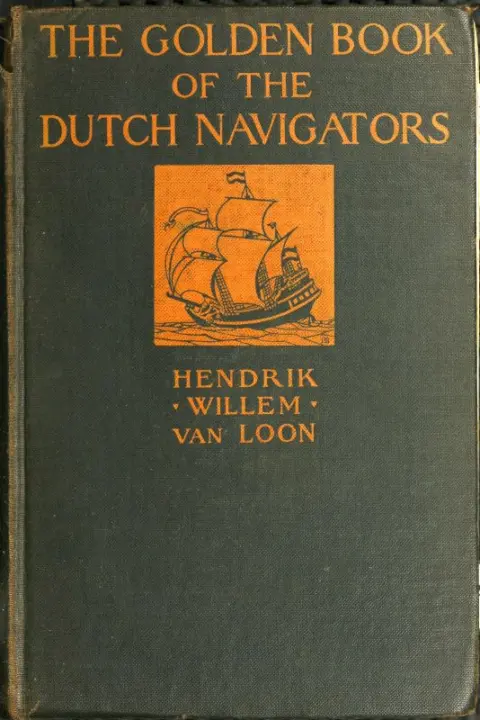
Hendrik Willem Van Loon
Hendrik Willem Van Loon
Hendrik Willem Van Loon
BEHIND THE BOOK
This eBook is for the use of anyone anywhere in the United States and most other parts of the world at no cost and with almost no restrictions whatsoever. You may copy it, give it away or re-use it under the terms of the Project Gutenberg License included with this eBook or online at www.gutenberg.org. If you are not located in the United States, you will have to check the laws of the country where you are located before using this eBook. Read the source licence.
The original source file, including credits and licence, is retained by this library. Request an original-format copy at no charge. Please include the book title and Project Gutenberg identifier #9991.
KEEP YOUR CURIOSITY GOING
Cécile Tormay

Moritz Busch
John L. Ransom
Frances Wright
Cécile Tormay

Mabel Potter Daggett