THE CLASSIC COLLECTION✦In furthest IndCLASSIC FREE BOOKS
In furthest Ind
Sydney C. Grier
THE CLASSIC COLLECTION · 1896
"An Uncrowned King: A Romance of High Politics" by Sydney C. Grier is a historical novel written in the early 20th century. The story unfolds within the realm of high politics and revolves around Viscount Usk, an English nobleman who finds himself faced with an unexpected and weighty proposition: to become the king of the troubled Balkan kingdom of Thracia. The intrigue of political affairs, revolution, and personal desire sets the stage for this compelling tale. The opening of the novel introduces us to the political turmoil surrounding Lord Usk, who is grappling with governmental decisions that threaten his political ambitions. After witnessing the frustrations of his fellow members in the House of Commons, Usk is invited by the Thracian M. Drakovics to consider ascending to the throne of Thracia, which leads him into a deeper contemplation of duty, identity, and sacrifice. As Usk navigates his societal responsibilities and personal relationships, we are also introduced to influential characters, like Mrs. Sadleir, who provide a social backdrop to Usk’s evolving journey. The chapter teases the intertwining of romance and high-stakes politics, setting the tone for an exploration of leadership, loyalty, and the burdens of power.
Introduction adapted from the source catalogue; source summaries may be automatically generated.
Free to read · English · 143,558 words · No account needed
MAKE TIME FOR A GOOD BOOK
On by default. Untick to stop anonymous reading totals. Each page counts after 10 seconds in view. How this works.
Anonymous counting is on unless you have switched it off.
“It was, milord. I had been absent from my country for many years, owing to my having once taken part in a meeting of those who wished to bring about a reform by means of constitutional agitation. I was a young man when I threw in my lot with the reformers, and had just begun to practise at the bar, but I was obliged to leave Thracia, and sacrifice all my prospects. My years of exile were not wasted. I travelled, I worked, I associated with earnest men--and I found my country a byword everywhere. At last I could endure it no longer, and I made up my mind to set on foot one more effort to stir up my compatriots to a sense of their degradation. I returned to Thracia, and found myself received with joy, yet with fear, by my old friends and by the younger generation of patriots that had sprung up. Once more we set ourselves to form a constitutional party, and to educate public opinion. Our objects were simple,--the dismissal of the Scythians who had been thrust into public offices, the reform of the whole corrupt administration, the discontinuance of the system of borrowing, and the gradual repayment of our debt to Scythia out of the money saved by reducing expenses and gained by the proper development of the country. We were quite ignorant of the extent to which our views found favour among the people, but we determined upon a bold stroke--in order both to advertise our programme and to show us how we were supported. The Elections were approaching, and we resolved to contest every seat for which we could find a candidate. The Administration was utterly taken by surprise, but its members perceived that their salvation lay in striking at once, and they chose to begin with me. I was elected by a large majority for the constituency to which I offered myself, but my election was declared void by a Government decree, and a fresh poll was announced. Troops were drafted into the town, nominally to preserve the peace, in reality to force my constituents to vote for the Government candidate, and vast numbers of persons crowded in from the country districts, drawn by the prospect of a tumult. I was passing through the market-place when a band of my supporters called upon me for a speech. Then, milord, I felt a strange fire seize me. I remembered the effect, long before, of my speech to the meeting for taking part in which I was exiled. I remembered that in my days as barrister I had often moved the court to tears and to indignation. It was merely a flash of memory, but with it came the impulse to act. I sought a place from which to speak--I climbed upon a country cart--I spoke--I heard the people shouting--the Government agent ordered the soldiers to arrest me--I saw them pushing their way through the crowd--they closed round me, dragged me down--I appealed to the bystanders--I was rescued--I spoke again, and raised the cry of Reform. Before I knew what had happened I was at the head of a revolution, the people had put themselves under my guidance, the troops had joined us, the Government agent was seeking the means for flight. By my orders he was captured and lodged in prison--I seemed to perceive at once what was to be done. The telegraph-office was seized, no message allowed to be sent but by my authority. To each of our candidates for the Assembly I telegraphed what had happened, and his orders. A brief pause to concert my plans with my chief supporters, and we were in motion again. The news spread through the country like wildfire; in a short time the whole army was with us, and the people were thronging to us in enormous numbers. We marched to Bellaviste, and entered the city without striking a blow. When we laid before the king our demands for a change of Ministry and a new constitution, he preferred to abdicate rather than grant them. We were nothing loath, and he has retired to the south of France on a suitable income. A provisional government was formed, and has remained in power, supported by the whole force of the national sentiment, for nearly a year. The success of our movement was due to its spontaneity. If we had prepared for it, Scythia would have gained some inkling of our plan, and might have out-plotted us, but she could not without any excuse interfere with the accomplished fact. In the very first moment of our freedom we ranged Pannonia on our side by making overtures to her for the conclusion of a commercial treaty which had hitherto been hindered by the intrigues of Scythia. To Scythia we were able to guarantee, through the good offices, secretly exercised, of Pannonia, the regular payment of her interest, and the gradual extinction of the debt itself, while the dismissed officials received honourable terms. It was not easy to arrange all this, for at first we found it difficult to obtain money, and the Thracians are hot-blooded and had much to avenge, but I would not remain at their head except with their promise to acquiesce in my decisions. Balancing Pannonia against Scythia in this way, we have passed through a year of national life, although Scythia refuses to recognise us, and has worked upon our suzerain, Roum, to withhold from us up to the present time the right we claim of choosing our own form of government.”
Your reading position is saved on this browser. Take it to another device with a library code. Reading pages adapt to text, rather than matching a printed edition.
Sydney C. Grier

Sydney C. Grier

Sydney C. Grier
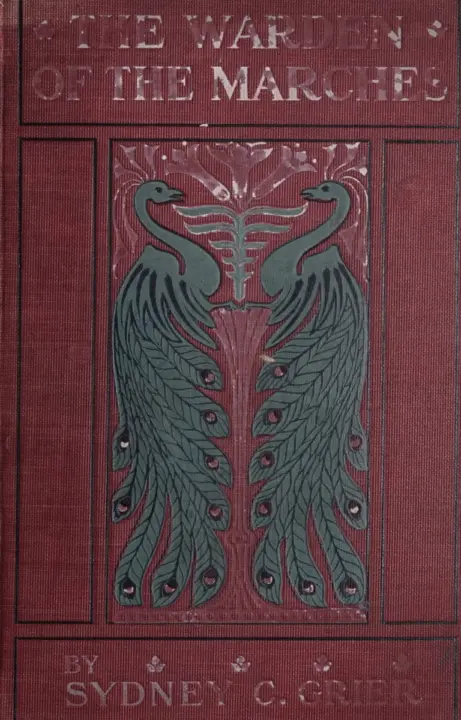
Sydney C. Grier
BEHIND THE BOOK
This eBook is for the use of anyone anywhere in the United States and most other parts of the world at no cost and with almost no restrictions whatsoever. You may copy it, give it away or re-use it under the terms of the Project Gutenberg License included with this eBook or online at www.gutenberg.org. If you are not located in the United States, you will have to check the laws of the country where you are located before using this eBook. Read the source licence.
The original source file, including credits and licence, is retained by this library. Request an original-format copy at no charge. Please include the book title and Project Gutenberg identifier #66280.
KEEP YOUR CURIOSITY GOING
Cécile Tormay

Moritz Busch
Coulson Kernahan
John L. Ransom

Maurice Baring
Frances Wright