THE CLASSIC COLLECTION✦The Stone AgeCLASSIC FREE BOOKS
The Stone Age
Clement Wood
THE CLASSIC COLLECTION · 1924
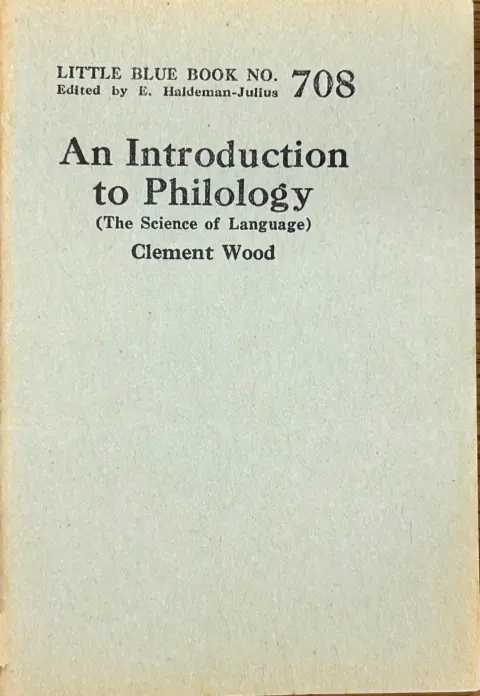
An introduction to philology by Clement Wood. Explore this classic work in a free online edition. Subjects include Philology. Read the locally hosted text below, adjust the reading display, and continue where you left off.
Introduction adapted from the source catalogue; source summaries may be automatically generated.
Free to read · English · 14,816 words · No account needed
MAKE TIME FOR A GOOD BOOK
On by default. Untick to stop anonymous reading totals. Each page counts after 10 seconds in view. How this works.
Anonymous counting is on unless you have switched it off.
More than this, a fact not as yet discovered by academic philology, climate plays a large shaping element in speech. The speech is determined, it might also be said, by isothermic lines. Study your map of the world for place-names, as samples of the spoken languages. The harsh Siberian and Russian Yakutsk, Kamchatka, Okhotsk, Tobolsk, Krasnoyarsk, Pustozersk, Petrozavodsk, Scandinavian Bukke Fjord, Tromso, Sundsvall, Laurvik, correspond to the explosive Eskimo gutturals, and to Umanak, Svartenhuk, Sukkertoppen, Tchaneta, Attumwapiskat, Winisk, Waskaiowaku, names modified by southerly settlers. The guttural Teutonic speech is similar to the American Massachusetts, Connecticut, Chingashcook, Androscoggin, Umbagog, Squam, Memphramagog, Mattawamkeag, Hopatcong, Keokuk, Saskatchewan, Iskut, Kamloops. The melting softness of Italian, southern French, Spanish finds its American parallel in Miami, Pensacola, Tuscaloosa, Tuscarora, Appalachicola, Alapha, Susquehanna, and the like. Equatorial speech is similar broadly the world around; the Southern hemisphere builds back from a lazy dwelling softness to a curtness and at last a staccato brusqueness, as we approach the southern pole. Civilized conquest of the world imports inept place-names everywhere: but the original speech was determined by the close-mouthed cold and the languid drawl of tropic warmth.
Thus English took her Teutonic speech from a local dialect. At first there was no general standard; but within a century, the spread of printed books, and the King James version of the Bible, made the form of the language comparatively rigid. If it were entirely rigid, it would be dead: never forget that living speech is a constantly growing thing.
The French Element.
The English language has been said to be French badly pronounced. There is some truth in the witticism; just as French, in turn, is mangled provincial Latin. Even before the Norman conquest, certain French words had crossed the channel, becoming among others purse, sot, castle, turn, trail, market, clerk, false. In the 12th Century, in the little written English coming down to us, these had been joined by such words as justice, war, peace, tower, treason, prison, court, crown, empress, chaplain, saint, grace, mercy, charity, faith. Notice how these words point to the part played by the Normans in English history, in military, court and religious circles. The middle of the 14th Century saw thousands of words borrowed. The legal terms especially were taken from the French: among these mortgage, forfeit, bail, jury, larceny, lease, perjury, assets, embezzle, seize, culprit, improve, attach, quit, matter of fact. General words, with the date of their first appearance from French sources in the Oxford dictionary, are havoc, 1585; plot, 1590; march, 1590; lobby, 1553; massacre, 1581; sentinel, 1579; attach, 1600; quatrain, 1585; gazette, 1605; dessert, 1600. Later additions are campaign, 1656; corps, 1711; memoir, 1673; group, 1686; profile, 1656; serenade, 1656; caprice, 1667; beau, 1687; brunette, 1713; cravat, 1656; pantaloons, 1661.
Your reading position is saved on this browser. Take it to another device with a library code. Reading pages adapt to text, rather than matching a printed edition.
Clement Wood
Clement Wood
Clement Wood
Clement Wood
BEHIND THE BOOK
This eBook is for the use of anyone anywhere in the United States and most other parts of the world at no cost and with almost no restrictions whatsoever. You may copy it, give it away or re-use it under the terms of the Project Gutenberg License included with this eBook or online at www.gutenberg.org. If you are not located in the United States, you will have to check the laws of the country where you are located before using this eBook. Read the source licence.
The original source file, including credits and licence, is retained by this library. Request an original-format copy at no charge. Please include the book title and Project Gutenberg identifier #78985.
KEEP YOUR CURIOSITY GOING

Charles G. (Charles Griffith) Ross
Hannah Webster Foster

Emily Lawless
Edwin Hamlin Carr

Charles De Lano Hine
Andrew Ure