THE CLASSIC COLLECTION✦The Stone AgeCLASSIC FREE BOOKS
The Stone Age
Clement Wood
THE CLASSIC COLLECTION · 1924
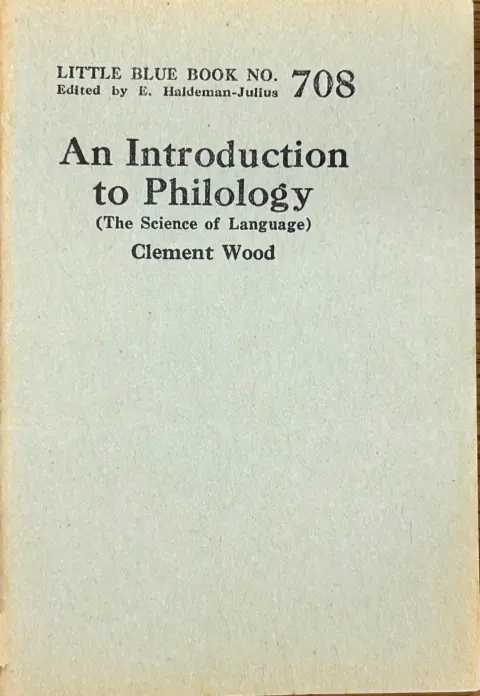
An introduction to philology by Clement Wood. Explore this classic work in a free online edition. Subjects include Philology. Read the locally hosted text below, adjust the reading display, and continue where you left off.
Introduction adapted from the source catalogue; source summaries may be automatically generated.
Free to read · English · 14,816 words · No account needed
MAKE TIME FOR A GOOD BOOK
On by default. Untick to stop anonymous reading totals. Each page counts after 10 seconds in view. How this works.
Anonymous counting is on unless you have switched it off.
From the Turkish, a race dependent upon others for culture, there are few words, including horde, turkey, turquoise, uhlan. India, the original home of the Indo-European speech to which Anglo-Saxon and Teutonic belong, is responsible for many words. Early words representing Oriental contributions to European civilization are pepper, camphor, indigo, china (ware), orange, candy, calico, chintz, sandal, jungle, loot, punch (beverage). Later borrowings are: juggernaut, pundit, rajah, sepoy, bandanna, thug, bungalow, shampoo, pariah, cot (bed), polo.
Relatively few words have come from China and Japan. Silk may be of Chinese origin; typhoon, tea, serge, mandarin, certainly are. From Japan emanate kimono, soy (bean), and few others. The South Seas have furnished more, including bamboo, cheroot, teak, caddy, gong, guttapercha, junk, orang-outang, gingham, bantam, taboo, tattoo, atoll, ukelele. Uncivilized Africa’s different races have given canary, chimpanzee, voodoo, hoodoo, tango, guinea, gorilla, yam, zebra. Australia is to be credited with boomerang and kangaroo.
The native speech of the pre-European Americans has given the words listed under the Spanish influence, and also mahogany, canoe, guava, cannibal, hurricane, guano, tapioca, buccaneer, pampas, alpaca, condor, tapir, banana, jaguar, coyote, also through the Spaniards. North American Indians have added to this a large number of place-names, and also caucus, pow-wow, hickory, hominy, moccasin, moose, opossum, raccoon, skunk, squaw, toboggan, wigwam, tomahawk. The Philippines gave the useful word hike. The expressive husky is said to be a corruption of Eskimo, first applied as a name for a dog.
With this we close the rapid survey of contributions to our language from every race of men. Each other language has grown by similar accretions; and the process is a continuing one. The world war added many words to the vocabulary; the uneasy peace now following is furnishing at least its daily dozen.
Your reading position is saved on this browser. Take it to another device with a library code. Reading pages adapt to text, rather than matching a printed edition.
Clement Wood
Clement Wood
Clement Wood
Clement Wood
BEHIND THE BOOK
This eBook is for the use of anyone anywhere in the United States and most other parts of the world at no cost and with almost no restrictions whatsoever. You may copy it, give it away or re-use it under the terms of the Project Gutenberg License included with this eBook or online at www.gutenberg.org. If you are not located in the United States, you will have to check the laws of the country where you are located before using this eBook. Read the source licence.
The original source file, including credits and licence, is retained by this library. Request an original-format copy at no charge. Please include the book title and Project Gutenberg identifier #78985.
KEEP YOUR CURIOSITY GOING

Charles G. (Charles Griffith) Ross
Hannah Webster Foster

Emily Lawless
Edwin Hamlin Carr

Charles De Lano Hine
Andrew Ure