THE CLASSIC COLLECTION✦An outlaw’s diary: the CommuneCLASSIC FREE BOOKS
An outlaw’s diary: the Commune
Cécile Tormay
THE CLASSIC COLLECTION · 1914
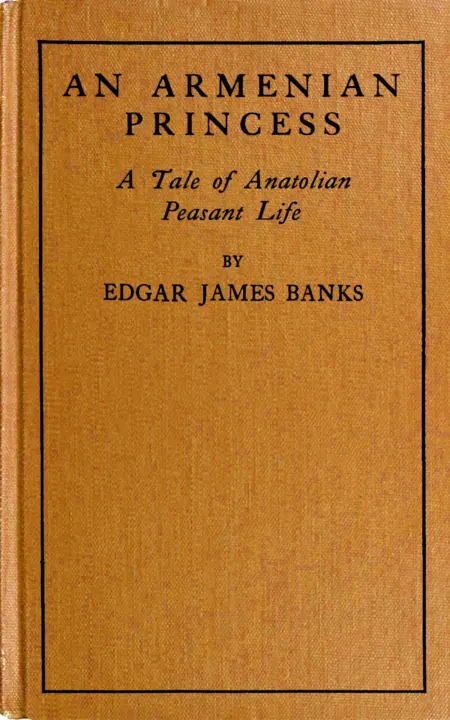
"An Armenian Princess: A Tale of Anatolian Peasant Life" by Edgar James Banks is a novel written in the early 20th century. The story is set in Anatolia, focusing on rural village life amid the complexities of Armenian and Turkish relations under Ottoman rule. The likely topic of the book is the experiences of Armenian villagers—specifically the Lucinian family, with a particular focus on Armenouhi, Dicran’s blue-eyed granddaughter—against a backdrop of social change, religious tensions, and the growing threat of oppression and violence. The opening of the novel introduces the village of Ak Hissar in Central Asia Minor, painting a vivid picture of daily life, its diverse Armenian and Turkish communities, and key local characters like dicran, the respected Armenian merchant, his beloved granddaughters Armenouhi and Vassinag, and their close friend Takvor. Early chapters recount the deepening bond between Armenouhi and Takvor, explore the impact of corruption as Badiark, the ambitious money changer, turns into the harsh tax collector Hassan, and describe growing threats against the Armenians. The narrative soon shifts to episodes of persecution: Armenouhi is sent away for safety, Takvor endures unjust imprisonment and witnesses violence in Constantinople, while Ak Hissar itself experiences brutal attacks and massacres. By the end of this portion, Armenouhi and her family’s fates are left in dire jeopardy, with Takvor desperately seeking to reunite with and save those he loves amidst turmoil and danger.
Introduction adapted from the source catalogue; source summaries may be automatically generated.
Free to read · English · 40,292 words · No account needed
MAKE TIME FOR A GOOD BOOK
On by default. Untick to stop anonymous reading totals. Each page counts after 10 seconds in view. How this works.
Anonymous counting is on unless you have switched it off.
Next morning Hassan disappeared early, only to return in a few minutes with soldiers from the guardhouse, armed with axes.
“Why these soldiers?” asked Dicran.
“We have come for the rafters,” said Hassan, and he pointed to the roof.
“I told you I had others to which you were welcome.”
“I want those up there,” growled Hassan, ordering a soldier to climb to
the roof.
In vain Dicran sought to reason with him; none but those particular rafters would answer, and already the soldier was tearing up the tiles.
“I will give you their cost if you will but leave them,” cried the alarmed Dicran, taking a gold lira from his pocket.
Though the gold piece was more than ample, Hassan looked at it with
apparent disgust.
“It is too little,” he sneered. “A lira for fourteen, good, straight, seasoned rafters!” and he laughed loud at the absurdity. “One rafter, one lira; fourteen rafters, fourteen liras, and cheap at that,” he added.
In a moment Dicran was bargaining for his own property.
“I will give you five liras.”
“Fourteen,” shouted Hassan, unabashed by the injustice of his exorbitant demand. “You can afford to send your girl to a foreign mission school, and you shall pay for those rafters. Cut them out, soldier,” he cried, turning to the man on the roof.
The soldier began to chop, and Dicran saw that his house would soon be
ruined.
“Here! here!” he cried, and began to count out the fourteen gold pieces.
Without rearranging the tiles which he had displaced, the soldier climbed from the roof and joined his companions. Hassan, chuckling at his success, ordered his men back to the barracks.
Thus the tax collector began a system of persecution worthy only of himself. The prosperous days of the villagers were over. Taxes in lump sums were demanded of them, and to enforce their payment, the shady trees on the hillside were cut down, the spring was filled, the sheep and cattle were driven away, the mulberry groves were burned, ancient family jewels and rich old embroideries were confiscated, all for taxes, all for the greed of one man who had purchased from the government the right to practice open brigandage.
According to the official report, the people of Ak Hissar had voluntarily paid their taxes in full. The valuable service which Hassan was rendering his government was recognized by the Sultan, and he was rewarded with a decoration. The tax collector was now no longer Hassan, nor Hassan Effendi, but Hassan Bey.
Your reading position is saved on this browser. Take it to another device with a library code. Reading pages adapt to text, rather than matching a printed edition.
BEHIND THE BOOK
This eBook is for the use of anyone anywhere in the United States and most other parts of the world at no cost and with almost no restrictions whatsoever. You may copy it, give it away or re-use it under the terms of the Project Gutenberg License included with this eBook or online at www.gutenberg.org. If you are not located in the United States, you will have to check the laws of the country where you are located before using this eBook. Read the source licence.
The original source file, including credits and licence, is retained by this library. Request an original-format copy at no charge. Please include the book title and Project Gutenberg identifier #75978.
KEEP YOUR CURIOSITY GOING
Cécile Tormay

Moritz Busch
Coulson Kernahan
John L. Ransom

Maurice Baring
Frances Wright