THE CLASSIC COLLECTION✦An outlaw’s diary: the CommuneCLASSIC FREE BOOKS
An outlaw’s diary: the Commune
Cécile Tormay
THE CLASSIC COLLECTION · 1824
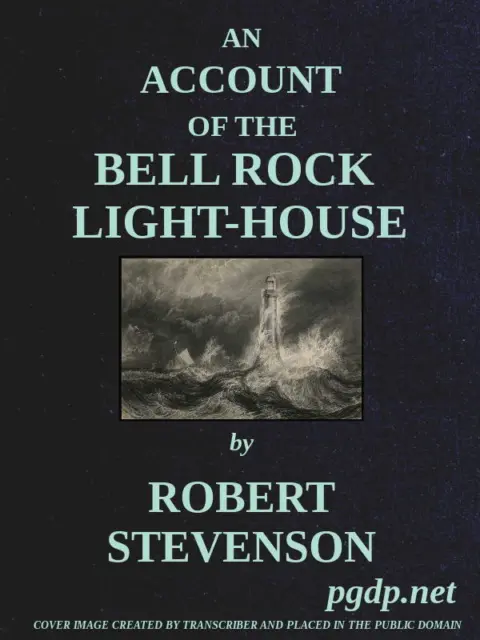
"An Account of the Bell Rock Light-House" by Robert Stevenson is a historical account written in the early 19th century. The work details the construction and unique structure of a critical lighthouse built on the Bell Rock, which posed a perilous threat to mariners navigating the eastern coast of Scotland. The book not only outlines the technical challenges and innovative solutions of the lighthouse's construction but also delves into the broader historical context of lighthouse development in Scotland. At the start of the text, Stevenson addresses the King, highlighting the national importance of the Bell Rock lighthouse, which was necessary for the safety of maritime trade and naval operations in the North Sea. He introduces the history of lighthouse establishment in Scotland, setting the stage by discussing the dangers faced by sailors and the initiatives taken by the Northern Lighthouse Board to improve navigation safety. The opening reveals a commitment to engineering excellence and societal benefit, suggesting a narrative rich in both technical detail and historical significance.
Introduction adapted from the source catalogue; source summaries may be automatically generated.
Free to read · English · 242,293 words · No account needed
MAKE TIME FOR A GOOD BOOK
On by default. Untick to stop anonymous reading totals. Each page counts after 10 seconds in view. How this works.
Anonymous counting is on unless you have switched it off.
ARNISTON LEDGE.--Named in compliment to the late Lord Chief-Baron Dundas of Arniston, who, while Solicitor-General and Lord Advocate of Scotland, took an active part in Light-house affairs; and visited the Bell Rock in the year 1812, as noticed at page 413.
RATTRAY LEDGE.--In compliment to Mr Baron Clerk Rattray, who, while Sheriff of the Shire of Edinburgh, as noticed at page 98, was ex officio one of the Commissioners of the Northern Light-houses, and, as one of the Bell Rock Committee, took much interest in the work.
HOPE’S WHARF--forms the termination of the permanent railway toward the west. It was named for the Right Honourable Charles Hope, Lord President of the Court of Session, who landed here in the year 1815. While Lord Advocate of Scotland, he took a warm interest in the affairs of the Northern Light-houses, and in 1803 brought the first bill into Parliament for the erection of the Bell Rock Light-house, as noticed at page 93.
PULTENEY LEDGE.--So named in compliment to Sir William Pulteney, who, as a Member of Parliament, took a lively interest in the bill brought forward for the Bell Rock Light-house in the year 1803, as alluded to at page 92.
BANKS LEDGE.--Named in compliment to Sir Joseph Banks, who was Vice-President of the Board of Trade in the year 1806, when the Bill for the Light-house was in Parliament, and who took much interest in it, as noticed at page 101.
COCHRANE’S LEDGE--is named in compliment to Admiral Sir Alexander Cochrane, who first called the attention of the Light-house Board to an erection upon the Bell Rock, as mentioned at page 85.
PORT ERSKINE--forms the principal landing-place on the western side of the Rock, and derives its name from the Honourable Henry Erskine, who, when Lord Advocate of Scotland, and ex officio one of the Commissioners of the Northern Light-houses, brought the second Bill for the Bell Rock Light-house into Parliament, which passed in the year 1806, as stated at page 100.
ULBSTER LEDGE.--Named in compliment to the Right Honourable Sir John Sinclair, Baronet, of Ulbster, Chairman of the Committee of the House of Commons, and who brought up its report relative to the Bell Rock bill, as stated at page 103.
KELLIE LEDGE.--Named in compliment to the Earl of Kellie, who visited the works at the Bell Rock in the year 1810, as noticed at page 378.
PITMILLY WHARF--formed the western extremity of the landing-wharf in use during the Light-house operations, and was named in compliment to Mr Monypenny, now Lord Pitmilly, who, while in the commission both as Sheriff of Fife and Solicitor-General of Scotland, was a member of the Bell Rock Committee, and visited the works in the year 1810, as stated at page 378.
Your reading position is saved on this browser. Take it to another device with a library code. Reading pages adapt to text, rather than matching a printed edition.
BEHIND THE BOOK
This eBook is for the use of anyone anywhere in the United States and most other parts of the world at no cost and with almost no restrictions whatsoever. You may copy it, give it away or re-use it under the terms of the Project Gutenberg License included with this eBook or online at www.gutenberg.org. If you are not located in the United States, you will have to check the laws of the country where you are located before using this eBook. Read the source licence.
The original source file, including credits and licence, is retained by this library. Request an original-format copy at no charge. Please include the book title and Project Gutenberg identifier #48414.
KEEP YOUR CURIOSITY GOING
Cécile Tormay

Moritz Busch
John L. Ransom
Frances Wright
Cécile Tormay

Mabel Potter Daggett