THE CLASSIC COLLECTION✦An outlaw’s diary: the CommuneCLASSIC FREE BOOKS
An outlaw’s diary: the Commune
Cécile Tormay
THE CLASSIC COLLECTION · 1824
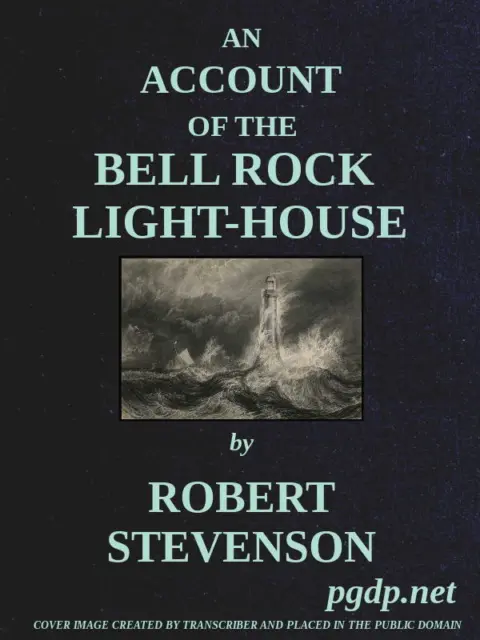
"An Account of the Bell Rock Light-House" by Robert Stevenson is a historical account written in the early 19th century. The work details the construction and unique structure of a critical lighthouse built on the Bell Rock, which posed a perilous threat to mariners navigating the eastern coast of Scotland. The book not only outlines the technical challenges and innovative solutions of the lighthouse's construction but also delves into the broader historical context of lighthouse development in Scotland. At the start of the text, Stevenson addresses the King, highlighting the national importance of the Bell Rock lighthouse, which was necessary for the safety of maritime trade and naval operations in the North Sea. He introduces the history of lighthouse establishment in Scotland, setting the stage by discussing the dangers faced by sailors and the initiatives taken by the Northern Lighthouse Board to improve navigation safety. The opening reveals a commitment to engineering excellence and societal benefit, suggesting a narrative rich in both technical detail and historical significance.
Introduction adapted from the source catalogue; source summaries may be automatically generated.
Free to read · English · 242,293 words · No account needed
MAKE TIME FOR A GOOD BOOK
On by default. Untick to stop anonymous reading totals. Each page counts after 10 seconds in view. How this works.
Anonymous counting is on unless you have switched it off.
“According to your orders, I have, on several occasions, during this month, careened the Float, and inspected her bottom as much as possible while the vessel is at anchor; but I can see no appearance of the wood-worm in any part of it. There is indeed plenty of sea-weed, mussels, and red-worms (creatures with many feet), but it is not this kind of worm that perforates the planks of shipping; and as this destructive animal generally makes its appearance between wind and water, I am apt to believe that the Pharos’ bottom is perfectly sound and healthy. With regard to the beam and knee observed to be working a little, I will send a note of the scantling of the timber that will be necessary for securing it, to Mr Dickie, the carpenter, at Arbroath. I, for one, have no objections to another winter on board, without further repairs; for though she rolls heavily in the trough of the sea, yet she has, upon the whole, been a very kindly ship to me.--I am, Sir, your most obedient servant,
“To Mr Stevenson.
JOHN REID, Carpenter.”
[Sidenote: 1810, July.]
[Sidenote: Narrow escape of one of the Masons.]
While William Kennedy, one of the masons, was stepping off the bridge into the entrance-door of the Light-house, one of the cast-iron slips of the balance-weight of the crane, weighing about 70 lb., fell from the top of the building and grazed his left shoulder, but, fortunately, in so gentle a manner, that it hardly ruffled the skin; a few inches nearer, it would have carried away his arm or killed him on the spot.
[Sidenote: Sunday, 1st.]
[Sidenote: Writer describes his Cabin.]
The artificers laid 12 stones to-day, and the seamen landed no fewer than 34 blocks.--The writer had now been at the Bell Rock since the latter end of May, or about six weeks, during four of which he had been a constant inhabitant of the Beacon, without having been once off the Rock. After witnessing the laying of the Sixty-seventh or second Course of the bed-room apartment, he left the Rock with the Tender, and went ashore, as some arrangements were to make for the future conduct of the works at Arbroath, which were soon to be brought to a close; the landing-master’s crew having, in the mean time, shifted on board of the Patriot. In leaving the Rock, the writer kept his eyes fixed upon the Light-house, which had recently got into the form of a house, having several tiers or storeys of windows. Nor was he unmindful of his habitation in the Beacon, now far overtoped by the masonry; where he had spent several weeks in a kind of active retirement, making practical experiment of the fewness of the positive wants of man. His cabin measured not more than 4 feet 3 inches in breadth on the floor; and though, from the oblique direction of the beams of the Beacon, it widened towards the top, yet it did not admit of the full extension of his arms when he stood on the floor; while its length was little more than sufficient for suspending a cot-bed during the night, calculated for being triced up to the roof through the day, which left free room for the admission of occasional visitants. His folding-table was attached with hinges, immediately under the small window of the apartment, and his books, barometer, thermometer, portmanteau, and two or three camp-stools, formed the bulk of his moveables. His diet being plain, the paraphernalia of the table were proportionally simple; though every thing had the appearance of comfort, and even of neatness, the walls being covered with green cloth, formed into pannels with red tape, and his bed festooned with curtains of yellow cotton-stuff. If, in speculating upon the abstract wants of man in such a state of exclusion, one were reduced to a single book, the Sacred Volume, whether considered for the striking diversity of its story,--the morality of its doctrine,--or the important truths of its Gospel, would have proved by far the greatest treasure.
Your reading position is saved on this browser. Take it to another device with a library code. Reading pages adapt to text, rather than matching a printed edition.
BEHIND THE BOOK
This eBook is for the use of anyone anywhere in the United States and most other parts of the world at no cost and with almost no restrictions whatsoever. You may copy it, give it away or re-use it under the terms of the Project Gutenberg License included with this eBook or online at www.gutenberg.org. If you are not located in the United States, you will have to check the laws of the country where you are located before using this eBook. Read the source licence.
The original source file, including credits and licence, is retained by this library. Request an original-format copy at no charge. Please include the book title and Project Gutenberg identifier #48414.
KEEP YOUR CURIOSITY GOING
Cécile Tormay

Moritz Busch
John L. Ransom
Frances Wright
Cécile Tormay

Mabel Potter Daggett