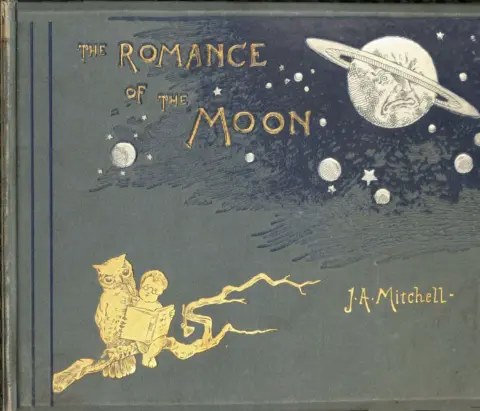
The Romance of the Moon
John Ames Mitchell
THE CLASSIC COLLECTION · 1895
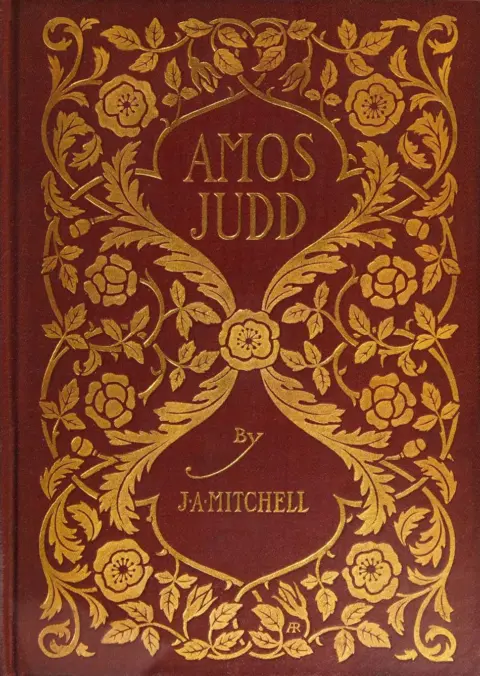
"Amos Judd" by John Ames Mitchell is a novel written in the late 19th century. The story begins with the arrival of three foreigners—two men and a boy—in a small American village, Daleford, where they seek out a man named Josiah Judd. The narrative hints at themes of cultural contrasts and the complexities of identity, particularly through the character of the boy, who is set to become intertwined with the lives of the locals. The opening of "Amos Judd" introduces us to the village of Daleford and lays the groundwork for the central relationships that will develop throughout the novel. As the strangers arrive, they exhibit an air of mystery, particularly the young boy who is revealed to be under the care of Mr. Judd, leading to speculation about his origins. A letter from Mr. Judd's brother in India reveals that the boy's life is in danger, introducing elements of suspense. The villagers, particularly Mr. Judd, are drawn into a web of intrigue involving wealth, foreign connections, and the challenge of understanding a child from a vastly different culture. As the scene unfolds, we witness the juxtaposition of the boy's dignified demeanor with the simple, rustic lives of the village, setting the stage for both conflict and connection.
Introduction adapted from the source catalogue; source summaries may be automatically generated.
Free to read · English · 38,711 words · No account needed
MAKE TIME FOR A GOOD BOOK
On by default. Untick to stop anonymous reading totals. Each page counts after 10 seconds in view. How this works.
Anonymous counting is on unless you have switched it off.
“Both. With a few old love-letters and a touch of dried apples.”
“Whatever it is, I love it. The days of my childhood come galloping back,” and with upturned face she closed her eyes and drew a longer breath. He bent silently over and touched her lips.
“What a breach of hospitality!”
“When a visitor insults a host by sleeping in his presence, it is etiquette to awaken her. And when lips with those particular undulations look one pleasantly in the eye and say ‘Amos, kiss us,’ what do you expect to happen?”
“From you I expect the worst, the most improper thing.”
“And you will always get it, O spirit of old-fashioned Roses!”
In opening a window he disturbed an enormous fly, whose buzzing filled every corner of the roof. “To me,” he said, “this atmosphere recalls long marches and battles, with splendid victories and awful defeats.”
“I don’t see why. To me it seems delightfully restful.”
From an ancient horse-hair trunk he brought forth a box, and seating himself at her feet, emptied its contents upon the floor.
“This is why,” and he arranged in parallel lines the little leaden soldiers, diminutive cannons, some with wheels and some without, and a quantity of dominos, two by two. “These are troops, and if you care to know how I passed the rainy days of boyhood this will show you.”
“But, what are the dominos?”
“They are the enemy. These lead soldiers are mine, and they are all veterans, and all brave. This is myself,” and he held up a bent and battered relic on a three-legged horse.
“And who are you in these fights, Goosey?”
“Napoleon, generally; often Cæsar and Frederick, and sometimes George Washington and General Lee.”
“But you have no head. Isn’t that a drawback for a commander?”
“Not with troops like these. I lost that head at Quebec, as Montcalm.”
She looked down upon him with a wish that she also might have been one of those absurd little soldiers and shared his victories.
“The cracks between the floor-boards,” he continued, “are railroads, rivers, canals, stone walls, or mountain ranges, according to the campaign.”
“They must have been a nuisance, though. Could not a soldier disappear
and not return?”
Your reading position is saved on this browser. Take it to another device with a library code. Reading pages adapt to text, rather than matching a printed edition.
John Ames Mitchell

Francis Davis Millet & W. Hamilton (William Hamilton) Gibson & Will H. (Will Hicok) Low & John Ames Mitchell & Francis Hopkinson Smith
John Ames Mitchell
John Ames Mitchell
BEHIND THE BOOK
This eBook is for the use of anyone anywhere in the United States and most other parts of the world at no cost and with almost no restrictions whatsoever. You may copy it, give it away or re-use it under the terms of the Project Gutenberg License included with this eBook or online at www.gutenberg.org. If you are not located in the United States, you will have to check the laws of the country where you are located before using this eBook. Read the source licence.
The original source file, including credits and licence, is retained by this library. Request an original-format copy at no charge. Please include the book title and Project Gutenberg identifier #72058.
KEEP YOUR CURIOSITY GOING
Coulson Kernahan

Maurice Baring
Frances Wright
Cécile Tormay

Frederic Jesup Stimson

W. H. P. (William Henry Pope) Jarvis