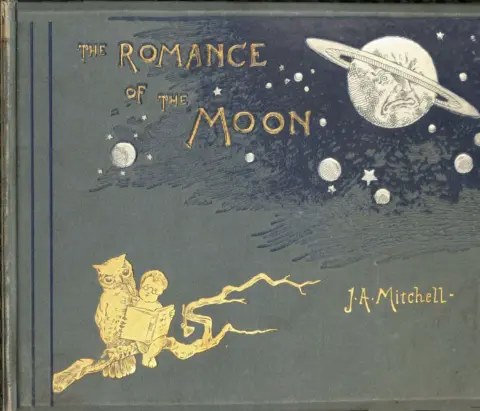
The Romance of the Moon
John Ames Mitchell
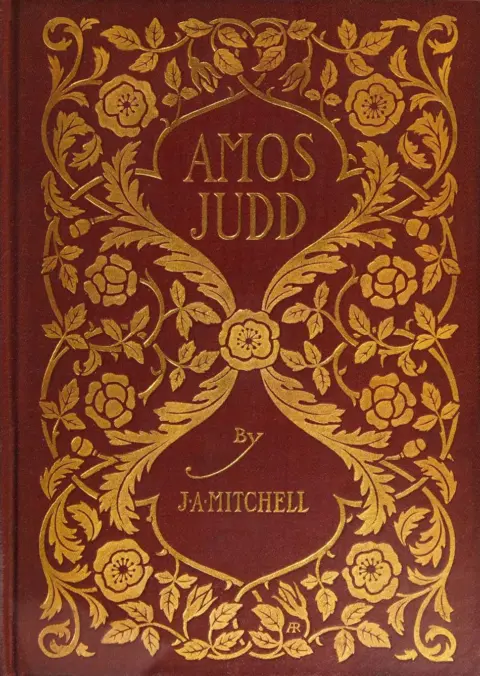
THE CLASSIC COLLECTION · 1895
"Amos Judd" by John Ames Mitchell is a novel written in the late 19th century. The story begins with the arrival of three foreigners—two men and a boy—in a small American village, Daleford, where they seek out a man named Josiah Judd. The narrative hints at themes of cultural contrasts and the complexities of identity, particularly through the character of the boy, who is set to become intertwined with the lives of the locals. The opening of "Amos Judd" introduces us to the village of Daleford and lays the groundwork for the central relationships that will develop throughout the novel. As the strangers arrive, they exhibit an air of mystery, particularly the young boy who is revealed to be under the care of Mr. Judd, leading to speculation about his origins. A letter from Mr. Judd's brother in India reveals that the boy's life is in danger, introducing elements of suspense. The villagers, particularly Mr. Judd, are drawn into a web of intrigue involving wealth, foreign connections, and the challenge of understanding a child from a vastly different culture. As the scene unfolds, we witness the juxtaposition of the boy's dignified demeanor with the simple, rustic lives of the village, setting the stage for both conflict and connection.
Introduction adapted from the source catalogue; source summaries may be automatically generated.
Free to read · English · 38,711 words · No account needed
MAKE TIME FOR A GOOD BOOK
On by default. Untick to stop anonymous reading totals. Each page counts after 10 seconds in view. How this works.
Anonymous counting is on unless you have switched it off.
Gasping, faint, and so weak from terror that she could hardly direct her steps, she did as she was told. In her dazed mind there was no conception of time or distance, but, a moment after, hearing a snort from the bull and the quick pounding of his feet, she stopped and turned. She expected to see Amos on the creature’s horns, but Amos was running in the other direction, so far safe, although scarcely his own length ahead. In an instant she saw to her horror that, although a nimble runner, he was losing distance with every spring of the bull. But with a presence of mind that did much toward renewing her own courage, he kept looking over his shoulder, and when further running was hopeless, he jumped swiftly to one side, the side up the hill, and the ponderous brute plunged on for several feet before he could come to a stop. Amos looked at once in her direction, and when he saw her he shook his hand and cried, in an angry voice:
“Run! Run! Your life depends on it!”
There was no time to say more, for the bull had wheeled and was again coming toward him. Molly turned and ran as she never ran before, and never before did so many thoughts flash through her mind. Above all came the torturing regret that she could be of no possible service to the man who, at that moment perhaps, was giving up his life for hers. Leaping rocks, stumbling over hillocks, tearing through bushes, she finally reached the wall, scrambled up and over as best she could, then, with a throbbing heart and pallid face, looked back into the field.
They were farther up the hill, and Amos had evidently just jumped aside, for again the bull and he were facing each other. The animal was advancing slowly toward him, head down, with an angry lashing of the tail and occasional snorts that drove the blood from the spectator’s heart. As Amos retreated slowly, his face to the animal, she saw him look swiftly in her direction, then back at the bull. Faster and faster the animal came toward him, and when finally he bounded forward on a run Amos turned and ran for his life. He was now making for this side of the pasture, but she saw with the keenest anguish that all his elasticity had departed, that he was losing ground much faster than at first. That he should show signs of exhaustion caused her no surprise, for the ground was rough, low briars and bushes concealing rocks of treacherous shapes and varying sizes, and the race was harder for the man than for the bull. The distance between them was being lessened with a rapidity that might end the struggle without a second’s warning, and the horns were now within a yard of his heels. Again he jumped to one side, but this time it brought a cry of agony from beyond the wall. His foot slipped, and instead of landing a yard or more from the creature’s path, he measured his length upon the ground. The bull lowered his head and plunged savagely upon him. The horns grazed the prostrate body, and the heavy brute, by his own impetus, dashed a dozen yards beyond. Amos raised first his head and shoulders, then climbed to his feet, slowly, like one bewildered or in pain. He stood cautiously upon his legs as if uncertain of their allegiance, but he still clutched the crimson sunshade. The bull, with fiery nostrils and bloodshot eyes, once more came on, and Amos started for the wall. It was evident to the one spectator that his strength was gone. With every jump of the thing behind him he was losing ground, and the awful end was near, and coming swiftly. She sank against the wall and clutched it, for the sky and pasture were beginning to revolve before her straining eyes. But Amos, instead of coming straight for the wall, bore down the hill. With the hot breath close upon his heels, he opened the crimson sunshade, jumped aside, and thrust it upon the pursuing horns: then without looking back he made a bee-line for the wall. It was skilfully done, and for one precious moment the seeming victor was delayed by goring the infuriating color; but only for a moment. He saw his enemy escaping and bounded in pursuit. This time, however, he missed him by a dozen feet and saw him vault the barrier into safety. The wall he accepted as a conclusion, but he stood close against it, looking over in sullen anger, frothing, hot-eyed, and out of breath.
Your reading position is saved on this browser. Take it to another device with a library code. Reading pages adapt to text, rather than matching a printed edition.
John Ames Mitchell

Francis Davis Millet & W. Hamilton (William Hamilton) Gibson & Will H. (Will Hicok) Low & John Ames Mitchell & Francis Hopkinson Smith
John Ames Mitchell
John Ames Mitchell
BEHIND THE BOOK
This eBook is for the use of anyone anywhere in the United States and most other parts of the world at no cost and with almost no restrictions whatsoever. You may copy it, give it away or re-use it under the terms of the Project Gutenberg License included with this eBook or online at www.gutenberg.org. If you are not located in the United States, you will have to check the laws of the country where you are located before using this eBook. Read the source licence.
The original source file, including credits and licence, is retained by this library. Request an original-format copy at no charge. Please include the book title and Project Gutenberg identifier #72058.
KEEP YOUR CURIOSITY GOING
Coulson Kernahan

Maurice Baring
Frances Wright
Cécile Tormay

Frederic Jesup Stimson

W. H. P. (William Henry Pope) Jarvis