THE CLASSIC COLLECTION✦My diaries, being a personal narrative of events 1888-1914, Part 2 (1900-1914)CLASSIC FREE BOOKS
My diaries, being a personal narrative of events 1888-1914, Part 2 (1900-1914)
Wilfrid Scawen Blunt
THE CLASSIC COLLECTION · 1904
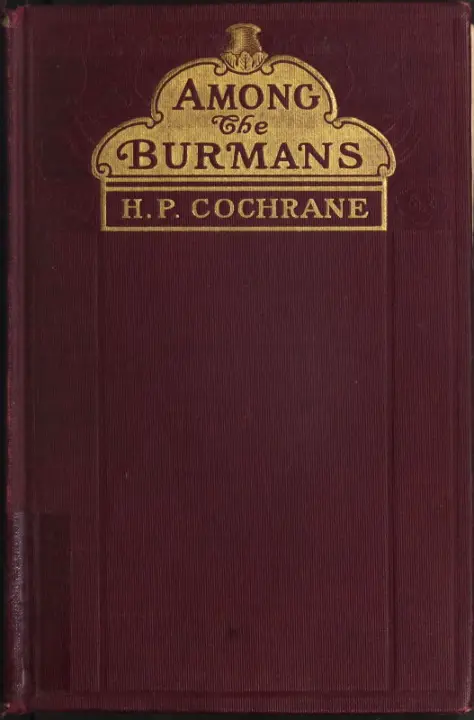
"Among the Burmans: A Record of Fifteen Years of Work and its Fruitage" by Henry Park Cochrane is a mission-focused account written in the early 20th century. The work shares the author's experiences and observations during his time as a missionary in Burma, highlighting various aspects of life, culture, and religion among the Burmese people. It offers a blend of personal anecdotes, cultural insights, and a documentation of missionary efforts aimed at understanding and influencing the indigenous population. The opening of this narrative details the arrival of the author and his wife in Rangoon, where they are met with a tumultuous but warm welcome from both fellow missionaries and locals. The couple experiences a mix of awe and uncertainty as they navigate their new environment, which is filled with unfamiliar sights, sounds, and customs. Initial challenges include grappling with the tropical climate, understanding local customs, and the realization that effective communication would require mastering the Burmese language. This early section sets the tone for the book, emphasizing the blend of excitement, challenges, and the commitment to their missionary work among the diverse communities in Burma.
Introduction adapted from the source catalogue; source summaries may be automatically generated.
Free to read · English · 62,684 words · No account needed
MAKE TIME FOR A GOOD BOOK
On by default. Untick to stop anonymous reading totals. Each page counts after 10 seconds in view. How this works.
Anonymous counting is on unless you have switched it off.
The one universal custom, common to all, both men and women, boys and girls alike, is the filthy habit of kun-chewing and smoking. The kun-chew is made up of part of a betel (areca) nut, chopped fine, and an astringent green leaf of a certain vine. A little lime-paste, usually coloured red, is spread on the leaf, then it is wadded up and jammed into the side of the mouth, with the betel nut. Saliva soon accumulates. To expectorate would be to lose some of the small pieces of the nut before the good had been extracted. Attempts at conversation are ridiculous and nauseating in the extreme. When the mouth can retain its load no longer its contents are discharged through a crack in the floor.
The white pony of a lady-missionary was once tethered under a native house for the night. What was the lady's disgust the next morning to find her beautiful pony all stained and bedaubed with vile red kun-juice. Smoking is begun before teething is finished. I myself have seen a mother take a lighted cheroot from her own mouth, and put it in the mouth of a wee child in her arms. Burmese ladies consider a cigar the finishing touch to their preparations for a dress-parade. But the Burman cigar contains but a small proportion of real tobacco leaf, otherwise the smoke-habit would soon kill off the race. They cannot both chew and smoke at the same time, but the twin habits keep them so busy that they accomplish little else. It is said that the Burman "smokes between chews, and chews between smokes."
It is simply marvellous how far a Burman can smell a rupee, and what methods he will employ to get it. Has the mission work to be done by carpenters, cartmen, etc., heathen Burmans are not wanting who will regularly attend chapel services, and pose as devout inquirers so long as the job lasts. I have known fortune-tellers, teachers, court-clerks, and common rice-cultivators to become pretended disciples with no other motive than to become preachers. They know that the native evangelists have regular salaries, and that the missionary takes a fatherly interest in their welfare, giving medicine when they are ill, advising when they are in difficulty. Though the salary is not large, it secures a fairly comfortable living, which is more than many a heathen is sure of the year round. So the wily heathen comes to our people, pretending to be deeply interested in Christianity, applies himself to learn all he can, attends worship, and finally asks for baptism, with every appearance of sincerity. One year we drew a prize, "Saya Tike" he was called. "Saya" because he had charge of a small private school. He was past middle age, of uncommon intelligence, and fine bearing. A more earnest and devout inquirer, to all appearances, we never met. After some months of waiting he was baptized and received into the church. Then began his tale of woe. In consequence of his becoming a Christian his school had been broken up. Persecutors had broken into his house and stolen his clothing. Friendless, penniless, and out of a situation, he appealed to the missionary for something to do. Being fairly handy as a carpenter he was given such work on the mission buildings. After about two weeks he suddenly disappeared. Some weeks passed before we could get any clue to his whereabouts. Then one day one of our preachers met him in a jungle-village wearing the yellow robe of a Buddhist priest. When asked why he had left the mission he complained that instead of being employed as a teacher he had only carpenter work to do. He preferred being a "pongyi," and have his food given him. Some months later he again turned up at the mission, professing repentance for his backsliding, and asking to be received back again. Our faith in him had been badly shaken, but we tried not to show it. If we would only give him citizen's clothing in place of his yellow robe he would gladly go to work again. Giving him the benefit of a doubt I arranged with my right-hand man to give him a longyi, such as the other men were wearing. No, he did not like a longyi, but must have the more stylish puhso. His taste not being gratified, back he went again to his heathenism. We soon learned that all his pathetic stories of persecution had been trumped up for the occasion, to excite our sympathy, and secure a position.
Your reading position is saved on this browser. Take it to another device with a library code. Reading pages adapt to text, rather than matching a printed edition.
BEHIND THE BOOK
This eBook is for the use of anyone anywhere in the United States and most other parts of the world at no cost and with almost no restrictions whatsoever. You may copy it, give it away or re-use it under the terms of the Project Gutenberg License included with this eBook or online at www.gutenberg.org. If you are not located in the United States, you will have to check the laws of the country where you are located before using this eBook. Read the source licence.
The original source file, including credits and licence, is retained by this library. Request an original-format copy at no charge. Please include the book title and Project Gutenberg identifier #51080.
KEEP YOUR CURIOSITY GOING
Wilfrid Scawen Blunt
Wilfrid Scawen Blunt

E. W. (Edgar Watson) Howe

David Patterson (Spirit) Hatch

David Patterson (Spirit) Hatch

David Patterson (Spirit) Hatch