THE CLASSIC COLLECTION✦My diaries, being a personal narrative of events 1888-1914, Part 2 (1900-1914)CLASSIC FREE BOOKS
My diaries, being a personal narrative of events 1888-1914, Part 2 (1900-1914)
Wilfrid Scawen Blunt
THE CLASSIC COLLECTION · 1904
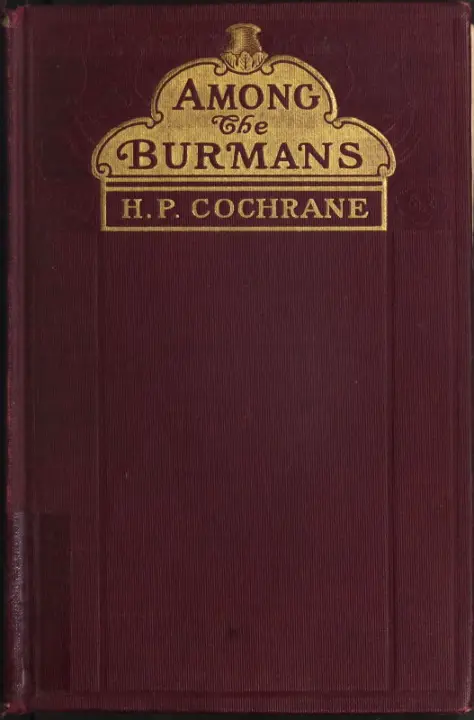
"Among the Burmans: A Record of Fifteen Years of Work and its Fruitage" by Henry Park Cochrane is a mission-focused account written in the early 20th century. The work shares the author's experiences and observations during his time as a missionary in Burma, highlighting various aspects of life, culture, and religion among the Burmese people. It offers a blend of personal anecdotes, cultural insights, and a documentation of missionary efforts aimed at understanding and influencing the indigenous population. The opening of this narrative details the arrival of the author and his wife in Rangoon, where they are met with a tumultuous but warm welcome from both fellow missionaries and locals. The couple experiences a mix of awe and uncertainty as they navigate their new environment, which is filled with unfamiliar sights, sounds, and customs. Initial challenges include grappling with the tropical climate, understanding local customs, and the realization that effective communication would require mastering the Burmese language. This early section sets the tone for the book, emphasizing the blend of excitement, challenges, and the commitment to their missionary work among the diverse communities in Burma.
Introduction adapted from the source catalogue; source summaries may be automatically generated.
Free to read · English · 62,684 words · No account needed
MAKE TIME FOR A GOOD BOOK
On by default. Untick to stop anonymous reading totals. Each page counts after 10 seconds in view. How this works.
Anonymous counting is on unless you have switched it off.
It was one of the most refreshing sights ever witnessed, in this land. According to Buddhism the male is far superior to the female. No woman can cherish the slightest hope of attaining to Naik-ban. Her highest hope and prayer is that in the next, or some future existence she may be born as man, and so take a fresh start. But in this life the Burmese woman holds a higher place than is enjoyed by her sisters in any other Oriental land. If divorced from her husband she can take away whatever property she brought when married, together with all she may have gained by her own exertions. She is by no means a silent partner in business affairs. Usually she has greater business acuteness than her husband, and does not hesitate to have a voice in all negotiations. The Bazar is almost wholly run by the women, each having her own stall and keeping her own accounts in her head, for she cannot read nor write. At this point women seem to be inferior, but it is because they were excluded from the monastic school, and never had a chance. Vastly better than her indolent husband or brother she knows how to make money and keep what she makes. While Mohammedan and Hindu women are shut up in harems and zenanas, the Burmese women walk the streets with head erect, puffing their huge cheroots without the slightest thought of being the "weaker vessel." The energy of the Burmese women saves the race from going to the wall.
From courtship and marriage we pass by a natural transition to child-life in Burma. The crop of babies never fails. Parents would as soon think of failure of the rice harvest as of a failure to add annually to the population of the village, and the disappointment would be about the same. If nature did not defeat the barbarous methods of native midwives there would be no child-life to describe. But in spite of methods that would soon depopulate more civilized lands, every town and village is just romping full of children. Boys run naked until six or eight years of age, and girls until one or two. Many a time have I seen parents, wrapped in blankets, huddled around a fire in the cool season while their infants and small children had not the slightest protection. There is no intentional neglect, for the parents love their children, but it is "custom." This custom supplements the ignorance of the midwives, and adds to the number of shallow little graves in the adjacent jungle for the parish dogs to fight over. But baby has its cradle for its frequent naps. This is made of wood or wickerwork, and suspended from a bamboo in the floor or roof above. Sometimes this swinging cradle is a wide strip of cloth tied together at the ends, with the baby deposited in the loop. Baby has not long been in the world before it has a name. The name depends on the day of the week in which it was born. Certain letters of the alphabet are assigned to each day. The baby's name must begin with one of the letters assigned to its birthday. There is no family name, nothing to indicate to what particular family a child belongs. Each day of the week represents some planet, from which it takes its name. The planet assigned to a particular day will influence the life of a person born on that day, and determine his temperament. The naming is done when the baby is one month old. On the previous day invitations are sent around to the elders of the village, who by eating a pinch of pickled tea from a cup sent by the messenger,--accepts the invitation to be present at the ceremony, the parents make ready a supply of food, a feast being an essential part of every ceremony. Invited guests bring presents of money, precious stones, or jewels, which they cast into a large jar of water set there for the purpose. Some of the more valuable presents are merely lent for the occasion, but they help to make a show. When the guests have enjoyed their pickled tea, betel-nut, and cheroot, several of the elders proceed to bathe the baby in the vessel containing the presents. Another repeats a benediction calling for the continuous welfare of the child, but limits it to one hundred and twenty years. From the centre of a circle of coins on a dish of rice a cord of cotton thread is taken and bound around the child's wrist. One of the elders now announces the child's name,--previously decided on by the parents,--as if it were the happy result of his own meditations. This ceremony is to the Burman and Shan what a christening is to many in other lands, in its relation to a child's future. An interesting naming ceremony was held by two couples of native Christians, in my mission. The missionaries and native Christians were invited to a prayer-meeting. After the meeting a number of Old Testament names, written on slips of paper, were put in a hat borrowed from the missionary. The first fond father to put his hand into the hat drew for his offspring the name Daniel,--which he would pronounce Dan-ya-lah. The other father got Moses as a name for his son. Dan-ya-lah and Maw-shay they are to this day.
Your reading position is saved on this browser. Take it to another device with a library code. Reading pages adapt to text, rather than matching a printed edition.
BEHIND THE BOOK
This eBook is for the use of anyone anywhere in the United States and most other parts of the world at no cost and with almost no restrictions whatsoever. You may copy it, give it away or re-use it under the terms of the Project Gutenberg License included with this eBook or online at www.gutenberg.org. If you are not located in the United States, you will have to check the laws of the country where you are located before using this eBook. Read the source licence.
The original source file, including credits and licence, is retained by this library. Request an original-format copy at no charge. Please include the book title and Project Gutenberg identifier #51080.
KEEP YOUR CURIOSITY GOING
Wilfrid Scawen Blunt
Wilfrid Scawen Blunt

E. W. (Edgar Watson) Howe

David Patterson (Spirit) Hatch

David Patterson (Spirit) Hatch

David Patterson (Spirit) Hatch